
If you’ve ever stood in front of your fridge thinking, I just need a fast lunch that won’t send my blood sugar on a roller coaster, this veggie and hummus sandwich for diabetics is exactly that kind of solution. It’s quick, it’s predictable in the best way, and honestly, it’s one of those meals you can throw together even when you’re not really in the mood to “cook.” And because the main ingredients rely on whole-grain bread, fiber-rich veggies, and protein-packed hummus, you get a lunch that works with your blood sugar rather than against it.
The real appeal here is speed: you can make this in under 5 minutes, and most of the ingredients live in almost everyone’s kitchen already. I’m not trying to oversell it, it’s just one of those rare diabetic-friendly meals that checks all the boxes without asking you to measure seventeen things or follow complicated steps. Whole grains slow digestion hummus adds plant-based protein and healthy fats and the veggies contribute extra fiber and volume so you actually stay full. That balance is what helps keep glucose stability steady throughout the afternoon.
Another reason this sandwich earns a spot in a diabetic-friendly rotation is its flexibility. You can swap breads, rotate veggies, adjust textures… the structure isn’t precious. If you’ve ever felt boxed in by “diabetes-safe” meals, this sandwich is a small reminder that you can have convenience and flavor without compromising your health goals. Plus, it’s built from ingredients with naturally lower glycemic impact, so you get the satisfying feel of a real sandwich – minus the spike.
By the time you finish this guide, you’ll know exactly which bread to choose, how to layer for the best texture, what hummus variations work best for blood sugar stability, and how to customize everything so it fits your routine. It’s simple, but in a way that makes you think, “Oh – this actually works for my life.” And that’s the entire point.
FAQ Preview (Quick Taste)
Can diabetics eat sandwiches like this regularly?
Yes as long as you choose whole-grain or sprouted bread, pair it with a fiber-rich filling like veggies and include a protein source such as hummus. This combination slows digestion and helps reduce glucose spikes.
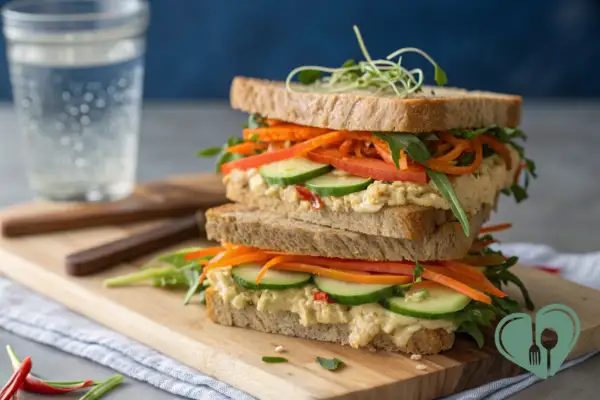


Veggie and Hummus Sandwich for Diabetics
Ingredients
Equipment
Method
- Toast the whole-grain bread if you prefer it crispy.
- Spread 3 tablespoons of hummus on each slice of bread.
- Spread the mashed avocado on top of the hummus on one slice.
- Add the mixed salad greens over the avocado.
- Layer the sliced red bell pepper, cucumber, and shredded carrot on top of the greens.
- Place the second slice of bread on top and press gently to hold the sandwich together.
- Slice and serve immediately.
Notes
- Bread choice matters: For the best blood-sugar stability, choose whole-grain or sprouted bread with at least 3–4g of fiber per slice.
- Make it lower-carb: Use thin-sliced whole-grain bread or turn it into an open-faced sandwich.
- Meal-prep tip: If you’re packing this for later, add the avocado right before eating to keep the bread from getting soft.
- Add protein if you want: A slice of turkey, tofu, or a sprinkle of seeds (like hemp or chia) increases staying power without affecting the diabetic balance.
- Flavor boost: Lemon juice, black pepper, or a pinch of smoked paprika on top of the veggies adds brightness without sugar or extra calories.
- Veggie flexibility: Swap or add any non-starchy vegetables you like – tomatoes, radishes, spinach, or zucchini all work well.
- Make it dairy-free or vegetarian: It already is! But you can add a slice of cheese if you want extra richness.
- Toasting note: Toasted bread holds up better for meal prep; untoasted keeps the texture softer and lighter.
Ingredients for a Diabetic-Friendly Veggie and Hummus Sandwich
There’s something oddly comforting about a recipe with ingredients you don’t have to Google. This veggie and hummus sandwich for diabetics leans into that feeling – simple foods you probably already buy, just arranged in a way that actually supports stable blood sugar. And maybe this is just me, but whenever a recipe requires too many steps or specialty “diabetic” products, I tend to skip it. This sandwich avoids all of that. It’s grocery-store normal, but still deliberate.
Every item here does a little job behind the scenes. The whole-grain bread slows digestion; the hummus brings plant protein; the avocado adds creamy fats that help buffer carbs; the veggies pile on volume and fiber without nudging blood sugar too far in either direction. It’s not magic, but it’s close enough to be useful – and let’s be honest, that’s what most of us want midday when we’re hungry and not really in the mood to negotiate with our glucose.
Before we get into the steps, here’s the exact ingredient lineup. Nothing fancy. Nothing you’ll regret buying. Just a handful of things that happen to work really well together.
Ingredient List (Exact Measurements)
- 4 slices whole-grain bread
- 6 tablespoons hummus
- ½ avocado, mashed
- 1 cup mixed salad greens
- ½ medium red bell pepper, sliced
- ½ cup sliced cucumber
- ½ cup shredded carrot
If you glance at this list and think, “That looks… too simple,” you’re not wrong. But sometimes simple ingredients behave differently when they’re combined thoughtfully. The creamy hummus and avocado soften the whole-grain bread; the crisp veggies bring the texture your brain expects from a “real” sandwich. It’s one of those meals that feels bigger than the sum of its parts – and that’s probably why it works so well for people trying to balance flavor with blood sugar stability.
And of course, you’re allowed to swap things. Everyone is. Maybe you don’t love cucumbers; fine, add more pepper. Maybe mixed greens feel too flimsy; switch to romaine for crunch. The structure doesn’t fall apart. The nutrition stays pretty close. I almost hesitated to call these “rules,” because they’re not. They’re starting points.
Do I need to measure everything exactly?
Not really. With a sandwich like this, precision isn’t the point – balance is. As long as you keep the whole grains, a spread of hummus, and a good handful of non-starchy veggies, the blood-sugar benefit stays more or less the same.
How to Make This Veggie and Hummus Sandwich (Step-by-Step)
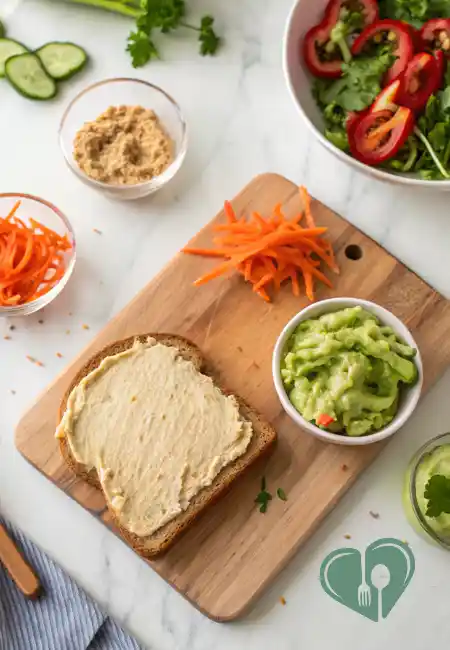
There’s a funny thing about making a simple lunch: sometimes the fewer steps there are, the more your brain relaxes. This veggie and hummus sandwich for diabetics is almost embarrassingly easy – the kind of meal you make when you’re hungry right now and honestly don’t have the bandwidth for anything complicated. And yet, weirdly, it still feels intentional once it’s done. Maybe that’s because the ingredients are fresh. Or maybe it’s because whole grains and hummus just play nicely together. I’m not entirely sure, but it works.
What surprised me the first time I made this was how much the order of the layers changed the whole experience. At first, I tossed ingredients on without thinking and it… wasn’t great. A little soggy, a little messy, the kind of sandwich that slips apart the second you try to pick it up. But once you tweak the layering – just small things – the whole thing transforms from “whatever” to “oh, this is actually good.” So these steps aren’t rigid rules; they’re more like shortcuts learned the mildly annoying way.
Should You Toast the Bread? (Honestly, It Depends)
Some days you want that crisp, toasty edge because it makes the whole sandwich hold together better – especially if the avocado is extra soft or you’re packing lunch for later. Other days, toast feels like too much effort, or maybe you just want something softer and easier to bite into. There isn’t a “correct” choice here. If you’re eating immediately, untoasted is perfectly fine. If you’re carrying it in a bag for a few hours, toast might save you from the dreaded bread collapse. Pick the version your mood leans toward.
The Layering That Actually Works
- Start with the bread. If you toasted it give it a few seconds to cool – spreading hummus on steaming-hot toast turns the texture oddly gummy.
- Spread the hummus generously on both slices. This is your flavor anchor and also your moisture barrier, which sounds dramatic but really just keeps things from getting weird later.
- Add the mashed avocado to one slice. It’s creamy, it’s rich, and it keeps the greens from sliding all over the place.
- Pile on the salad greens. Not too neat – let them be a little messy. That slight looseness gives the sandwich height.
- Layer in the bell peppers, cucumbers, and shredded carrot. This order matters more than you’d expect. The firmer veggies form a kind of edible scaffolding that keeps the softer ingredients in place.
- Close the sandwich and press lightly. Not a full smash – just enough to make it feel unified.
If you’re packing it for lunch, wrap it snugly in parchment. It’s a tiny step, but it keeps the structure intact and the veggies crisp.
What if my sandwich still feels “too squishy”?
Try adding the cucumber slices at the very bottom or lightly patting them dry first. A little moisture control goes a long way with veggie-heavy sandwiches.
How to Make This Veggie and Hummus Sandwich (Step-by-Step)
Toasting or Not Toasting
Before you start stacking anything, decide whether you actually feel like toasting the bread. Some days the crisp edges make the whole sandwich feel sturdier and a little more put-together. Other days… you just want to keep things soft and quick. Either way is fine.
If you do toast it, let the slices cool for a minute so the hummus doesn’t melt into them.
The Layering That Actually Works
1. Start with the bread.
Lay the slices out flat. Nothing complicated – just give yourself space to build.
2. Spread the hummus.
Cover both slices with a generous layer. It’s the base that holds everything steady, so don’t be shy here.
3. Add the mashed avocado.
Spread it over the hummus on one slice. This extra creaminess helps the greens stay in place instead of slipping around.
4. Add the salad greens.
A loose handful works best. Don’t try to make it look perfect – a little messiness actually gives the sandwich some nice volume.
5. Layer the veggies.
Place the bell pepper slices, cucumber, and shredded carrot on top. This order matters more than you’d think – the firmer veggies keep the whole stack from collapsing when you pick it up.
6. Close the sandwich.
Add the top slice and give it a light press. Not a full squish, just enough so everything feels like one piece instead of separate layers.
Why This Order Works
Putting the creamy spreads at the bottom creates a stable base, and letting the crunchier vegetables sit on top helps the sandwich keep its shape. It’s a small detail that makes the whole thing easier (and cleaner) to eat.
Why This Sandwich Works for Diabetes
There’s a reason this veggie and hummus sandwich for diabetics feels different from the usual “healthy lunch” advice. It’s not pretending to be something it isn’t. It’s simple, it’s filling, and-most importantly-it’s built on ingredients that work with your blood sugar instead of creating those frustrating spikes that hit out of nowhere. And if you’ve ever tried to balance convenience with glucose stability, you know how rare that combination can be.
What makes this sandwich genuinely diabetes-friendly isn’t just one ingredient; it’s the way the whole thing comes together. Whole-grain bread gives you slow-digesting carbs. Hummus brings plant-based protein and fiber. The vegetables add bulk and crunch without adding a carb load. The avocado adds healthy fats that help slow digestion even more. When all of these show up in one place, they create a meal that feels satisfying without being heavy the kind of lunch that keeps you steady through the afternoon instead of leaving you feeling like you made the wrong call an hour later.
And here’s a slightly overlooked truth: sandwiches don’t have to be off-limits when you have diabetes. The issue isn’t “bread vs. no bread.” It’s what kind of bread, what you pair with it, and how much fiber and protein you build into the rest of the meal. This one checks all those boxes without turning into a science experiment.
Fiber Content Breakdown
Fiber is really the backbone here – the quiet hero that makes this sandwich work. Each component brings a little of its own:
- Whole-grain bread: Usually around 3–4 grams of fiber per slice
- Hummus: Chickpeas add both soluble and insoluble fiber
- Avocado: Adds creamy fat, yes but also fiber
- Veggies: Cucumbers, peppers, greens and carrots each contribute small amounts that add up
Altogether, you get a meal that’s surprisingly fiber-rich without feeling like you’re chewing your way through something dry or “healthy for the sake of being healthy.”
More fiber means slower digestion, which means a steadier rise in blood sugar – not the sudden jumps you get from low-fiber breads or sugary spreads.
How It Supports Blood Sugar Stability
This sandwich uses the classic “slow-carb” formula almost by accident:
- Whole grains digest slowly.
- Healthy fats (avocado) help delay glucose absorption.
- Protein + fiber in hummus smooth the whole process.
- Non-starchy veggies add volume and nutrients without glucose impact.
That combination leads to fewer surprises after lunch. Instead of a spike-and-crash afternoon, you get a steady, predictable energy curve – something most people with diabetes can appreciate on a practical, daily level.
Is this sandwich okay to eat regularly?
Yes. The ingredients are balanced enough for this to be a go-to lunch several times a week. Just keep an eye on portion size and choose whole-grain or sprouted bread for the best blood sugar support.
Smart Swaps and Variations for a Diabetic-Friendly Sandwich
The nice thing about this veggie and hummus sandwich for diabetics is that it doesn’t fall apart the second you tweak something. You know how some “healthy” recipes feel like a house of cards – change one ingredient and the whole thing stops working? This isn’t that. Here, you’ve got room to play around a little. Realistically no one makes the exact same sandwich every single time anyway. Some days you have all the ingredients. Other days you’re staring at a fridge that looks a bit… picked over. That shouldn’t stop you from making lunch that still supports your blood sugar.
Think of these swaps as small detours, not big compromises. You’re keeping the same core idea – whole grains, fiber, veggies, protein but adjusting it to fit your mood your pantry, or whatever dietary thing you’re juggling that day.
If you enjoy this veggie and hummus sandwich and want another option that feels just as familiar but a little more filling, the Avocado Tomato Sandwich (Chicken or Chickpea Version) fits naturally into the same high-fiber, blood-sugar-friendly lunch routine.
Gluten-Free or Lower-Carb Bread Options
Bread is one of those foods people with diabetes get nervous about and honestly understandably so. But you don’t have to overthink it. You just need something that behaves like real bread and has enough fiber to slow everything down a bit.
If wraps tend to feel easier or more practical than sliced bread, especially for packed lunches or eating on the go, the Grilled Veggie Hummus Wrap (Diabetic-Safe Lunch) uses the same hummus-and-vegetable base in a format that’s often simpler and just as blood-sugar friendly.
Sandwiches don’t have to disappear from your routine just because you’re watching your blood sugar. When fiber stays high, both breads and wraps can still fit comfortably into everyday lunches. We break this down in Diabetes-Friendly Sandwiches and Wraps High in Fiber, with practical examples that go beyond one single sandwich.
Here are some that work well without feeling like “health bread”:
- Gluten-free whole-grain bread: Just double-check the label some are basically air with starch.
- Sprouted-grain bread: A little sturdier great for sandwiches that lean veggie-heavy.
- Thin-sliced whole grain: Same flavor, fewer carbs and it still feels like a “normal” sandwich.
- Whole-grain pita or wraps: A softer alternative if toastiness isn’t your thing.
- Open-faced version: Surprisingly filling and honestly kind of pretty.
At the end of the day go with the one that tastes good and offers some fiber. That combination matters more than any buzzword on the packaging.
Low-Sodium or DIY Hummus Options
Hummus might be the easiest part to customize because almost every version – from plain to spicy to “whatever’s on sale” – still fits the nutritional goal. But sometimes the salt is too much or you want something fresher or maybe you’re just bored of the same flavor.
Here are a few ways to switch it up:
- Low-sodium hummus: Same texture, less of that salty aftertaste.
- Homemade hummus: It’s honestly not as complicated as it sounds. Blend chickpeas, lemon, tahini, garlic… done.
- Edamame hummus: Slightly higher protein, really smooth.
- Roasted red pepper hummus: Good if you want sweetness without sugar.
- Herb-heavy hummus: Basil, parsley, dill – tiny change, big flavor shift.
As long as it’s a bean-based spread with some fiber and healthy fats it’ll support steady blood sugar.
Will changing the veggies change the carb load?
Not really. As long as you stick with non-starchy vegetables, you can swap, mix, double or skip things with almost zero impact. Hate cucumbers? Fine. Add extra peppers. Want tomatoes? Go for it. The nutrition barely shifts but the sandwich feels more “you.”
Nutrition Snapshot: Fiber, Protein, Carbs
The honest truth? Most people with diabetes don’t need a long nutritional lecture – they just want to know whether a meal is going to cooperate with their blood sugar or make the rest of the day harder. This veggie and hummus sandwich for diabetics leans firmly into the first category. Nothing in it feels sneaky. You can almost predict how your body will respond just by looking at the ingredients, which is… refreshing, honestly.
And I’ll say this upfront: the exact numbers might drift a little depending on the bread you use or how generous you are with the hummus (it happens). But the overall pattern stays the same – high fiber, moderate protein, steady carbs, and a whole lot of vegetables adding volume without adding glucose stress. That’s really the story here.
Fiber – The Quiet Hero of This Sandwich
Fiber tends to get talked about like homework but in meals like this, it’s the thing that makes everything work smoothly. It slows digestion, it steadies blood sugar, and it keeps you full longer than you’d expect from something as simple as a sandwich.
A typical breakdown looks something like this:
- Whole-grain bread: about 3–4g per slice
- Hummus: around 3–4g (for the full 6 tablespoons)
- Avocado: roughly 5g
- Veggies: 2–3g depending on how much you pack in
So you’re looking at 13–16 grams of fiber without even trying. For a lunch you can assemble in a few minutes, that’s pretty impressive – and probably one reason people feel genuinely satisfied afterward instead of rummaging through their pantry an hour later.
Protein – Not the Star, but Definitely the Support
This isn’t a high-protein power meal, and it doesn’t need to be. But it does have enough protein to keep things balanced and prevent that floaty, hungry feeling later in the day.
Here’s where it comes from:
- Hummus: ~4–5g
- Whole-grain bread: ~6–8g
- Veggies + avocado: maybe 1g combined
Total: about 10–14g of plant-based protein. Not huge, but steady – and paired with the fiber and healthy fats, it holds its own.
Carbs – More Predictable Than You’d Think
Carbs are usually the stress point for people with diabetes, and I get it. Bread especially. But whole-grain bread behaves differently, and when you surround it with fiber, fat, and protein, the carbs don’t hit nearly as fast.
Here’s a rough estimate:
- Whole-grain bread: 22–25g per slice
- Hummus: ~9–10g
- Veggies: ~4–6g
- Avocado: ~6g
Total: around 60–70g of carbs – but moderated by everything else on the sandwich. That’s why people often say this meal feels steady instead of spiky.
What if I need fewer carbs?
You can switch to thin-sliced or sprouted bread or just make it open-faced. You keep the flavors and the structure, but the carb count drops instantly.
FAQs
What kind of bread is best for diabetics?
In real life, the “best” bread isn’t about some magic brand – it’s about fiber. Whole-grain and sprouted breads usually give you the most predictable blood-sugar response because they digest slower. A quick shortcut is to check the label and look for 3–4 grams of fiber per slice. If the loaf hits that mark, you’re already in the right territory. And if you prefer something lighter thin-sliced whole grain is a really easy way to lower carbs without feeling like you’re compromising.
Is hummus good for people with diabetes?
Yes – and honestly, it’s one of those foods that feels like it should be “too good to be true,” but it actually works. Hummus is made from chickpeas, and chickpeas come with natural fiber + plant protein, a combo your blood sugar tends to handle calmly. It’s creamy it’s filling and it doesn’t behave like sugary spreads or sauces that spike you out of nowhere. Just be mindful of portion size if you’re sensitive to carbs – but the amount used in this sandwich is right in the comfortable zone for most people.
Can I still eat bread or sandwiches if I have diabetes?
You can – absolutely. The trick isn’t avoiding sandwiches; it’s avoiding the versions built with fast-digesting white bread and sugary condiments. When you use whole-grain bread, layer in non-starchy veggies, and add something like hummus or avocado to slow digestion, the sandwich stops feeling like a “blood sugar gamble” and becomes a steady, predictable meal again. So yes sandwiches can stay in your life – they just need a little structure behind them.
How many carbs should I aim for in a meal for someone with diabetes?
Most adults with diabetes end up in the 45–60 grams of carbs per meal range but that’s just a general guideline. Your personal ideal depends on things like medication activity level and what your body tends to tolerate. This sandwich usually fits within that range but if you need to go lower, thin-sliced bread or an open-faced version makes the adjustment easy without changing the whole meal.
Which vegetables are best for blood sugar control?
Non-starchy vegetables are usually the most forgiving: cucumbers, peppers, leafy greens, tomatoes, carrots, radishes anything crisp, colorful and fresh. They’re low in carbs, high in fiber, and don’t push your glucose around. Plus the more veggies you add to your sandwich, the more balanced (and honestly, more satisfying) the whole thing becomes.
This veggie and hummus sandwich is one simple example of how high-fiber lunches can quietly support blood sugar throughout the day. If you’re looking to build a fuller lunch routine around the same idea – with bowls, salads, wraps, and other practical options – The Ultimate Guide to High-Fiber Diabetes-Friendly Lunches walks through the bigger picture and shows how all these pieces fit together.
Conclusion: Why This Veggie and Hummus Sandwich for Diabetics Just Makes Sense
If I’m honest, what I love most about this veggie and hummus sandwich for diabetics is that it doesn’t try too hard. It’s not pretending to be a clever “diabetic hack” or some dramatic reinvention of lunch. It’s just simple food that works – the kind you can make quickly, eat without overthinking and still feel good about afterward.
There’s something reassuring about knowing you can throw together a meal that supports your blood sugar without feeling like a chore. The whole-grain bread gives you steady energy, the hummus and avocado bring that slow, calming balance and the veggies… well they do what veggies do best: add crunch, color, and just enough freshness to make the whole thing feel alive.
And I think that matters, especially if you’re someone who’s tired of food feeling complicated. Diabetes can make eating feel like a daily puzzle, and it’s exhausting. But a sandwich like this – one you can trust to be consistent – takes a little of that pressure away.
If you end up trying it pay attention to how you feel afterward. Not just physically, but mentally too. A lot of people describe this kind of meal as “steadying,” like it gives them the afternoon back instead of stealing it with a sugar crash.
And if you ever switch things up – different veggies, a new hummus, sprouted bread instead of whole grain – the core idea still holds. This recipe bends with you. It doesn’t break.
So keep it in your rotation. Use it on busy days or low-energy days or days you just want something you don’t have to negotiate with. Sometimes the best meals are the ones that quietly make your life easier without asking for anything in return.

Dreena shares balanced, diabetes-friendly recipes made for real life—simple, nourishing, and full of flavor. Her kitchen is where health meets heart.