
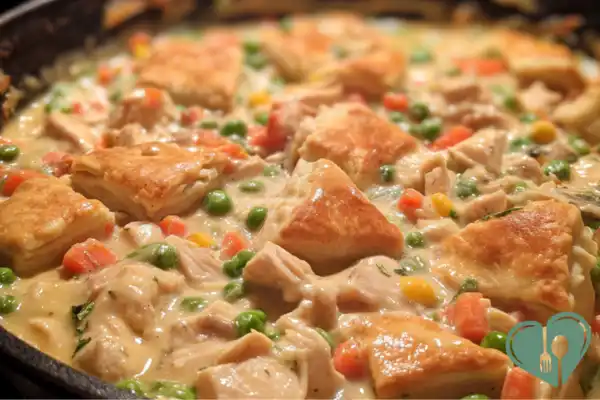
Healthy chicken pot pie skillet nights usually start the same way. You want pot pie. Not the project. Just the feeling. Warm pan. Creamy stuff. Chicken that actually tastes like chicken. The crust is great, sure, but it is also the part that makes you pause. Or sigh. Or decide to order something instead.
This is what happens when you skip that part.
I did not think I would like it at first. It sounded like a shortcut pretending to be a meal. But once it was in the pan, it made sense. The smell hits first. Onion. Thyme. That familiar pot pie smell. You stop caring about what is missing.
It is not soup. It is not stew. It is just thick enough to sit there and behave. You spoon it. You do not chase it around the bowl. That matters more than it should.
This is a one skillet thing. No rolling. No baking math. You cook, stir, taste, adjust, eat. The kind of dinner you make when you are tired but still want something decent. Something that feels normal. Not like you are being punished.
I make this when I want comfort but also want to sleep well after. When leftovers sound good tomorrow. When I need something that quietly fits into comfort food diabetic dinners without announcing itself as one.
Anyway. Let’s talk about why the crust is not the point here.

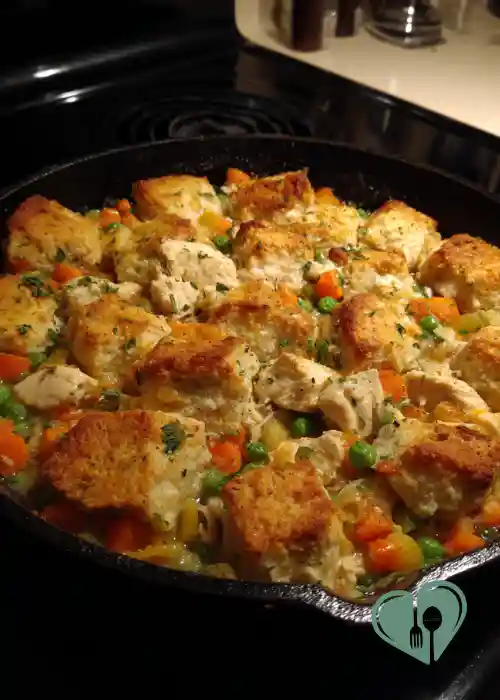

Healthy Chicken Pot Pie Skillet
Ingredients
Equipment
Method
- Heat a large skillet over medium heat and add the olive oil. Let it warm up before adding anything.
- Add the chicken to the pan in a single layer. Season lightly with salt and pepper. Let it cook without touching it for a few minutes, then stir and cook until mostly done. Remove chicken and set aside.
- In the same skillet, add the onion. Cook until soft and slightly golden. Do not rush this part.
- Add carrots and celery. Stir and cook for a few minutes until they start to soften.
- Add garlic and cook just until fragrant. About 30 seconds.
- Pour in the chicken broth and scrape the bottom of the pan to release any stuck bits.
- Stir in thyme and bay leaf. Add the chicken back to the skillet. Let everything simmer gently until vegetables are tender.
- Reduce heat to low and slowly stir in the milk or half and half. Let it heat through and thicken slightly.
- Add frozen peas and stir. Cook for another minute or two.
- Taste and adjust salt and pepper as needed. Remove bay leaf.
- Turn off heat and let the skillet sit for a minute before serving. It will thicken a bit more as it rests.
Notes
- Thighs stay juicier, but breasts work. Just do not overcook them. Pull them early if needed.
- If the skillet looks thin, let it sit. It thickens more once the heat is off.
- If it gets too thick, add a splash of broth. Stir. Done.
- Dried herbs are fine. Fresh is nice, not required.
- Taste at the end. Then taste again. Most fixes are just salt.
- Leftovers get thicker overnight. That is normal.
- Reheat gently. Microwave works. Stove works better.
- Skip peas if you hate them. Add mushrooms if you want. No one is watching.
- This is better the second time you make it. You stop thinking and just cook.
Why a Crustless Chicken Pot Pie Skillet Still Works
The crust gets way too much credit. People act like without it, the whole thing collapses. But when you really think about it the crust is just sitting there. On top. The part you notice first, sure, but not the part doing most of the work.
What you want is underneath. The chicken. The vegetables. That thick, savory situation that coats everything. That is the part your brain remembers. That is the part that makes you go back for another bite without thinking about it.
Once the crust is gone, the filling does not feel exposed. It feels louder. Like it finally gets the mic. You taste the herbs more. You notice when the onion is cooked right. Or when it is not. There is nowhere to hide, which sounds bad, but it is actually kind of nice.
Cooking it all in a skillet helps. Everything stays close. Nothing dries out while waiting for something else to finish. You stir it. You stop. You taste it again. Maybe you add a little salt. Maybe you do not. It is not precious.
It eats like dinner, not like a workaround
This is usually where people get nervous. They think it is going to feel like soup pretending to be something else. It does not. It sits there. Thick enough. You scoop it. It behaves. That sounds small, but it matters.
You feel full after. Not stuffed. Not like you need to lie down. Just done. Which is kind of the goal most nights. ” That is why meals like this tend to show up in diabetic comfort food recipes that focus on feeling satisfied, not restricted. ”
The smell does half the convincing
Before you even eat it, it already smells right. Onion cooking down. A little garlic. Herbs hitting warm fat. Your brain checks the box that says pot pie. By the time it is on the table the crust is not part of the conversation anymore.
Question that always comes up
Does it feel like something is missing?
Maybe for a second. Then you keep eating and forget why you asked.
Ingredients That Make This Feel Like Real Pot Pie
This is not a long list. It should not be. If it starts feeling fussy, it is probably going the wrong way.
Chicken is obvious. Thighs work better than breasts, but use what you have. If it is already cooked, fine. If not, also fine. No rules here.
Onion matters. More than people think. Dice it small. Let it cook longer than feels necessary. That smell is part of the whole thing. If you rush it, you will notice later.
Carrots. Celery. The usual suspects. They do not need to be perfect. Uneven cuts are normal. They soften. They catch flavor. That is their job.
Garlic, but not a lot. This is not that kind of dish. You want background, not sharpness.
Then the herbs. Thyme is the main one. Dried is fine. Fresh is nice if it is already in your fridge. Bay leaf if you remember. If you forget, it still works.
For the creamy part, do not overthink it. Broth plus something richer. Milk, half and half, a splash of cream. Whatever feels right when you pour it. You are not measuring with your soul here, but close.
Salt. Pepper. Taste it. Then taste it again. This is where people stop too early.
Some people add peas at the end. Some do not. I usually do, unless I forget. Frozen is normal. Canned feels wrong here, but that is just me.
That is basically it. No secret ingredient. No miracle powder. Just things that make sense together in a pan.
Next is how to actually cook it without turning it into mush or soup or something weird.
How to Cook This in One Skillet Without Ruining It
Put the pan on the stove. Medium heat. Not ripping hot. Just steady. Add a little fat. Whatever you normally use. Oil, butter, both. Let it warm up before you rush it.
Chicken goes in first if it is raw. Spread it out. Do not crowd it. Let it sit longer than you want to. If you keep poking it, it will never brown. Once it looks done enough, pull it out. It does not need to be perfect yet. It will be back.
Same pan. Onion goes in. This is where people get impatient. Do not. Let it soften. Let it get a little color. If it sticks a bit, that is fine. That is flavor. Stir, but not constantly. You want it to settle.
Add the carrots and celery. Stir them around so they pick up what is already in the pan. Give them a minute. Maybe two. Then garlic. Just until you smell it. Do not walk away here. Garlic burns fast and gets mean.
Now pour in the broth. Scrape the bottom. All that stuck stuff comes up. That is the good part. Add the herbs. Salt. Pepper. Put the chicken back in. Let it simmer. Not boil. If it starts bubbling hard, turn it down.
Once everything looks tender enough to eat, add the creamy part. Slow pour. Stir as you go. The texture changes pretty quickly. This is where you stop and look at it. Too thin. Let it cook a bit longer. Too thick. Splash in more broth. This is not exact. It is feel based.
Peas go in last if you are using them. They just need heat. Taste again. Adjust. You will probably add more salt. Everyone does.
Turn off the heat. Let it sit for a minute. It thickens more than you think once it stops moving.
Next is how to thicken it without flour, which somehow stresses people out way more than it should.
Thickening Without Flour (It Is Not That Serious)
This part makes people tense. I do not know why. As soon as flour is off the table, everyone freezes. Like the pan is about to judge them.
It is fine.
The skillet is already doing most of the work. Liquid reduces. Chicken gives off stuff. Vegetables soften and let go of their own starch. You are not starting from nothing here.
The easiest move is patience. Let it simmer. Not rushy bubbling. Just enough heat so it gently moves. Walk away for a minute. Come back. Stir. You will notice it is already thicker than before. That surprises people every time.
If you want more help than that, there are options. You do not need all of them. Pick one. Or none.
A splash of cream does more than you think. Same with half and half. It changes the texture fast. Suddenly it feels like pot pie filling instead of broth with ambitions. That same creamy, skillet style is why dishes like Creamy Mushroom Chicken tend to hit the same comfort note without needing anything complicated.
Some people stir in a little cornstarch mixed with cold water. That works. It is fine. Just do not dump it straight in dry. That gets weird fast. Add a little. Stir. Wait. It thickens more as it cools, so stop early.
Mashed vegetables also do the job. Scoop out a bit of the carrots and onion. Smash them. Stir them back in. It sounds extra, but it is not. It blends right in and no one notices unless you tell them.
Whatever you do, stop stirring nonstop. Let the pan sit. Thickness needs stillness. Movement lies.
If it looks slightly thinner than you want, walk away. By the time you come back with a bowl, it will probably be right.
Next up is portions. Not the preachy kind. Just how to serve this without feeling weird about it.
Portion Control Without Turning It Into a Whole Thing
This is where people start overthinking again. Portions do not need a lecture. You are not measuring rice for a competition. You are serving dinner.
Use a bowl. Not a huge one. Not a tiny one either. Something normal. The kind you always grab without thinking. That alone fixes half the problem. Plates make it feel like it should spread out. Bowls let it be what it is.
Scoop it once. See how it looks. If it feels skimpy, add a little more. If it feels like a lot, stop. Your brain is better at this than you think, as long as you let it decide after seeing the food, not before.
Protein does the heavy lifting here. Chicken fills you up faster than you expect. Especially when it is hot and creamy. You get halfway through and realize you are slowing down. That is usually the signal. You do not need to clean the bowl just because it is there.
If you want something on the side, keep it boring. A simple salad. Something crunchy. Or nothing at all. This dish does not need backup to feel like dinner. That same one-pan, self-contained dinner idea is what makes something like Tuscan Chicken work so well on busy nights too.
Leftovers matter more than portions anyway. If you save some for tomorrow and actually want to eat it again, you probably served yourself the right amount.
Next are the questions people always ask after they make it once. Some practical ones. Some unnecessary ones. Still worth answering.
FAQs People Ask After Making It Once
Can I use rotisserie chicken?
Yes. That is usually what happens the second time. Just add it later so it does not dry out. It already lived a full life.
Does it reheat well?
Better than expected. It thickens more overnight. Microwave is fine. Stove is better if you care. Add a splash of broth if it looks stubborn.
Can I freeze it?
You can. It will be a little different when it comes back. Still good. Just not identical. Most things are not.
Why did mine turn out watery?
Usually heat was too high. Or you rushed it. Or both. Let it sit next time. Stillness helps more than stirring.
Can I add potatoes?
You can. It changes the whole vibe. Still good, just heavier. Decide what you want before you toss them in.
Is it supposed to be super thick?
Not gluey. Not loose. Somewhere in between. If you are questioning it, you are probably close.
That is usually where the questions stop. After that, people just make it again and tweak things quietly.
At this point, you kind of know what to do with it. You make it once. Then the next time is a little different. More pepper. Less liquid. Maybe you skip peas. Maybe you add them and remember why you like them.
It becomes one of those meals you do not look up anymore. You just start cooking. You taste. You stop when it feels right. The same thing tends to happen with recipes like Turkey Meatloaf. You make it once, then it quietly earns its place in your regular rotation.
That is usually how the good ones stick around.
If you want to tweak it, you will. If you do not, you will still eat it straight from the bowl and call it dinner. And honestly, that is enough.
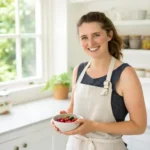
Dreena shares balanced, diabetes-friendly recipes made for real life—simple, nourishing, and full of flavor. Her kitchen is where health meets heart.