
If you’ve ever stood in front of your fridge wondering what kind of diabetic-friendly lunch won’t send your blood sugar on a rollercoaster, you’re not alone. A Tuna/Salmon High-Fiber Salad for Diabetics is one of those meals that looks almost too simple to be effective – yet somehow ends up ticking every nutritional box you quietly hope for. And honestly, that’s part of the magic. The combination of lean protein, omega-3 fats, and slow-digesting fiber creates this subtle sense of steady energy that most people with diabetes spend years trying to figure out.
I’m hesitating for a second – because whenever a recipe claims to be “good for blood sugar,” people get skeptical. Rightfully so. A lot of salads pretend to be healthy but secretly pack hidden sugars, unnecessary carbs or dressings that behave more like dessert. But this recipe doesn’t try to fake virtue; the tuna or salmon is naturally low-glycemic, the beans bring that gentle resistant starch effect, and the seeds add crunch without chaos. It’s one of those meals where each ingredient feels like it has your back.
Another thing I’ve noticed over time – readers with diabetes often feel stuck between wanting flavorful food and fearing anything that seems too rich or too filling. So this salad tries to bridge that emotional tension. The acidity from lemon or vinegar cuts through the richness of the fish, the greens keep things light, and the fiber acts like that tiny traffic officer slowing down glucose absorption before it gets the chance to misbehave. If you’ve ever eaten something “healthy” and still felt your blood sugar spike, you’ll probably appreciate how different this one feels.
As we go through the recipe, you’ll notice that the method is intentionally flexible. That’s not indecision – it’s respect for real-life kitchens. Some days you’ll have canned salmon; some days it’s tuna; other days you’ll discover you’re completely out of chickpeas and only have black beans. The salad still works. Diabetic-friendly meals shouldn’t require perfect conditions. They should adapt to you not the other way around.
In the sections ahead, we’ll walk through exactly why fish salads tend to support diabetic health, what ingredients make the biggest difference in slowing digestion, how to build flavor without adding extra carbs, and which small mistakes to avoid if you’re sensitive to glucose swings. By the end, you’ll not only know how to make the dish – you’ll understand why it works, which, let’s be honest, is what most people actually want when they’re trying to manage diabetes day to day.

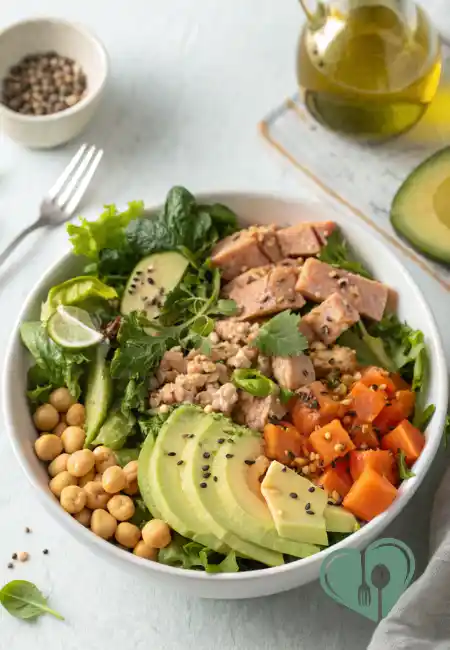

Tuna/Salmon High-Fiber Salad for Diabetics
Ingredients
Equipment
Method
- Drain the tuna or salmon and place it in a mixing bowl.
- Add the leafy greens to a separate bowl to form the salad base.
- Add the beans on top of the greens, spreading them evenly.
- Sprinkle in the seeds for added crunch.
- Add chopped vegetables such as celery, cucumber, or bell pepper.
- Spoon the tuna or salmon on top and gently fold everything together.
- Drizzle with olive oil and lemon juice or vinegar.
- Season with salt, pepper, and herbs to taste.
- Optional: Add Greek yogurt or avocado for a creamy version.
- Let the salad rest for 1 minute before serving.
Notes
- You can use either canned tuna or salmon; salmon provides more omega-3 fats for insulin support.
- Chickpeas, black beans, and navy beans all work. Start with ½ cup if you want to track carbs more closely.
- Add seeds or crunchy vegetables like celery, cabbage, or cucumber for more texture and fiber.
- Mix in 1 tablespoon Greek yogurt if you prefer a creamy-style salad.
- To reduce sodium, rinse canned fish and beans before use.
- For meal prep, keep dressing separate to prevent the greens from getting soggy.
- Enjoy with sparkling water, herbal tea, or a small serving of berries for a balanced diabetic-friendly meal.
- Store leftovers for up to 1 day in the refrigerator; stir before eating.
Why Fish Salads Support Diabetic Health
I should probably start by admitting something: I didn’t always believe that a simple tuna or salmon salad could make a noticeable difference in blood sugar stability. It felt too… ordinary. But over time – and after hearing from dozens of people trying to get a handle on unpredictable glucose swings – a pattern kept showing up. Meals built around lean fish and fiber just behaved differently. Not dramatic, not flashy, but quietly steady. And for most diabetics, that “quietly steady” zone is the holy grail.
Part of that steadiness comes from how these fish digest. Protein is slow, patient. It doesn’t rush into your bloodstream the way certain carbs do. Think of it like the difference between someone knocking on your door politely versus someone barging in – your body has time to process, adjust, and respond before things escalate. Tuna and salmon sit in that polite category, offering you energy without demanding immediate metabolic attention. Sometimes people expect heavy proteins to weigh them down, but the irony is that fish often feels lighter and yet somehow more satisfying.
Then there’s the omega-3 factor. I hesitate to oversell it – the internet already does enough of that – but there is something reassuring about fats that support inflammation control and insulin function rather than working against you. I’ve had readers tell me they feel “more even” after a salmon-based lunch, and while that’s anecdotal, it lines up with what researchers often hint at: omega-3s can make the body a little more forgiving in how it handles glucose. Not a miracle, just… a nudge in the right direction.
But the real magic happens when you bring fiber into the mix. Beans, seeds, leafy greens – they don’t just sit on your plate looking virtuous. They influence the entire rhythm of digestion, slowing the release of sugars and softening the rise that follows. If you use a CGM, you might notice that the typical spike you brace for simply doesn’t happen, or happens more gently. It’s almost like the meal whispers to your system instead of shouting at it. And honestly, most diabetics are tired of meals that yell.
What makes fish salads especially useful is that they avoid the usual traps. No sugary sauces pretending to be “light dressing.” No carb-heavy fillers that sneak in when you’re distracted. Just clean, steady components that leave you feeling nourished rather than remorseful. I sometimes wonder if their simplicity is why they’re underestimated – as though food has to be complicated to “count.” But blood sugar doesn’t care about culinary theatrics; it cares about how your body processes what you eat, and fish-plus-fiber happens to be a combination that your physiology understands and handles gracefully.
If salads like this have started to feel like a safe zone for your blood sugar, you might also enjoy exploring our guide to High-Fiber Salads for Diabetics: Colorful, Filling and Blood-Sugar Smart, where we break down other fiber-rich combinations that support steady glucose without sacrificing flavor.
FAQ – Why does fish help keep my blood sugar steadier than other proteins?
Fish digests more slowly than carbohydrate-heavy foods, and the omega-3 fats in salmon (and to a lesser extent tuna) may support better insulin sensitivity. When paired with high-fiber ingredients, this combination slows glucose absorption and reduces post-meal spikes, which many diabetics find easier to manage throughout the day.
Ingredients for a High-Fiber Diabetic Tuna or Salmon Salad
There’s a moment – right before you start cooking – where you mentally size up what you have on hand and wonder whether it’s “enough” to make something healthy. Honestly, that hesitation is familiar to almost anyone managing diabetes. The good news with this salad is that the ingredients don’t demand perfection, presentation, or even planning. They just need to show up. And maybe that’s why this recipe feels oddly grounding: everything here is simple, recognizable, and blood-sugar-friendly without trying to perform.
Let me be transparent for a second: I used to overthink diabetic-friendly ingredients, as if one wrong vegetable would send everything spiraling. But over time, I realized it’s more about the pattern of the meal than any single item. Tuna or salmon gives you protein; beans slow things down; seeds bring texture without spikes. When you line the pieces up mentally, the logic becomes almost comforting. It’s not about restriction – it’s about composition.
As you look at this list, notice how each ingredient plays a role but doesn’t steal the show. You won’t find sugary dressings disguised as “light” anything, or carb-heavy add-ins that pretend to be healthy. Instead, it’s the kind of lineup that would make a dietitian nod and a home cook sigh with relief. And if you have the impulse to substitute something – go ahead. The recipe isn’t fragile it’s more like a framework you get to bend to your own routines.
Core Ingredients (The Essentials That Do the Heavy Lifting)
- 1 can tuna or salmon (water-packed preferred; both work equally well)
- 2 cups leafy greens (spinach, arugula, romaine – whatever isn’t wilted)
- ½–1 cup cooked beans (chickpeas for creaminess, black beans for richness, navy beans for mild flavor)
- 2–3 tablespoons seeds (sunflower, pumpkin, or hemp – pick what feels intuitive)
- A handful of chopped vegetables (celery, cucumber, bell pepper – low-glycemic and crisp)
- 1–2 tablespoons olive oil (a slow-digesting fat that keeps hunger from creeping back)
- Lemon juice or vinegar (brightness without sugar)
- Salt, pepper, herbs (use generously; flavor costs nothing in carbs)
Optional Add-Ins (Only If You Want to Lean In a Little More)
- ¼ avocado (creamy, satisfying, and yes – totally fine in moderation) If avocado tends to work well for your blood sugar, you might also like our Salmon-Stuffed Avocado (Diabetes-Friendly Healthy Fat Lunch) – a simple lunch built around healthy fats and protein without carb overload.
- Capers or chopped pickles (sharp flavors that wake the salad up)
- 1 tablespoon Greek yogurt (a gentle, tangy binder if you prefer creamy salads)
- Shredded cabbage (almost miraculous for volume and fiber)
Sometimes people worry beans might raise blood sugar – a reasonable concern – but beans behave differently from the fast carbs you might be used to avoiding. Between the resistant starch and the fiber, they tend to slow digestion rather than speed it up. If you’ve ever watched your CGM trace after eating them, you may have noticed that the rise is more like a gentle slope than a sudden cliff. Of course, everyone’s body is a little idiosyncratic. You might find chickpeas feel better than black beans or vice versa. That’s not a flaw – that’s just your metabolism telling you the truth.
If you’re into meals built around fiber-rich components like beans and greens, check out The Ultimate Guide to High-Fiber Diabetes-Friendly Lunches for more lunch ideas that keep your blood sugar steady and your plate exciting.
FAQ – Is canned fish okay for a diabetic meal?
Yes – in fact, canned tuna or salmon is one of the easiest most stable proteins for blood-sugar-friendly meals. Just choose water-packed versions when possible, and watch out for flavored varieties with added sugars.
How to Make It (A Calm, Almost Meditative Assembly Method)
I sometimes think the real challenge of diabetic-friendly meals isn’t the cooking – it’s the mental noise that comes before it. “Will this spike me?” “Is this too much?” “Do I have the energy to figure it out today?”
This salad is the kind of recipe you make on the days when you’re tired of negotiating with your food. The steps aren’t complicated; they’re more like gentle nudges that help you build something nourishing without the pressure of doing it “perfectly.”
What follows isn’t a rigid sequence as much as a flow – the way you’d make lunch if no one were watching and you actually trusted your instincts. And maybe that trust is the real skill diabetic cooking tries to rebuild.
Step 1: Get the fish ready – without the weird pressure to be precise.
Open the tuna or salmon drain it loosely, and set it aside. You don’t need to obsess over how dry it is. A little extra moisture actually makes the final salad cling together in a way that feels… comforting. If the salmon has soft bones, mash them lightly. They disappear into the mix, offering nutrition you didn’t have to “try” for.
Step 2: Throw the greens into a bowl – casually.
No need to fluff, massage, chiffonade or any of those words recipes use when they forget real people are cooking. Just toss a couple of handfuls of greens in. They’ll look like too much at first, but they always settle, a reminder that volume and calories aren’t the same thing.
Step 3: Add beans like you’re giving the salad a center of gravity.
This part always feels grounding to me. Beans have weight – literally and metabolically. They slow digestion, slow glucose, slow that “eat now, crash later” cycle. Scatter them across the greens. Don’t pile them. For some reason, the distribution matters for texture more than taste.
Step 4: Bring in the seeds – a small thing that changes everything.
Sprinkling seeds over the top is the closest this recipe gets to flair. And even then, it’s understated. A soft rain of pumpkin, sunflower, or hemp seeds gives the salad a kind of confidence. It crunches, but politely.
Step 5: Fold in the fish – like you’re trying not to break the moment.
Add the tuna or salmon to the bowl. Don’t stir aggressively; let the flakes hold their shape a little. There’s something oddly reassuring about seeing the fish rather than mashing it into anonymity.
Step 6: Dress with intention, not urgency.
A drizzle of olive oil. A squeeze of lemon or dash of vinegar. A pinch of salt and pepper. You don’t need to drown anything – the flavor shows up even when you’re reserved. Taste a corner of the salad, not a whole forkful. Corners tell you more.
Step 7: Adjust the texture if you want – or don’t.
If you’re in a creamy mood stir in a spoonful of Greek yogurt. If today needs simplicity, skip it. This step is entirely emotional – which is probably why it matters.
Step 8: Pause for a moment before eating.
I know this sounds poetic, maybe annoyingly so, but letting the salad rest for 60 seconds does something subtle. The beans soften slightly, the greens relax, and the flavors settle into agreement. It’s a small pause that mirrors the one you might need before rushing back into your day.
FAQ – Is this method good for meal prep, or does it get soggy?
It actually holds up well for a few hours, but if you want to prep it in advance, keep the dressing separate until you’re ready to eat. The greens stay crisp, and the beans maintain their slow-digesting benefits without turning mushy.
Flavor Boosters (Ways to Make the Salad Taste Alive Without Spiking Anything)
There’s a funny tension in diabetic cooking: you want flavor – real, bright, memorable flavor – but you don’t want to accidentally sabotage yourself with hidden sugars or heavy dressings. Most people assume those two goals are incompatible. They’re not. If anything, this salad is proof that flavor doesn’t require carbs; it just requires intention. And maybe a willingness to experiment a little without assuming you’ll get it wrong.
The trick with flavor boosters in a diabetic-friendly salad is recognizing that small things carry big influence. A squeeze of citrus can shift the entire mood of the bowl. A handful of herbs can turn something “fine” into something you actually look forward to eating again tomorrow. And oddly enough, the deeper you get into blood-sugar-aware cooking, the more you start appreciating these subtle, almost invisible upgrades.
Below are boosters that don’t cost you carbs but change everything else – texture, aroma, brightness, even your emotional relationship to the meal. And yes, emotional satisfaction matters just as much as nutrition; bland food eventually drives rebellion.
Herb, Acid & Spice Upgrades (Zero-Carb, High-Impact)
Fresh herbs
Parsley, dill, basil, or chives – each one adds a different personality.
Parsley is clean. Dill is nostalgic. Basil feels almost indulgent.
Use more than you think you need; herbs rarely overdo it.
Citrus & vinegar
A squeeze of lemon wakes the whole salad up.
Red wine vinegar adds structure.
Apple cider vinegar adds warmth.
If you want a tiny trick: add the acid after you taste the dressing – it lets you adjust the brightness instead of guessing.
Spices that do the heavy lifting
- Smoked paprika for depth.
- Garlic powder for warmth.
- Cracked pepper for bite.
None of these will budge your glucose, which feels a bit like cheating in the best way.
Low-Glycemic Crunch & Texture Add-Ins
Texture might sound like a luxury, but it’s actually one of the secret weapons in diabetic cooking. When a meal feels varied – soft beans, flaky fish, crisp vegetables – you’re more satisfied, which naturally reduces the urge to snack later. It’s not psychology it’s physiology with a little sparkle.
Cucumber or celery: hydrating, refreshing and practically carb-neutral.
Shredded cabbage: a crunchy fiber powerhouse.
Pickled onions (sugar-free): bright, tart and unexpectedly addictive.
Radishes: they give off a peppery energy that wakes the dish up.
These tiny upgrades help you forget this salad started as a “healthy choice” and feel more like something you genuinely chose because it tastes good.
Why These Boosters Matter for Diabetics – The Quiet Reasoning
Here’s something most recipes skip:
When food tastes vibrant, you naturally slow down while eating. That slower pace gives your body more time to manage the glucose from the beans and vegetables. Flavor doesn’t just make meals enjoyable – it makes them more metabolically friendly. And there’s something encouraging about that isn’t there? Knowing that pleasure and health aren’t opposites.
FAQ – Are store-bought dressings okay if I want more flavor?
Many store-bought dressings contain added sugars, starches, or sweeteners that can cause unexpected spikes. If you want convenience, choose vinaigrettes with simple ingredients (oil, vinegar, herbs) and aim for fewer than 2 grams of carbs per serving. But honestly, a homemade lemon-olive oil combo tastes better and gives you full control.
Nutrition (How This Salad Supports Your Metabolism Without Feeling Restrictive)
Nutrition can feel like a maze when you’re navigating diabetes – numbers to calculate, ingredients to question, choices that sometimes feel heavier than they should. What makes this salad strangely comforting is that the nutrition isn’t something you battle; it’s something that quietly aligns itself with what your body needs. And maybe that’s the piece most diabetic meals try – but fail – to deliver: harmony instead of tension.
Let’s break it down without turning this into a science lecture. The tuna or salmon brings a clean, steady source of protein, the kind that doesn’t give you that sudden “I need something else” feeling an hour later. Protein helps slow digestion and smooth out the rhythm of your glucose response. Not flattening it, not controlling it – just evening out the edges.
Then there’s the fiber, which plays a bigger role than people give it credit for. Beans, seeds, leafy greens… they don’t just fill the bowl; they slow the entire digestive process in a way that feels almost therapeutic. Resistant starch from beans softens the glycemic impact, and the soluble fiber helps steady that post-meal curve. It’s the difference between a ride with seatbelts and a ride without them.
Healthy fats – olive oil, seeds a little avocado if you choose – add that satisfying weight that lingers in a good way. Fats help keep your insulin response from jumping too fast, too soon. And emotionally, fat makes the meal feel like food, not punishment. There’s value in that.
A typical bowl of this salad, depending on your add-ins, tends to land around:
- Carbohydrates: 18–30g (with a meaningful portion from fiber)
- Fiber: 8–12g
- Protein: 20–30g
- Fat: 10–18g
- Overall glycemic effect: slow, steady, predictable
These aren’t rules they’re landmarks. You don’t have to obsess over them to enjoy the meal or benefit from it. What matters more is the pattern your body feels afterward – light, steady energy instead of that slow slide into fatigue.
And here’s something I rarely see acknowledged in nutrition sections: how this meal supports your mood. Not by being indulgent, but by giving you a sense of control without demanding discipline. When the numbers, flavors, and digestion all line up, you feel calmer inside your choices. That emotional steadiness is as much “nutrition” as anything on a label.
Conclusion: Tuna/Salmon High-Fiber Salad for Diabetics
This Tuna/Salmon High-Fiber Salad for Diabetics offers a kind of comfort that goes beyond nutrition. It’s simple enough for the days when you feel worn down, yet steady enough to remind you your body can still respond well to the right kind of care. There’s something quietly reassuring about a meal that supports you without demanding effort – a meal that lets you breathe a little easier. And when living with diabetes feels heavy, even small moments of ease matter more than people realize.

Dreena shares balanced, diabetes-friendly recipes made for real life—simple, nourishing, and full of flavor. Her kitchen is where health meets heart.