
There’s a quiet kind of relief in finding a meal that doesn’t make you second-guess what it’s going to do to your blood sugar. This High-Fiber Quinoa Burrito Bowl for Diabetics grew out of that craving – that almost subconscious need for something warm and filling that won’t derail the rest of your day. And I’ll admit, I’ve tried a lot of “diabetes-friendly bowls” that sounded convincing but left me either hungry, spiking, or just mildly annoyed that healthy food so often forgets to be enjoyable. This recipe tries to undo that pattern.
The surprising thing – and I didn’t expect this the first time I tested it – is how the quinoa, beans, and veggies sort of sync up. Not in the technical, dietitian-speak way (though yes, the fiber and low glycemic load absolutely matter), but in a lived-in, body-awareness kind of way. About halfway through the bowl, there’s this grounded feeling, like you can almost tell your blood sugar isn’t gearing up for drama. Maybe that’s a weird thing to notice in a recipe introduction, but honestly, anyone managing diabetes knows that food isn’t just fuel; it’s a negotiation between comfort and control. And sometimes you just want a break from negotiating.
I should also say – this isn’t one of those overly sanitized health recipes where everything tastes like it’s been washed twice. There’s flavor here. Heat if you want it. The kind of layering you get in a good burrito bowl, but without that moment afterward where you think, “Ugh, why did I do that to myself?” Actually, let me rephrase – it’s more like a familiar favorite that grew up a little, got honest about carbs, and found its balance.
As you go through this guide, I’ll show you exactly how each part of the bowl earns its place. The quinoa for slow, steady digestion. The beans for that oddly magical protein-fiber mix diabetics rely on. The veggies for bulk and brightness. And the toppings? Totally adjustable – because no one with blood-sugar issues needs another rigid set of rules telling them what they can’t have. You’ll also get simple swaps, meal-prep pointers, and straight answers to the questions people quietly Google: Does quinoa raise blood sugar? Are black beans too carby? Is corn allowed? Should I skip the salsa?
If you’ve been trying to build meals that feel satisfying without creating tomorrow-morning regret, this bowl might fit into that small, precious category: foods that taste good, stabilize instead of spike, and don’t require a culinary pep talk to make. And if not – well, at least it’ll get you closer to something that does.

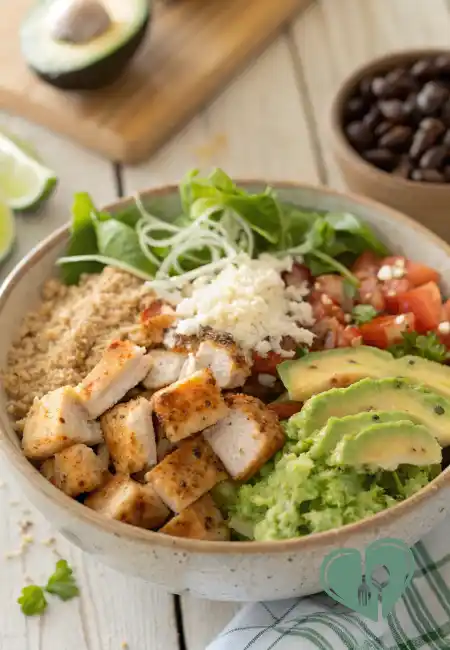

High-Fiber Quinoa Burrito Bowl for Diabetics
Ingredients
Equipment
Method
- Stir together the chipotle, olive oil, garlic powder, cumin, and salt in a small bowl.
- Add the chicken and coat well with the seasoning mixture.
- Cook the chicken in a skillet over medium heat for 6–8 minutes per side, or until fully cooked.
- Let the chicken rest for 1–2 minutes, then slice or chop.
- Prepare the quinoa if not already cooked; fluff and let it cool slightly.
- Rinse the pinto beans and warm them briefly in a small pan or microwave.
- Add quinoa and romaine to your bowl as the base.
- Top with chicken, beans, diced avocado, pico de gallo or salsa, and cheese.
- Adjust ingredient amounts to suit your taste and blood-sugar needs.
Notes
- You can prep the chicken, quinoa, and beans up to 3 days ahead to make assembly faster during busy weeks.
- If your blood sugar responds better to lower carbs, reduce the quinoa and add extra romaine or grilled veggies.
- Use store-bought pico de gallo with no added sugar for the cleanest flavor and best blood-sugar results.
- Cooling quinoa slightly before assembling keeps the romaine crisp instead of wilting.
- Swap chicken for tofu or extra beans to make the recipe vegetarian without changing the balance much.
- A squeeze of lime at the end brightens the bowl and makes the chipotle flavor come alive.
Ingredients
I always feel like ingredient lists tell a small story about how a recipe wants to behave. And this one – this High-Fiber Quinoa Burrito Bowl Recipe – reads like a meal that’s trying pretty hard not to stress you out. Nothing complicated. Nothing you have to hunt for. Just straightforward things that play nicely with your blood sugar and still let you enjoy your dinner like a normal human being.
Some days I think the real challenge of diabetic-friendly cooking isn’t the macros – it’s trying to make food that feels generous instead of restricted. This list walks that line in a surprisingly comfortable way. You get the smoky heat, the creaminess, the crunch, the fiber… it’s all there but none of it feels heavy-handed. And honestly, that balance matters more than we admit.
Anyway, here’s everything you need – exactly as you provided it, but with the kind of commentary that happens in your head when your hands are already halfway to the cutting board.
The Flavor Base
- 1 tablespoon finely chopped chipotle peppers in adobo sauce
This is your personality. It’s what keeps the bowl from tasting like a “healthy obligation.” If you’re sensitive to heat, you might hesitate here – but trust me, it mellows out once everything’s mixed. - 1 tablespoon extra-virgin olive oil
Helps carry the heat, adds that smooth mouthfeel, and gives the chicken something to cling to. - ½ teaspoon garlic powder
A quiet heavy-hitter. You don’t taste “garlic,” but you’d notice if it were missing. - ½ teaspoon ground cumin
Because without cumin, it just doesn’t taste like a burrito bowl – it tastes like a salad trying to pretend. - 1 pound boneless, skinless chicken breast
Lean, simple, reliable. The kind of protein you don’t have to overthink. - ¼ teaspoon salt
Enough to make the flavors show up, not enough to make your body complain later.
The Bowl Backbone
- 2 cups cooked quinoa
If rice bowls have ever betrayed you with a glucose spike, quinoa is the “I’ve learned my lesson” alternative. Slightly nutty, slightly chewy, and way more predictable blood-sugar-wise. - 2 cups shredded romaine lettuce
This adds the cool crunch that balances the warm chipotle chicken. Also helps you get a big bowl without loading up on carbs.
Slow-Digesting Fillers
- 1 cup canned pinto beans, rinsed
They’re humble, they’re reliable, and they make the bowl feel twice as filling while keeping digestion slow. Rinsing them keeps things lighter.
Toppings That Tie It All Together
- 1 ripe avocado, diced
Creamy, rich, stabilizing – and honestly, a lifesaver on days when you want the bowl to feel comforting. - ¼ cup prepared pico de gallo or other salsa
A little brightness cuts through the richness. If you’re store-buying, check for added sugars; they sneak them into salsa more often than you’d think. - ¼ cup shredded Cheddar or Monterey Jack cheese
Just enough to make everything feel like a real burrito bowl instead of a “diabetic version” of one.
FAQ – Will these ingredients cause blood sugar spikes?
Not when they’re combined like this. The protein, fiber, and healthy fats buffer the carbs from the quinoa and beans, making the whole bowl digest more steadily. That’s the real magic here – everything balances everything else.
Instructions
1. Season & Cook the Chicken
Stir together the chipotle, olive oil, garlic powder, cumin and salt. Add the chicken and rub everything in -it doesn’t need to be fancy. Cook it in a skillet over medium heat until it’s done (usually 6–8 minutes per side). Let it sit for a moment, then slice it however you like.
2. Get the Base Ready
Quinoa cooked? Great. Fluff it. If it’s hot, let it cool a bit so it doesn’t steam your romaine into sadness.
3. Warm the Beans
Rinse the pinto beans and warm them briefly. This part doesn’t need precision; just don’t leave them ice-cold.
4. Build the Bowl
Layer quinoa + romaine, then add chicken, beans, avocado, pico and cheese. Adjust the ratios to what your blood sugar tends to handle well – you know your body better than any recipe could.
FAQ – Can I prep the components ahead of time?
Yes, and it actually makes the bowl better for busy days. Keep the chicken, quinoa and beans in separate containers and assemble when you’re ready.
Why This High-Fiber Quinoa Burrito Bowl Works for Diabetics
A big reason this bowl works for people managing diabetes is that nothing in it rushes your system. Everything digests at a slower, steadier pace – the kind that usually leads to fewer surprises on your glucose meter. It’s not magic; it’s just smart pairing.
Quinoa brings fiber and a gentler carb profile than rice, while beans layer in even more fiber plus protein to create that slow, steady release diabetics tend to feel best with. The chicken keeps the meal grounded and genuinely satisfying, so you’re not hunting for snacks 20 minutes later. And the avocado does its quiet job too acting as a healthy-fat buffer that helps smooth out the carbs instead of letting them hit all at once. You see this same grain-plus-fiber balance at work in other bowls like High-Fiber Turmeric Veggie Grain Bowl (lunch ideas diabetes), where whole grains, vegetables, and warming spices create steady energy without overwhelming blood sugar.
What’s nice is that the bowl feels like real food – not something designed in a nutrition lab. You get flavor, texture, and actual fullness but without the usual blood-sugar spike that burrito bowls can cause when they lean heavy on rice, tortillas, or sugary sauces.
FAQ – Is quinoa actually safe for diabetics?
Yes. Most people with diabetes do well with quinoa because its fiber and protein slow absorption. It’s not “no-carb,” but it’s far more predictable than most grains – especially when paired with protein and healthy fats like in this bowl.
Add-Ons and Swaps (Simple, Flexible Tweaks)
One thing I like about this bowl is that it doesn’t lock you into a strict formula. If you’ve cooked while managing diabetes for a while, you already know your body has “good carb days” and “eh… maybe not today” days. These tweaks fit right into that reality.
Quick Low-Carb Adjustments
If you want to tone down the carbs a bit:
- Use less quinoa and fill in with more romaine or spinach.
- Swap pinto beans for black soybeans or lentils when you want something gentler.
- Add a little more chicken so the bowl stays filling.
Nothing complicated – just sliding things up and down based on how you tend to respond.
Heat-Level Tweaks
Chipotle can feel perfect one day and too much the next.
- For less heat: cut the chipotle in half or just use smoked paprika.
- For more heat: jalapeños, hot sauce, spicy salsa… whatever you normally reach for.
These don’t affect blood sugar; they just shift the personality of the bowl.
Extra Add-Ons That Still Play Nice
If you want to make the bowl feel fuller or fresher:
- A little extra avocado
- Greek yogurt (instead of sour cream)
- Grilled peppers or zucchini
- Cilantro, scallions, lime juice
If you tend to gravitate toward lighter, veggie-forward bowls, that same fresh, lemony balance shows up in Lemon-Roasted Veggie Bowl with Hummus (Diabetic-Safe Lunch), where roasted vegetables and creamy hummus create a satisfying lunch without relying on heavier proteins.
All of these keep the bowl balanced without changing how it digests.
FAQ – Will these swaps change the blood-sugar impact?
Not really, as long as you’re keeping the basic balance of protein, fiber and healthy fats. The main thing is adjusting portions in a way that matches how your body reacts.
Nutrition Breakdown
The nice thing about this Quinoa Burrito Bowl is that its nutrition profile leans naturally toward steady digestion. Nothing here is “empty,” and everything contributes to a slower, more predictable rise in blood sugar.
This same slow, steady effect shows up again and again across a variety of meals built around fiber, lean protein, and balanced ingredients like those in High-Fiber Lunch Bowls for Diabetics: Easy, Filling and Blood-Sugar Friendly.
Below is a general breakdown per serving (assuming two servings), though it will shift slightly depending on how much avocado, cheese, and quinoa you use:
- Calories: ~520–560
- Protein: ~38–42g
- Carbohydrates: ~48–52g
- Fiber: ~11–14g
- Net Carbs: ~35–40g
- Fat: ~22–26g
What matters most is the combination: carbs paired with fiber, protein, and healthy fats. That’s the part that usually leads to steadier glucose readings – especially compared to traditional burrito bowls that rely heavily on rice or tortillas.
If you adjust the bowl (less quinoa, more greens, different beans), the ratios shift, but the general “slow and steady” digestion pattern stays intact.
FAQ – Is this bowl considered low-carb?
Not exactly. It’s more “smart carb” than low-carb. The carbs it includes digest more slowly, which is often the bigger priority for blood-sugar stability.
Tips & Tricks for the Perfect Quinoa Burrito Bowl
Even though this High-Fiber Quinoa Burrito Bowl is simple, a few small choices make it noticeably better- both in flavor and in how steadily it digests. These tips aren’t fussy; they’re just the little things you only learn after making bowls like this a few times.
1. Rinse the Quinoa (Seriously, Don’t Skip It)
Even if the bag says “pre-rinsed,” rinse it anyway. It removes that slightly bitter coating and gives you fluffier grains, which makes the base feel lighter and cleaner.
2. Let the Quinoa Cool a Bit
Warm quinoa is fine – hot quinoa wilts the romaine instantly and changes the texture of the whole bowl. A quick five-minute rest helps everything stay crisp.
3. Slice the Chicken After Resting
Letting the chicken sit for a minute or two keeps it juicier. Cutting it too soon lets the moisture run out, and you feel that dryness in every bite.
4. Portion Carbs Based on Your Patterns
Everyone with diabetes has different “trigger” foods.
Some people tolerate beans better than quinoa; others find quinoa more predictable. Adjust the ratio accordingly.
5. Build the Bowl With Texture in Mind
A good bowl should hit a few textures at once – warm, cool, creamy, crunchy.
Quinoa + romaine + avocado + salsa gives you that without much effort.
6. Add Acid for Balance
A quick squeeze of lime or splash of vinegar keeps the bowl from feeling heavy and helps the flavors pop.
7. Make the Components Ahead
Quinoa, beans, chicken – all of them store well. If you prep the components once, assembling the bowl later is basically effortless.
FAQ – How long can I store the components?
Keep the chicken and quinoa in airtight containers for up to 3–4 days. Avocado should be cut fresh, but everything else holds up well for meal prep.
Conclusion
It’s funny how some meals just settle into your routine without you planning for it. This High-Fiber Quinoa Burrito Burrito Bowl is one of those dishes – the kind you make once because you’re curious, and then again because your body felt steady afterward, and then again because it’s just… easy. Easy to cook, easy to adjust, easy to trust.
You get the comfort of something warm and hearty, but you don’t get that familiar “uh-oh” feeling some bowls come with. It’s balanced in a way that doesn’t call attention to itself – the protein, the fiber, the healthy fats all working quietly in the background so you can just eat without overthinking.
If meals like this become part of your weekly rotation, you might find it helps to see the bigger picture of steady, fiber-forward lunches that make blood sugar less dramatic day after day. That bigger framework is laid out in The Ultimate Guide to High-Fiber Diabetes-Friendly Lunches, with practical ideas, variations, and simple ways to keep this balance working no matter what your week looks like.
If anything, I hope this becomes one of those meals you return to on the nights when you’re tired of monitoring and measuring and just want dinner to behave. And honestly, you can keep tweaking it – more greens, less quinoa, extra heat, no heat – whatever your body tends to respond best to.
Whenever you’re ready to make it again, you’ll already know exactly why it works.

Dreena shares balanced, diabetes-friendly recipes made for real life—simple, nourishing, and full of flavor. Her kitchen is where health meets heart.