
I’ll be honest when I first started looking for vegetarian and plant-forward low-carb crockpot meals, I didn’t expect much. Everything I found was either too carby, too bland, or just didn’t feel like real food. You know that feeling when a recipe checks the “healthy” box but leaves you hungry or bored halfway through the week? Yeah. That.
For anyone managing Type 2 diabetes, food gets personal fast. You start reading labels like detective notes second-guessing every “healthy” grain and wondering why dinner feels like a math problem. I remember thinking, there’s no way I can keep this up and still enjoy what I eat. But then slowly, almost accidentally I realized the crockpot could change everything.
There’s something almost forgiving about slow cooking. It gives tofu time to absorb every bit of spice. Cauliflower softens into something creamy, not soggy. Even a handful of tempeh turns into a kind of protein-packed comfort I didn’t think plant food could pull off. Suddenly, meals weren’t just low-carb they were something I actually looked forward to eating.
This isn’t about restriction. It’s about rhythm that balance between flavor, blood sugar, and a bit of joy at dinnertime. So, if you’ve been stuck between wanting to eat more plants and needing to keep carbs in check, you’re in the right place. Let’s talk about how to make it all work protein, veggies, texture, and all one slow, simmering meal at a time.
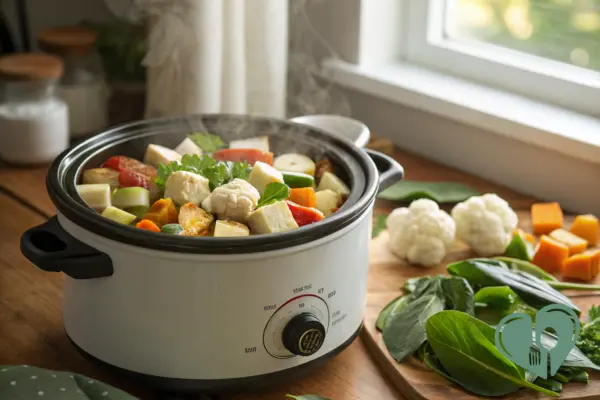
Protein Challenges in Vegetarian Diabetic Diets
Here’s the honest truth: getting enough protein on a vegetarian diabetic diet can feel like walking a tightrope. You think you’ve nailed it you’ve got lentils simmering, quinoa on standby, maybe a sprinkle of nuts for good measure and then you check your glucose levels. Up they go. It’s maddening isn’t it? You’re doing everything “right,” yet your blood sugar says otherwise.
The real problem isn’t willpower; it’s the math hidden inside plant foods. Most vegetarian protein sources come bundled with carbs nature’s little two-for-one deal that doesn’t work in your favor when you’re trying to stay low-carb. Lentils? Packed with fiber, yes, but also starch. Chickpeas? Great texture, still heavy on carbs. Even quinoa, the darling of every “healthy” recipe, can nudge your numbers up if you’re not careful.
After a while, it stops being about nutrition and starts feeling personal like your own body’s working against you. That’s where many of us trip up: we assume protein equals animal products, and plants just can’t compete. But that’s not the whole story. tofu, tempeh, seitan, and even humble edamame are quietly powerful when you give them a chance. They hold up under slow heat, soak in flavor, and deliver that satisfying “bite” we often miss in plant-based meals.
And maybe that’s what we’re all really craving not just balance on a chart, but something that feels substantial. Protein doesn’t just build muscle it anchors a meal. Without it everything else even the healthiest vegetables starts to feel like background noise. the challenge isn’t just finding plant proteins; it’s learning how to make them sing.
FAQ: Can vegetarians get enough protein on a low-carb diabetic diet?
Yes but you’ll need to be intentional. Stick with lower-carb options like tofu, tempeh, or seitan (if gluten’s okay for you). Layer them with fiber-rich veggies broccoli, spinach, zucchini and finish with a drizzle of healthy fat to slow digestion. It’s not about perfection. It’s about steady energy and food that feels like it belongs on your table not a diet plan.
Best Low-Carb Plant Proteins (Tofu, Tempeh, Pea Protein)
It took me a while to admit this but I used to think plant-based protein was kind of… boring. Or worse, complicated. Every recipe I found either involved fifteen steps or tasted like cardboard. Then I started paying attention to the ingredients that quietly do the work tofu, tempeh, and pea protein. Nothing fancy, just reliable building blocks that hold a meal together when you’re trying to keep carbs low and flavor high.
Let’s start with tofu. It’s not exciting at first glance pale, quiet, almost shy but give it a little love, and it becomes something you actually crave. The trick is texture and time. A good press, a solid marinade and the patience to let your crockpot do its slow, steady magic. By hour four tofu stops pretending to be bland it’s tender, almost creamy, soaking up whatever spices or sauces you’ve paired it with. For diabetics, it’s kind of a dream: barely any carbs, solid protein, and that satisfying heft that tells your stomach, yeah, this is dinner.
Tempeh, though, that’s the one with attitude. It’s nutty, dense and has this quiet tang from fermentation that just feels alive in your mouth. I like slicing it thin, letting it sit in a sauce tomato, coconut milk, maybe a bit of chili paste if I’m feeling bold and letting the crockpot take over. Six hours later, you’ve got something meaty without being meat. It’s oddly grounding, the kind of food that makes you slow down a bit while you eat.
And then there’s pea protein not the powdered gym kind (though that works too in a pinch), but the subtle stuff you can sneak into soups, stews, or even sauces. It doesn’t fight for attention; it just quietly boosts your protein without changing the flavor. think of it as the behind-the-scenes helper especially useful on days when your meal leans a little too veggie-heavy and you need that extra staying power.
Why Pea Protein Works So Well in Slow-Cooked Meals
There’s something about slow heat that makes flavors mellow, like they’ve all agreed to get along. Pea protein plays nice it thickens the sauce just a little, adds that whisper of richness that tricks your brain into thinking there’s cream involved. No sugar spike, no heavy feeling after. Just balance.
FAQ: Is soy safe for diabetics?
For most people, yes especially in its less-processed forms like tofu or tempeh. Soy gets a bad rap sometimes, but these versions have a low glycemic index and plenty of protein that helps keep blood sugar steady. Just keep an eye on pre-flavored or marinated varieties they can sneak in added sugars faster than you’d expect.
Combining Veggies for Balanced Macros
Here’s something I wish someone had told me early on: not all vegetables play nicely together at least, not when you’re trying to keep your blood sugar steady. Some act like slow-burning fuel; others behave like tiny sugar grenades. The trick isn’t giving anything up it’s learning which ones belong side by side, and when to let the crockpot do the work for you.
Cauliflower was my first real win. It’s plain, sure, but that’s its superpower. It takes on whatever you throw at it garlic, curry paste, coconut milk and turns it into comfort food. I’ll toss it in the bottom of the slow cooker, where it can soften and soak everything up. By the time dinner’s ready it’s rich, almost buttery, without adding a single gram of guilt. Pair it with spinach or kale and suddenly you’ve got a meal that feels grounding, not heavy.
Zucchini’s another quiet hero. It doesn’t fight for attention it just fills the gaps. I like to slice it thin and let it blend into stews or tomato-based sauces. It adds volume, warmth and this kind of velvety texture that makes you forget it’s mostly water. And mushrooms oh, mushrooms they bring that chew, that umami depth that plant-based meals often miss. Together, they hit that sweet spot: fiber, flavor, and texture that feels real.
The secret, honestly, is in layering. Heavier veggies like broccoli, cauliflower, or eggplant go low close to the heat while the softer ones, like zucchini or peppers rest on top. That way nothing turns into that dreaded mush. You end up with layers of flavor and color instead of a beige blur. It’s small details like this that make plant-based low-carb cooking feel less like math and more like art again.
Smart Swaps That Actually Work
- Swap potatoes for cauliflower same comfort, fewer carbs.
- Skip pasta and try thin ribbons of zucchini or eggplant.
- Trade beans for chopped mushrooms or tempeh to keep the heft.
- Use yellow squash instead of corn when you want a hint of sweetness.
FAQ: Which vegetables should diabetics limit in crockpot meals?
I wish it were simpler, but yeah some veggies deserve moderation. Corn, peas, carrots, and white potatoes can creep up your carb count fast, especially when slow-cooked (that heat brings out their natural sugars). I still use them sometimes, just in smaller amounts like a spoonful for color, not a full cup. You don’t have to ban them, just let them play supporting roles, not leads.
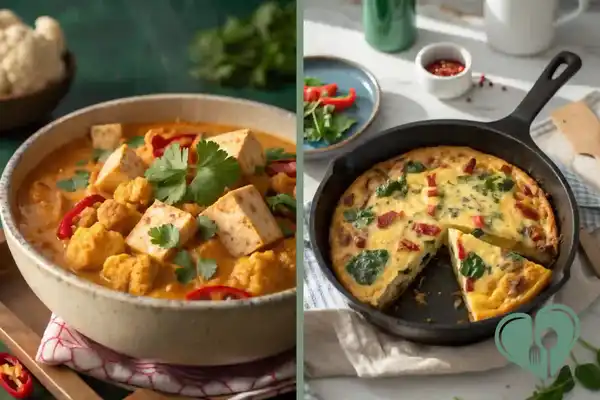
Recipe Highlights: Tofu Cauliflower Curry And Crockpot Breakfast Frittata
The Tofu And Cauliflower Curry wasn’t planned. I wasn’t trying to write a recipe that day I just wanted dinner to be easy. You know that kind of evening where you’re tired of thinking about carbs, tired of checking numbers and you just need something that makes the kitchen smell like you’re doing okay? That’s how it started.
There was tofu, a head of cauliflower, coconut milk, and a spoonful of curry paste. That’s all I had energy for. I threw it together and left it. Hours later, the house smelled like something you’d want to come home to deep, spicy, a little sweet. The tofu had gone soft and rich, the cauliflower turned to velvet. It wasn’t fancy. But it felt like care. That’s what surprised me most that comfort can come from food that doesn’t knock your body off balance.
The Breakfast Frittata happened the same way. Not inspiration more like fatigue. I was skipping breakfast too often because everything “healthy” felt complicated or sweet. One night, I cracked eggs into the slow cooker with leftover spinach and peppers and didn’t think twice. The next morning, I woke up to that smell the kind that feels like someone thought of you. It wasn’t pretty, but it was warm, solid, ready. And that felt… enough.
Those two recipes ended up teaching me more about balance than any nutrition chart. They made me stop rushing. They reminded me that food doesn’t have to be perfect to feel like peace. Some meals just meet you where you are.
FAQ: Can you freeze vegetarian crockpot meals for later?
You can and you should. The curry tastes even deeper the next time, like it’s had a chance to rest. The frittata freezes fine too slice it, wrap it, warm it slowly when you need it. There’s comfort in that, too knowing that something good is already waiting for you, even on the hard days.
Tips for Texture & Flavor in Slow Cooking
I used to think the slow cooker did all the work. You toss everything in, walk away, and come back to dinner simple, right? Except it wasn’t. The vegetables turned to mush, the sauce lost its spark, and I’d sit there wondering why something that smelled so good could taste so tired. It took a few failed batches to realize flavor isn’t automatic. It’s earned slowly, like trust.
Now, I start with what can handle the heat. Cauliflower, onions, tofu they go first, right at the bottom where it’s hottest. The softer stuff, the spinach, the zucchini, even the peppers they wait. Sometimes I don’t add them until the end, When everything else has already found its rhythm. The difference is small but it changes everything. You stop ending up with soup when you wanted stew.
Seasoning’s another thing people rush. I used to dump it all in at once salt, herbs, everything like front-loading a story. But slow cooking dulls flavors; it rounds them off. Now I season in stages. A pinch at the start another somewhere in the middle, a little flourish near the end. It’s almost musical small layers that build instead of blur.
And then there’s brightness. That tiny, final thing that wakes the whole meal up. A squeeze of lemon, a spoon of vinegar, even just fresh herbs tossed on top. Without it, crockpot food can feel heavy, like it’s been sitting too long in its own comfort. But that hit of acid it’s a reminder that the dish, like you, still has life in it.
There’s something poetic about the way slow cooking mirrors everything else the patience it asks for, the way it forgives mistakes if you stay gentle. You can’t rush tenderness whether in food or in how you treat yourself. I’ve learned that the best flavor often comes when you stop trying so hard and just let time do its quiet work.
Supplementing with Plant Protein Powders
Sometimes even when the flavor’s right the balance isn’t. You finish the meal and feel… not full, exactly but incomplete. That’s when I stir in a spoonful of unflavored pea or hemp protein near the end. Not earlier it clumps. Near the finish, though, it melts into the sauce, thickens it slightly and suddenly the dish feels grounded again.
FAQ: Why do my crockpot vegetarian meals taste flat?
Because time alone doesn’t make flavor. Add layers. Let your vegetables cook in their right order. And don’t forget the finish salt, acid, something alive at the end. You’ll know it when you taste it; the food stops being background and starts speaking again.
Vegetarian and Plant-Forward Low-Carb Crockpot Meals: Finding Comfort in Balance
I didn’t plan for this way of eating to feel comforting it just sort of happened over time. The more I leaned into these vegetarian and plant-forward low-carb crockpot meals, the more I realized I wasn’t chasing perfect numbers anymore. I was chasing calm. Food that didn’t punish me meals that didn’t make me anxious, flavors that felt like they belonged in my life.
Slow cooking did that for me. Not overnight it took a few burned edges, some bland dinners, a lot of patience I didn’t think I had. But something changed once I stopped trying to make “diabetic food” and started just making food that made sense for me. Tofu, cauliflower, eggs, greens they stopped being ingredients on a list and became something like old friends. Reliable. Predictable in the best way.
And maybe that’s the real comfort here. Not the recipes themselves, but the rhythm of them how they let you slow down, how they give you space to get it wrong and still end up with something warm at the end. That feels like balance. Not perfect control, not giving up just the middle ground that’s finally livable.
So no, it’s not just about what’s in the pot. It’s about what happens while it cooks – that small exhale you didn’t know you needed, the quiet hum in the background that says, you’re doing fine.

Dreena shares balanced, diabetes-friendly recipes made for real life—simple, nourishing, and full of flavor. Her kitchen is where health meets heart.