
Lunch can be strangely tricky when you’re trying to keep blood sugar steady – not because it’s complicated, but because it often catches you in the middle of everything else. That’s partly why this high-fiber turmeric veggie grain bowl works so well: it’s quick, it’s flexible, and it leans on ingredients most of us already have waiting in the fridge or freezer.
Turmeric adds that warm, almost comforting note, and even though people sometimes treat it like a “health halo” spice, it genuinely brings something useful to the table: a subtle anti-inflammatory nudge and a flavor that makes simple veggies taste more intentional. And honestly, using frozen vegetables or leftover grains isn’t a culinary shortcut – it’s what makes the bowl doable on real-life days.
If you’ve ever felt stuck between wanting something nourishing and not wanting to fuss with a full recipe, this bowl sits in that middle ground. High fiber helps smooth out those midday highs and lows, the dressing comes together in a minute and the whole thing feels steadying without being heavy. That’s the main idea here: lunch that supports you without demanding much from you.
Let’s start with the turmeric part, because understanding why it works makes the bowl feel a little more purposeful.

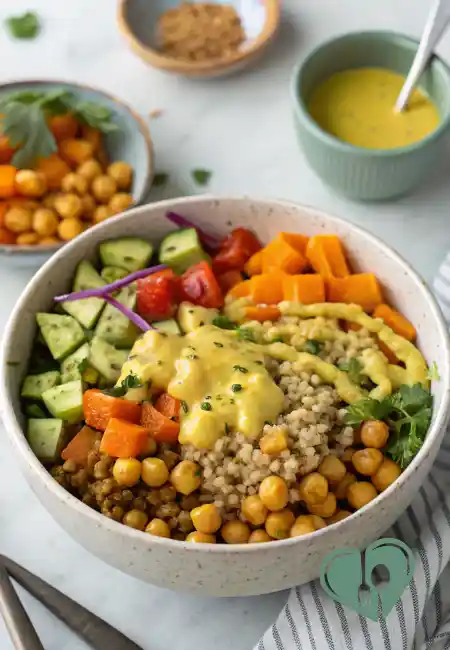

High-Fiber Turmeric Veggie Grain Bowl
Ingredients
Equipment
Method
- Add the cooked quinoa to a mixing bowl and fluff with a fork.
- Add the chopped veggie mix. If frozen, thaw or warm slightly.
- Add the rinsed chickpeas and gently mix everything together.
- Pour the creamy turmeric salad dressing over the bowl.
- Toss until everything is evenly coated.
- Taste and adjust with extra dressing if desired.
- Serve immediately or chill for later.
Notes
- You can enjoy this bowl warm or cold. Warm bowls bring out more turmeric flavor, while cold bowls feel fresh and quick.
- Frozen veggies work just as well as fresh. If using frozen, soften them briefly so the bowl mixes easily.
- Add-ins like seeds or extra beans boost fiber and help keep blood sugar steadier.
- If the dressing seems thick, thin it with a splash of water or lemon juice before tossing.
- This recipe stores well for 2–3 days in the fridge, but add dressing right before serving if you want to keep the texture crisp.
- For extra protein, add grilled chicken, tofu, or more chickpeas.
- This bowl is naturally vegetarian and can be made vegan depending on the dressing you choose.
Why Turmeric Is a Great Add-On
Turmeric has this quiet way of making a simple bowl feel a bit more intentional. It doesn’t need a long pitch – a small spoonful adds warmth, color, and a sense that you’re doing something good for your body without making lunch feel like a project. In a high-fiber grain bowl, that gentle earthiness helps tie everything together, especially when the veggies and grains are pretty neutral on their own.
For people managing blood sugar, turmeric isn’t a magic fix, but it can support the “overall calm” you want after eating. Pairing fiber-rich grains with a spice known for helping reduce inflammation creates a kind of steady, grounded energy that just feels easier on the body. And honestly, sometimes the psychological side matters too – adding turmeric feels like a small, positive step, even on days when you’re not eating perfectly.
Flavor-wise, turmeric can lean a bit bitter on its own, but in a dressing with lemon and olive oil, it softens. It becomes more of a warm backdrop than a loud spice. If you’ve ever tried turmeric in something and thought, “Hmm… not sure,” a creamy or tangy dressing is usually the fix. It blends, it mellows, and it just works.
Anti-inflammatory benefits
Turmeric’s anti-inflammatory reputation mostly comes from curcumin, its bright yellow compound. It’s not dramatic but it may help calm the background inflammation that many people with diabetes deal with. And because curcumin absorbs better with fat and a pinch of pepper, using it in a dressing is almost unintentionally ideal – you get the benefit without having to think about it.
FAQ – Is turmeric really noticeable in the flavor?
Not as much as you’d think. In dressings, turmeric becomes mild and warm rather than sharp or bitter. Most people say they taste “brightness” more than “turmeric,” especially once it’s mixed into a veggie bowl.
Ingredients
Here’s the thing about this bowl: the ingredients are simple because lunch should feel easy, not like a whole negotiation with yourself. These four items work together without needing prep marathons or mental energy – which, let’s be honest, is half the battle on busy days.
First up, two (8-ounce) packages of cooked quinoa. Using pre-cooked quinoa almost feels like cutting a corner, but the good kind – the kind that makes you wonder why you ever bothered cooking it from scratch on a weekday. It’s already fluffy, already done, and it brings that steady, high-fiber base that keeps you from crashing halfway through the afternoon.
Then there’s the 16-ounce container of chopped veggie mix. This is the ingredient that saves you when you open the fridge and realize you don’t have the bandwidth to chop anything. Fresh or frozen, colorful or mostly green – it doesn’t matter. There’s something comforting about grabbing one container and knowing the decision-making is basically done for you. It’s like the vegetables are saying, “Hey, we’ve got you.”
Now for the 15.5-ounce can of chickpeas, rinsed. Chickpeas are that quietly reliable friend – not flashy, not demanding, but always there when you need them. They add protein fiber and a soft bite that balances the grains and veggies. And the ease of opening a can and rinsing it? That alone is enough reason to keep them around.
And finally, the bowl’s personality comes from ½ cup creamy turmeric salad dressing. This is what makes everything taste intentional. The dressing brings warmth, color, and just enough richness to make the bowl feel like something you wanted to eat – not something you’re forcing yourself to be “good” about. Without it, the bowl is fine. With it, the bowl is… well, lunch you’ll look forward to.
Frozen or fresh veggies
Use whatever feels doable today. Frozen if you’re tired. Fresh if you want crunch. There’s no wrong choice – the bowl doesn’t depend on perfection; it depends on convenience and fiber, both of which you get either way.
Grain base
The cooked quinoa keeps everything grounded. It’s steady, mild, and plays well with the turmeric dressing. And because it’s ready to go, you skip the whole “should I bother cooking a grain right now?” internal debate.
FAQ – Can I change any of these ingredients?
Absolutely. Swap quinoa for brown rice or farro, change up the veggies, or use black beans instead of chickpeas. The only thing I’d keep the same is the turmeric dressing – it’s the glue of the whole bowl. You can also try High-Fiber Quinoa Burrito Bowl for Diabetics for another filling, blood-sugar-friendly option. Or try the Simple Grain-Bean-Greens Bowl (Diabetic Lunch Base) for another easy, blood-sugar-friendly option.
Steps
The nice thing about this bowl is that the “steps” barely feel like steps. It’s more like putting a few things together in whatever order makes the most sense in the moment. Some days you’ll warm everything; other days you’ll just assemble it cold and call it a victory. There’s no ceremony here – just a meal that comes together quickly and tastes like you actually took care of yourself even if it only took five minutes.
Start with the quinoa. If it’s one of those days when warm food feels grounding, heat it up. If not, leave it cold – it works both ways. Spread it out in the bowl just so you don’t end up with all your veggies sinking to the bottom. Then grab your chopped veggie mix. Fresh or frozen, there’s no moral high ground here. If it’s frozen, give it a quick steam or microwave so it’s not icy if it’s fresh just toss it right in. Honestly, the moment you open the container, it already feels like you’ve cut your effort in half.
Now add the chickpeas. They don’t ask for anything extra – no seasoning, no special treatment. They slide right in and suddenly the bowl feels substantial. There’s something reassuring about that tiny moment of “Oh, this is actually going to be filling.”
The dressing is the part that ties everything together and you’ll feel it the second you drizzle it on. The turmeric adds warmth without trying too hard, and the creaminess makes the bowl feel like more than a pile of healthy ingredients. If you want everything perfectly coated stir it. If you prefer little pockets of flavor – keep it layered. There’s no wrong move.
Chopping tips
If you’re using fresh veggies and chopping them yourself, keep things small – small enough that you don’t have to fight with your fork. Uneven pieces are totally fine. This isn’t a cooking show it’s lunch. And if you start chopping and instantly regret it, frozen veggies exist for a reason.
Making the dressing
Since the creamy turmeric dressing is already made your only job is to get it into the bowl. If it feels thick add a splash of water or honestly just go with it. The richness works. Drizzle it over everything and let the warmth of the turmeric settle in. It’s amazing how much flavor comes from such a small step.
FAQ – Does the bowl taste better warm or cold?
It depends on your mood. Warm bowls feel cozy and make the turmeric pop more. Cold bowls feel fresh and effortless. Most people end up switching back and forth without really thinking about it.
Optional Add-Ins
The nice thing about this bowl is that you can shape it depending on how you’re feeling that day. Maybe you want it a bit heartier, maybe you want more crunch, or maybe you just want to use up the odds and ends sitting in your fridge Optional add-ins make the bowl feel personal without turning lunch into a whole project. Think of them as small upgrades – nothing dramatic, just those little touches that make you feel like you put in a bit of care.
What’s especially useful for anyone managing blood sugar is how these add-ins shift the bowl’s balance naturally. A few extra beans? More fiber and staying power. A sprinkle of seeds? A tiny hit of healthy fats that slows digestion just enough. It’s not about reinventing the recipe it’s more like adjusting the mood of the meal.
And honestly, some days these add-ins are less about nutrition and more about making the bowl feel a little less predictable – a tiny way to keep lunch from getting boring.
Beans
Even though you already have chickpeas in the bowl, adding another type of bean can change the feel in a really satisfying way. Black beans bring a deeper, earthy flavor; white beans make everything a little softer and creamier. It’s also a practical move – if you’ve got half a can left from another recipe, tossing it in here saves it from getting lost in the fridge Beans are one of those ingredients that quietly make a meal more filling without you having to think too hard about it.
Seeds
Seeds are the easiest way to add texture without adding prep time. Pumpkin seeds give you that satisfying crunch, sesame seeds add a subtle nuttiness and hemp or chia seeds sort of melt in without announcing themselves. They’re tiny, but they do a surprising amount to make the bowl feel “finished.” And because seeds bring healthy fats to the party, they help the bowl keep you full longer – which matters more on those days when lunch has to carry you through a chaotic afternoon.
FAQ – Should I mix them in or leave them on top?
It really depends on what you want. Mixing them in gives every bite a little something extra. Leaving them on top keeps things crunchy. Most people switch back and forth without thinking about it – which is exactly how add-ins should feel.
Nutrition
What makes this bowl feel so steady and dependable is the way its ingredients naturally balance each other out. Instead of thinking about nutrition in a strict or numbers-heavy way, you get a meal that quietly supports you – especially if blood sugar stability is on your mind. It’s the kind of lunch where you realize a few hours later that you’re not crashing, not starving, not jittery. Just… steady.
Quinoa does most of the groundwork. It’s a fiber-rich slow-digesting grain with enough protein to make the bowl feel substantial without weighing you down. It’s gentle on blood sugar and gives the bowl that long-lasting fullness people often struggle to find at lunchtime. For more ideas on easy, filling, and blood-sugar-friendly lunch bowls, check out High-Fiber Lunch Bowls for Diabetics: Easy, Filling and Blood-Sugar Friendly
Your veggie mix adds bulk, color, and the kind of fiber that helps keep digestion calm and predictable. You don’t need to overthink which veggies are “best” – almost any mix will boost volume and help prevent the quick spikes that come from low-fiber meals. It’s a simple equation: more vegetables, more stability. For a complete guide to high-fiber, diabetes-friendly lunch ideas, see The Ultimate Guide to High-Fiber Diabetes-Friendly Lunches
Chickpeas deepen the fiber and protein side of things. They’re small but surprisingly filling, and they round out the bowl so it doesn’t feel like a carb-heavy meal pretending to be balanced. Chickpeas help slow everything down – in a good way.
Then there’s the creamy turmeric dressing, which adds healthy fats and warmth. The fat helps your body absorb nutrients and slows digestion slightly the turmeric offers a mild anti-inflammatory lift. Nothing dramatic – just a quiet support system built into the flavor.
Altogether, the bowl creates that “comfortable fullness” that doesn’t swing your energy in weird directions. And sometimes that’s all you want from lunch: something that holds you without dragging you down.
FAQ – Is this bowl too high in carbs?
It has carbs, yes – but they’re paired with plenty of fiber and protein, which makes a big difference. Most people find this kind of combination leads to steadier energy compared to low-fiber meals.
Conclusion – Enjoying Your High-Fiber Turmeric Veggie Grain Bowl
At the end of the day, this high-fiber turmeric veggie grain bowl isn’t about perfection – it’s about having one meal in your back pocket that feels good, tastes good, and doesn’t make lunchtime harder than it needs to be. There’s something really refreshing about a recipe that doesn’t ask for special tools, hours of chopping, or a long grocery list. you just put a few simple things together add the turmeric dressing, and suddenly you’ve got a bowl that feels steadying in a way you can actually feel.
What I love most is how forgiving it is. If you’re tired, it still works. If you want something warm and grounding, it works. If you just need a quick, blood-sugar-friendly lunch to get you through the afternoon without crashing, it definitely works. And maybe that’s why people end up making bowls like this over and over – they don’t require you to be “on,” they just meet you where you are.
If you ever feel like tweaking it – more crunch, more beans, more veggies – go ahead. This bowl doesn’t fall apart if you change it. But even as-is, it’s enough. Simple, steady, and surprisingly comforting for something made in just a few minutes.

Dreena shares balanced, diabetes-friendly recipes made for real life—simple, nourishing, and full of flavor. Her kitchen is where health meets heart.