
If you’ve ever tried to put together a “diabetic-friendly” lunch and ended up frustrated, you’re not alone. One day it’s too carb-heavy, the next day it’s basically a sad salad that leaves you hungry by 3 p.m. This simple grain-bean-greens bowl exists to take that pressure off. It’s not a one-off recipe – it’s a reliable lunch base you can return to without overthinking every bite.
The idea is straightforward but surprisingly effective: pair a whole grain with beans and greens so your body processes the meal more slowly and steadily. Instead of sharp blood sugar spikes followed by crashes, this combination supports smoother digestion, longer-lasting fullness, and more predictable energy. It’s the kind of lunch that quietly does its job – no extremes, no food rules, just balance that actually holds up in daily life.
This article will walk you through why this bowl works, how to build it, and how to adapt it without breaking its blood-sugar-friendly structure. Whether you’re managing diabetes, prediabetes, or simply trying to avoid that post-lunch slump, this bowl gives you a practical place to start – and stay. If you want more ideas for high-fiber, diabetes-friendly lunches that actually keep your blood sugar steady, check out The Ultimate Guide to High-Fiber Diabetes-Friendly Lunches.
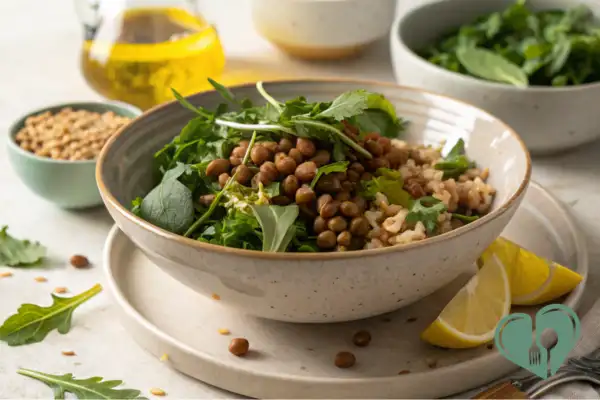
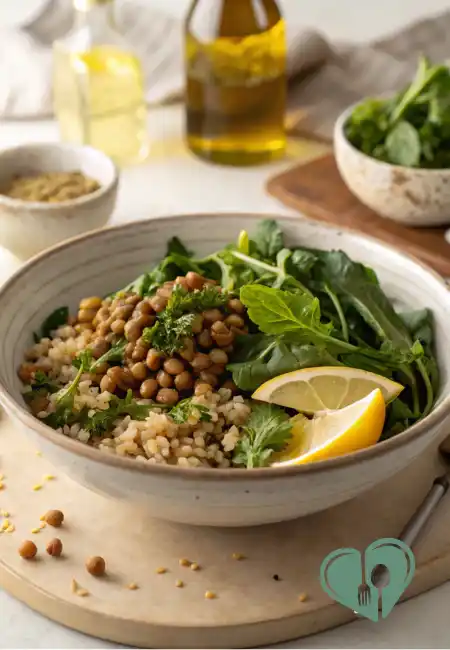

Simple Grain-Bean-Greens Bowl
Ingredients
Equipment
Method
- Cook the whole grain according to package instructions until tender but still slightly chewy. Set aside.
- Prepare the beans. If using canned beans, rinse and drain well. If using home-cooked beans, make sure they are fully cooked and soft.
- Wash and prepare the greens. Leave tender greens raw, or lightly sauté or steam heartier greens until just wilted.
- Assemble the bowl by adding the cooked grain, beans, and greens to a mixing bowl.
- Drizzle with olive oil and add lemon juice or vinegar, if using. Season lightly with salt and pepper.
- Taste and adjust seasoning as needed. Serve warm or at room temperature.
Notes
- This grain-bean-greens bowl is designed as a flexible base, not a rigid recipe. Swap grains, beans, or greens based on preference, season, or what you have on hand.
- For the best blood sugar response, choose intact whole grains and well-cooked beans. Softer, fully cooked legumes are often easier to digest.
- Lentils tend to be gentler than larger beans if digestion has been an issue.
- Greens can be eaten raw or lightly cooked. Cooking heartier greens often makes the bowl more comforting and easier to tolerate.
- This recipe works well for meal prep. Cook grains and beans ahead of time and assemble fresh when ready to eat.
- Flavor matters. A small amount of acid (lemon juice or vinegar) and fat (olive oil or tahini) helps make the bowl more satisfying and balanced.
- Nutrition values are estimates and may vary depending on ingredient choices and portion sizes.
Why This Combo Helps Stabilize Blood Sugar
At first glance, a bowl with grains and beans might seem risky for blood sugar. That reaction makes sense – we’ve been trained to look at carbs in isolation. But the real story is how foods behave together, once digestion actually starts. This grain-bean-greens bowl works because it slows the entire process down, turning what could be a spike into a gentle rise and fall.
The key player here is fiber, and not just “a little fiber,” but fiber from multiple sources hitting the gut at the same time. Whole grains bring structure and slow-burning carbohydrates. Beans add both soluble fiber and plant protein, which thicken digestion and delay glucose absorption. Greens add volume and micronutrients with almost no blood sugar cost. When combined, these foods create a kind of metabolic traffic calming – nothing rushes through too fast.
There’s also a hormonal angle that doesn’t get talked about enough. Slower digestion supports more stable insulin signaling and better satiety cues. In practical terms, that means fewer sudden hunger waves and less mental noise around food later in the afternoon. Many people notice they stop “white-knuckling” it between lunch and dinner once meals like this become routine. It’s not willpower – it’s physiology finally working with you.
Fiber layering and glucose absorption
One useful way to think about this bowl is fiber layering. Instead of relying on a single high-fiber food, you’re stacking moderate amounts from grains, legumes, and greens. This layering increases viscosity in the digestive tract, which physically slows how quickly carbohydrates are broken down into glucose. The result is a flatter blood sugar curve, not a dramatic peak followed by a crash. For more high-fiber lunch ideas that keep blood sugar steady, see High-Fiber Lunch Bowls for Diabetics: Easy, Filling and Blood-Sugar Friendly
This matters especially for lunch, when stress hormones and activity levels can already make glucose harder to manage. A meal that digests slowly acts like a buffer giving your body time to respond without overcorrecting.
FAQ: Why not just eat protein to control blood sugar?
Protein helps but it doesn’t replace fiber. Protein can blunt spikes but without enough fiber, glucose can still enter the bloodstream quickly. This bowl uses fiber as the foundation, with protein as a supporting stabilizer – not the other way around.
Ingredients
This bowl isn’t about exact measurements or “perfect” choices. Think of it as a loose formula you can rely on when you’re tired of guessing what will work for your blood sugar. As long as these three core pieces are present, the bowl does what it’s meant to do – even on low-effort days or when you’re using leftovers.
Whole grain (choose one):
- Brown rice
- Quinoa
- Farro
- Barley
- Any other intact, chewy whole grain
Beans or legumes (choose one):
- Lentils (often the easiest to digest)
- Chickpeas
- Black beans
- Kidney beans
- Pinto beans
Greens (choose one or a mix):
- Spinach
- Kale
- Swiss chard
- Arugula
- Collard greens
Greens can be raw or lightly cooked – whatever makes the bowl feel satisfying without feeling heavy.
Optional extras (use lightly):
- Olive oil, avocado, or tahini
- Lemon juice or vinegar for brightness
- Garlic, fresh herbs, or spices to keep things interesting
FAQ: What if I don’t like one of these foods?
That’s completely fine. This bowl isn’t about specific ingredients – it’s about categories. Swap within the category and move on. The structure matters more than the individual food, and that flexibility is what makes this sustainable long term.
Steps
Think of this less as a set of instructions and more as a rhythm you fall into. Once you’ve made this bowl a couple of times, you’ll stop “following steps” and start assembling it on autopilot – which is kind of the point.
- Cook the grain first
Make your chosen grain the way you normally do, aiming for soft but still a little chewy. That texture matters more than people realize – it helps the meal feel substantial instead of mushy. If you’re cooking extra let it cool and store it. Having cooked grain ready turns this bowl into an easy default instead of a project. - Handle the beans
Use whatever makes sense that day. If they’re home-cooked, great. If they’re from a can, rinse them well and move on. Beans don’t need much babysitting here – just make sure they’re fully cooked and comfortable to eat. Warm them up if you want a cozier bowl, or leave them cool if you’re short on time. - Deal with the greens your way
This is where preference really comes in. Some days raw greens feel fresh and light; other days you want something warm and soft. A quick sauté, a short steam, or no cooking at all – all of it works. Let the greens match your mood and the season. - Build the bowl
Add the grain, spoon in the beans, then layer on the greens. Drizzle a little fat, sprinkle whatever seasoning you like, and don’t overthink the order. You’re aiming for balance, not presentation. - Pause and adjust
Take a bite before you sit down. If it tastes flat, add acid – lemon or vinegar usually fixes it fast. A pinch of salt or extra herbs can pull everything together. When the bowl tastes good, it’s far more likely to actually satisfy you.
Once the components are ready, this comes together faster than deciding what else to eat – and it’s a lot more predictable in how it makes you feel afterward.
FAQ: Can I meal prep this bowl?
Yes, and honestly, that’s where it shines. Cook grains and beans once or twice a week, keep the greens separate, and assemble when you’re ready. It stays flexible, doesn’t feel stale, and still feels like a real meal.
Variations
This is usually the part where things either stick… or slowly fall apart. Not because the bowl stops working, but because eating the exact same thing over and over eventually feels like a chore. Variations are what keep this from becoming “that healthy lunch you used to make.”
What helps is remembering that you’re not changing the rules, just the vibe. The grain-bean-greens structure stays the same, so your blood sugar response stays fairly predictable. But the flavors, textures, and even the temperature can shift enough that the bowl still feels appealing. That balance – familiar but not boring – is what makes this sustainable.
Some days you’ll want something warm and grounding. Other days lighter and sharper. You don’t need a plan for all of it. You just need a few directions you recognize when you’re standing in the kitchen thinking, What do I even feel like right now?
Here are a few easy paths people tend to fall into naturally:
- Mediterranean-style
Farro or barley, chickpeas, spinach or arugula, olive oil, lemon, maybe some herbs if you have them - Mexican-leaning
Brown rice, black or pinto beans, greens sautéed with cumin, finished with lime and cilantro - Earthy and comforting
Barley or brown rice, lentils, kale or collards, garlic, olive oil – simple, warm, filling - Lighter and fresher
Quinoa, lentils, mixed greens, lemon, a small drizzle of tahini
If beans have ever felt like a gamble digestion-wise, lentils are often the easiest place to land. And if a full portion feels like too much on a given day, you can scale beans down slightly and lean more on greens. The bowl still holds together – it just feels gentler.
FAQ: Can I add extra protein or toppings?
You can, and sometimes you’ll want to. Just keep an eye on when add-ons start crowding out the base. A little extra protein or fat can help with satisfaction, but once toppings become the focus, blood sugar responses can get less predictable. When in doubt, let the bowl stay the main character.
Nutrition
This bowl isn’t impressive on paper. If you’re expecting a dramatic macro split or a bold promise, it’ll probably disappoint you. What it does instead is show up quietly, day after day, in how your body feels after lunch – which, honestly, is where nutrition actually matters.
Most versions of this grain-bean-greens bowl end up high in fiber without you trying to make that happen. The fiber comes from different places at the same time, and that seems to matter more than chasing a big number. Digestion slows down. Blood sugar rises more gently. Things don’t feel rushed or chaotic inside. You eat, you feel fed, and then… you move on with your day.
What people usually notice first isn’t a number – it’s the absence of problems. No sudden crash. No weird hunger an hour later. No low-grade anxiety about whether lunch “worked” or not. The bowl has enough volume and texture that your body seems to accept it as a real meal, not something it needs to compensate for later.
Nutritionally, it covers a lot of quiet basics. Greens bring minerals your body uses constantly but rarely asks for loudly. Beans add fiber and plant protein that keep things steady. Whole grains give energy that lasts longer than you expect. None of this feels dramatic in the moment, but over time it adds up to meals that feel calmer and more predictable – which is a big deal if blood sugar has ever felt like a moving target.
FAQ: Is this bowl good for weight loss with diabetes?
For many people, yes – but not in a “diet” way. This bowl doesn’t push weight down directly. What it does is remove some of the conditions that make weight loss hard: blood sugar swings constant hunger, and the mental fatigue of managing food all day. When lunch actually holds you, eating later tends to feel simpler. If weight changes happen, they usually happen slowly – and that’s often why they last.
Conclusion: Why the Grain-Bean-Greens Bowl Works Long Term
This grain-bean-greens bowl isn’t about eating ‘perfectly’ or following rigid rules. It’s about giving yourself a lunch that behaves well – one that keeps blood sugar steadier, hunger quieter, and decision-making simpler. Once you have this base in your routine, lunch stops feeling like a daily puzzle and starts feeling predictable in a good way. You can change flavors, rotate ingredients, and adapt it to real life, ( You can change flavors, rotate ingredients, and adapt it to real life – for a vibrant, spiced option, see High-Fiber Turmeric Veggie Grain Bowl (lunch ideas diabetes) ) knowing the structure still works. And for most people, that reliability is what makes healthy eating actually stick – see Mediterranean & Plant-Based High-Fiber Lunches for Diabetics for more ideas.

Dreena shares balanced, diabetes-friendly recipes made for real life—simple, nourishing, and full of flavor. Her kitchen is where health meets heart.