
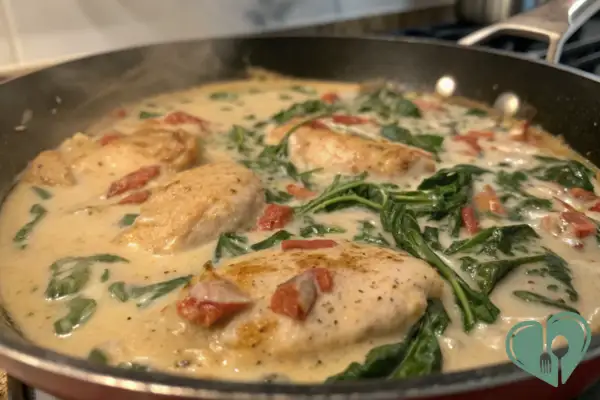
Some nights you just want something creamy. Not light. Not clever. Just warm and filling and normal. And if you deal with blood sugar stuff, that want usually comes with hesitation. You start wondering if it is even worth it. Sometimes you end up eating something boring instead. That gets old fast.
This is one of those meals that does not feel like a workaround. Low-Carb Creamy Tuscan Chicken shows up like real dinner. The kind you would make even if no one told you to be careful. It smells good. It tastes rich. It does not feel like it is trying to behave.
A lot of creamy recipes lie a little. They look fine on the plate, then you realize later something was off. Too much starch. Too many hidden carbs. You feel it after. This one does not do that. It stays simple. Chicken. Cream. Flavor. That is kind of it.
I am not going to pretend this is magic or perfect. It is just food that works better than most. It fills you up. It does not leave you hunting for snacks an hour later. That matters more than people admit.
You do not need to think too hard while making it. You should not have to. Cooking like this should feel calm. Familiar. Like you have made something similar before, even if you have not.
Anyway. Let’s get into it before I overthink it.
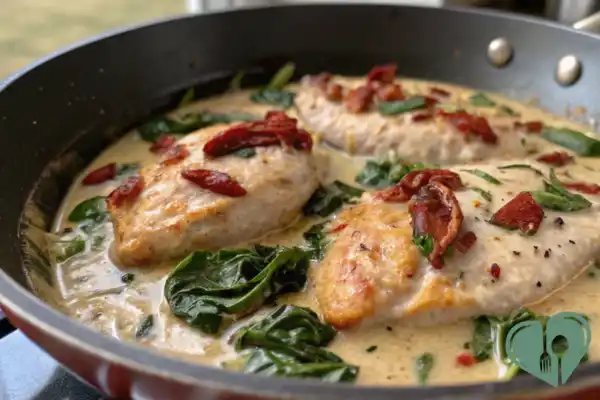
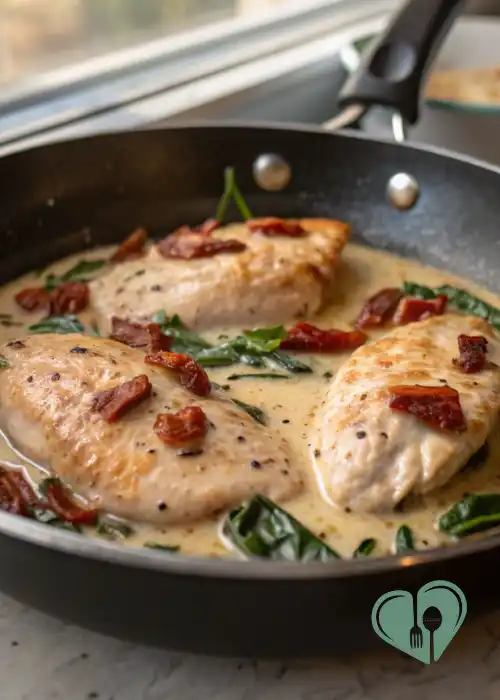

Low-Carb Creamy Tuscan Chicken (No Flour)
Ingredients
Equipment
Method
- Heat the olive oil in a large skillet over medium heat.
- Season the chicken with salt and pepper on both sides.
- Place the chicken in the pan and cook without touching it for a few minutes until it browns. Flip and cook the other side. Once cooked through, remove it from the pan and set aside.
- Lower the heat slightly. Add the garlic and stir for about 20 seconds, just until it smells good.
- Pour in the heavy cream slowly while stirring. Let it warm gently. Do not let it boil.
- Add the sun dried tomatoes and stir them into the sauce.
- Add the spinach and let it wilt down. This takes about a minute.
- Stir in the parmesan a little at a time until the sauce thickens.
- Return the chicken to the pan and spoon the sauce over it. Let everything simmer together for 2 to 3 minutes.
- Taste and adjust seasoning if needed. Turn off the heat and let it sit briefly before serving.
Notes
- This sauce thickens as it cools. If it looks a little loose in the pan, give it a minute before adjusting anything.
- Keep the heat gentle once the cream goes in. High heat is usually what causes problems.
- Chicken thighs stay more forgiving, especially if you get distracted. Breasts work, just watch them.
- Fresh parmesan melts better and tastes better. The packaged stuff works in a pinch, but the texture will be different.
- If the sauce feels too thick, a small splash of water or broth fixes it fast.
- This reheats best on the stove over low heat. Stir slowly. Microwaving too hard can mess with the sauce.
- Taste at the end. Always. The salt level changes once everything comes together.
Why This Creamy Chicken Works for Blood Sugar
I used to think creamy food automatically meant trouble. Like, you eat it and then you wait. You know what I mean. You start paying attention to how you feel instead of enjoying the meal. This one does not play out that way.
The main reason is pretty boring, honestly. Protein and fat do most of the work here. Chicken fills you up. Cream slows things down. Nothing rushes through your system. That pacing matters more than people realize. When food hits too fast, that is when things get weird. That kind of steady response is exactly why meals like this often end up in collections of easy diabetic dinner ideas people can actually stick with.
There is also nothing here trying to fake thickness. No flour. No starch pretending to be helpful. That stuff usually sneaks in quietly and causes problems later. When you skip it, the dish stays steadier. The sauce still feels rich. It just behaves better.
I know some recipes love to overexplain this part. Carb counts. Charts. Long warnings. I am not going to do all that. This is more about how it feels after you eat. Full, but not heavy. Satisfied, but not sleepy. You are not scanning your body for signs you messed up.
This is why it fits naturally into low-carb diabetic dinners without feeling like one. It is just dinner. You eat it. You move on. No damage control.
What Actually Helps Here
- The chicken does the anchoring. It keeps hunger in check.
- The fat slows digestion instead of spiking it.
- The sauce stays smooth without needing thickeners.
- Portions feel natural, not forced.
You could eat a normal plate of this and stop. That alone says a lot.
What People Usually Worry About
Cream scares people. I get it. It has a reputation. But cream on its own does not act like sugar or flour. It does not rush. It hangs back. That difference changes everything. Especially if you are eating it with protein instead of carbs.
Spinach and tomatoes show up for flavor, not bulk. They add something without tipping the balance. You notice them, but they do not take over.
Quick Question That Comes Up a Lot
Will this spike blood sugar anyway?
For most people, it does not. Not when eaten as intended. Chicken, sauce, no starch on the side. Everyone reacts a little differently, sure. But this one is about as calm as creamy food gets.
If you have ever avoided meals like this out of habit, this might surprise you. In a good way.
Ready to look at what actually goes into it?
Ingredients (And Why They Are Here)
I am just going to list these first, then talk around them a bit. Because that is how most people actually read recipes. You scan. Then you decide if it feels doable.
You will need chicken thighs or breasts. Either works. Thighs stay juicier. Breasts are fine if that is what you keep around. Heavy cream. Garlic. Sun dried tomatoes. Spinach. Parmesan. Olive oil. Salt. Pepper. Maybe a little Italian seasoning if you like that sort of thing.
That is it. Nothing sneaky.
The chicken is the backbone. Without it, this dish falls apart. It is what makes the meal feel finished instead of snacky. You want a decent portion. Not a sad one. When people cut protein too hard, everything else goes sideways later. If you lean toward simpler skillet dinners, something like Garlic Butter Chicken follows that same protein first approach without the creamy sauce.
Cream is where people pause. I get messages about this all the time. Is it too much. Is it risky. Should it be swapped. Honestly, cream behaves differently than people expect. It does not rush. It sits. It carries flavor. That matters more than numbers on a label. Also, you are not drinking it. It is part of a sauce.
Garlic is non negotiable. Do not skimp. It makes the whole thing smell like something you actually want to eat. Same with the sun dried tomatoes. You only use a small amount, but they punch through the richness. Without them, everything tastes flat.
Spinach is there because it makes sense. It wilts down to almost nothing. Adds color. Adds a little bitterness. You do not need to overthink it. Fresh works best, but frozen will not ruin anything if that is what you have.
Parmesan is optional, but also not really optional. It thickens the sauce naturally and gives it depth. Use real grated if you can. The powdery stuff technically works, but it does not melt the same way. You will notice.
Salt and pepper should be added slowly. Taste as you go. This sauce changes as it cooks. What tastes fine early can end up dull later.
That is the whole list. No flour. No starch. No substitutions trying too hard to be clever.
A Small Question People Ask
Can I swap ingredients and still have it work?
Yes, within reason. Different greens are fine. Different cuts of chicken are fine. Just do not remove the fat and expect the same result. That is where people usually get disappointed.
Next up is how to actually cook it without drying the chicken or breaking the sauce.
Step by Step Instructions (Without Overthinking It)
This is one pan. That already helps. Fewer dishes means you are less annoyed before you even eat. Heat the pan first. Medium heat. Add a bit of olive oil. Not too much. Just enough so the chicken does not stick and ruin your mood.
Season the chicken. Salt. Pepper. Do it properly. Then put it in the pan and leave it alone. This part matters. If you keep poking it it will not brown and you will feel cheated later. Let it cook until the bottom looks good then flip. Same thing on the other side. Once it is cooked through pull it out and set it aside. Do not worry if it is not perfect. It will go back in.
Lower the heat a little. Add garlic. Stir it around for a few seconds. Not minutes. Garlic burns fast and burnt garlic ruins everything. If it smells good, you are on time. If it smells sharp, you waited too long.
Pour in the cream. Slowly. Stir as you go. This is not the moment to rush. Let it warm up not boil. If it starts bubbling hard, turn the heat down. You want calm heat here. That is how the sauce stays smooth.
Add the sun dried tomatoes. Stir. Then the spinach. It will look like too much. It always does. Give it a minute. It collapses. It always does.
Now add the parmesan. A little at a time. Stir until it melts. This is where the sauce thickens. If it feels too thick, a splash of water or broth fixes it. If it feels thin, just wait. It catches up.
Put the chicken back in. Spoon sauce over it. Let everything sit together for a couple of minutes. Taste. Adjust salt and pepper. This is your last chance to fix things easily.
Turn off the heat. Walk away for a minute. The sauce settles. The chicken relaxes. That pause helps more than people think.
Common Question Right Here
Why does my sauce sometimes break?
Usually heat. Too high, too fast. Cream likes patience. Keep it gentle and it behaves.
Next up, options if you want less dairy without wrecking the whole thing.
Dairy Light Options (If You Need Them)
Sometimes cream is fine. Sometimes it is not. Not because of rules, just because bodies are annoying like that. Or the fridge is empty. Either way, you have options. Just keep expectations realistic.
Half and half is the easiest swap. It makes a thinner sauce. Still good. Just not as rich. You might miss that coating feeling on the chicken, but the flavor holds. You will want to simmer it a bit longer and keep the heat low. It needs more patience.
Coconut cream works too. Not milk. Cream. The thick part. It brings a faint coconut thing with it. Some people love that. Some people hate it. There is no in between. If you are unsure this might not be the night to experiment. But texture wise, it behaves well. If you prefer a dairy based option with a deeper savory flavor instead of coconut, something like Creamy Mushroom Chicken keeps that same low-carb, skillet dinner feel.
Cashew cream is another option. Blend soaked cashews with water until smooth. It thickens nicely. Feels creamy. The taste is quieter. Almost neutral. The downside is effort. This is not a lazy swap. If you are already tired, maybe skip it.
What usually does not work well is low fat milk. It looks fine at first, then it falls apart. The sauce goes thin. Or grainy. Or both. People try to save calories here and end up disappointed. It is rarely worth it.
If dairy bothers you a little but not a lot, you can also just use less cream. Add a splash of broth to stretch it. That alone changes how heavy the dish feels without changing the core of it.
Quick Question That Comes Up
Will these swaps change the way it feels after eating?
Yes. A bit. Lighter dairy usually means less fullness. That is not good or bad. Just different. You might notice hunger sooner. Plan accordingly.
Next, let’s talk about how to serve this without accidentally undoing all the good choices.
Serving Tips (So You Do Not Ruin It at the Table)
This part matters more than people think. You can cook everything right and then undo it in two minutes with the wrong side dish. It happens all the time.
First thing. Portions. You do not need a mountain of this. A normal plate is enough. The sauce is rich. The chicken fills you up faster than you expect. If you go back for seconds, fine. Just pause first. Give it a minute. This dish catches up to you. If you like dinners where the portion is already built in, something like Stuffed Bell Peppers follows the same steady idea without needing anything extra on the side.
What you put under it matters. Cauliflower mash works. Zucchini noodles too. Even just a bowl with nothing underneath is fine. The sauce is not begging for pasta. It really is not. Once you spoon it over something starchy, the whole balance changes. And not in a good way.
Bread is the usual trap. Someone always wants to mop up the sauce. I get it. It smells good. But if this meal is about staying steady, bread is where things slide sideways. If you really want something on the side, roasted vegetables do the job without causing drama.
Timing matters too. This is better eaten fresh. Not piping hot. Not cold. Somewhere in the middle. When it cools just a bit, the sauce thickens and clings better. The flavors settle. Rushing it straight from pan to plate makes it feel looser than it should.
Leftovers are fine. Reheat slowly. Low heat. Stir gently. If you blast it, the sauce gets weird. Add a splash of water if it looks tight. That usually fixes it.
One Question People Ask Late
Can I prep this ahead and eat it later?
Yes. Just keep it simple. Store the chicken in the sauce. Reheat gently. Do not microwave it into submission. Slow and patient works better here.
That is pretty much it. Nothing fancy. Just a few choices that keep the meal feeling good after you are done eating.
FAQs (The Stuff People Usually Ask Quietly)
Can I freeze this?
You can. It is not perfect after but it is fine. The sauce might separate a little when you reheat it. That happens. Stir it slowly over low heat and it usually comes back together enough. If it looks odd at first give it a minute. Do not panic and crank the heat.
Does this taste heavy?
It tastes rich, yes. Heavy, not really. There is a difference. You feel full, but not stuck. Most people expect it to sit like a brick and are surprised when it does not. That is kind of the point.
Can I make it spicier?
Sure. Red pepper flakes work. Add them early if you want warmth throughout. Add them late if you just want a little kick on top. Just do not overdo it. Heat can drown out everything else fast.
What if I hate sun dried tomatoes?
Then skip them. Seriously. This is not sacred. You can add mushrooms instead. Or nothing. The sauce still works. The chicken still works. The world keeps turning.
Is this something kids will eat?
Depends on the kid. If they like creamy chicken, probably yes. If they are suspicious of anything green, maybe pick the spinach out first. Or not. Sometimes they surprise you.
That is everything people usually ask before making this. And some things they ask after. If something feels unclear, it usually works itself out once you start cooking. This is not a fragile recipe. It is forgiving. Which is honestly why people keep coming back to it.
When Dinner Doesn’t Need Extra Effort
That is it. Nothing more hiding behind this recipe. No extra rules. No special tricks waiting at the end.
If you make it once, you will probably tweak it next time. A little more garlic. Less spinach. Different pan. That is normal. That is how this kind of food sticks around.
Some meals feel like a project. This one does not. It fits into real evenings. The tired kind. The hungry kind. The kind where you want dinner to work and then get out of the way. If you are building a weekly routine, browsing a few easy diabetic dinner ideas can make that rotation feel a lot less repetitive.
If you try it and something feels off, adjust it. If it turns out better than expected, keep it in rotation. That is usually how the good ones earn their spot.
Alright. That is enough talking about dinner.

Dreena shares balanced, diabetes-friendly recipes made for real life—simple, nourishing, and full of flavor. Her kitchen is where health meets heart.