
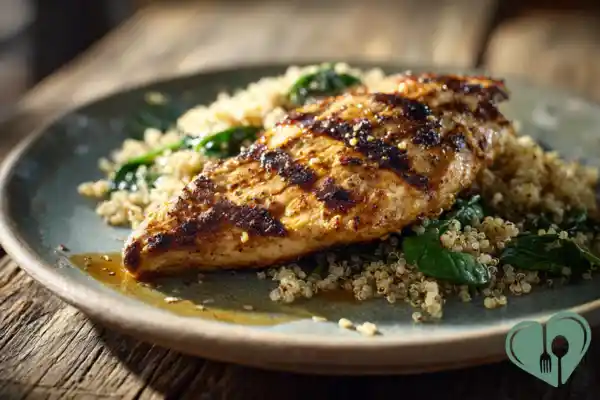
Grilled chicken with quinoa and spinach sounds like one of those meals you see on lists of easy diabetic dinner recipes and immediately assume it will be boring. Not bad just dull. Like food you eat because you are supposed to. A plate you finish without really noticing it.
I have made a lot of versions like that. Most were forgettable. Dry chicken happens fast. Quinoa turns into this bland filler if you are not paying attention. Spinach usually gets tossed on at the end and called balance. It works, technically. It just does not feel like dinner.
This one came from being tired of that feeling. Wanting something that still fits into a balanced plate meal but does not feel like it is watching you eat. Something you could make on a regular night, not just on your best, most disciplined day. You cook it, you sit down, you eat and that is it.
I am not trying to make this impressive. Or clever. It just needed to be reliable. Something that does not spike things, but also does not leave you restless an hour later. The kind of healthy grilled chicken recipe that quietly does its job without asking for attention.
Before getting into ingredients or steps or any of that it helps to slow down and look at what this plate is even trying to be. Not perfectly. Just realistically. That part tends to get skipped, and it probably should not.
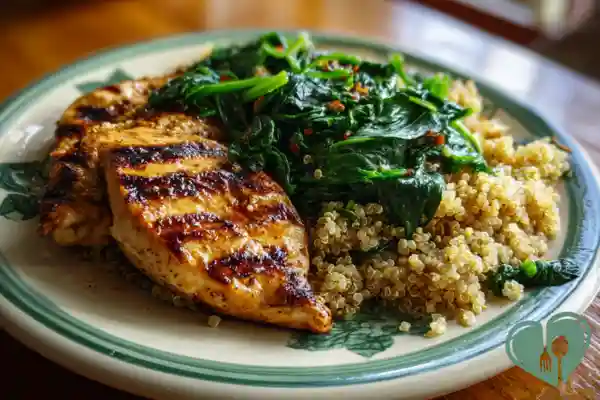
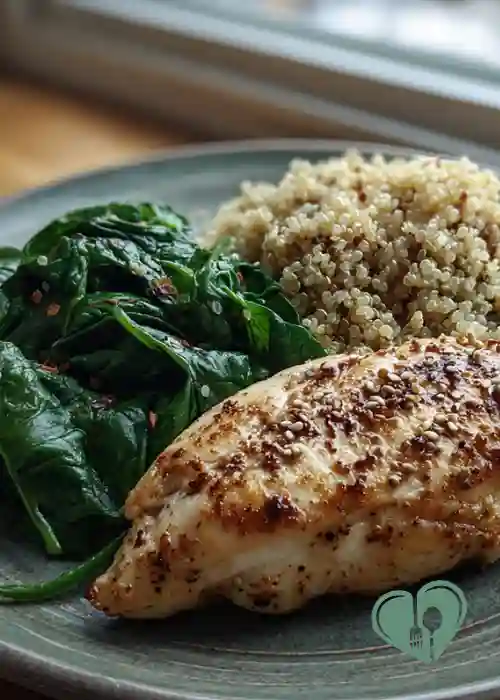

Grilled Chicken with Quinoa and Spinach
Ingredients
Equipment
Method
- Rinse the quinoa under cold water. Put it in a saucepan with water and a pinch of salt. Bring it up, then lower the heat. Lid on. Let it cook without messing with it.
- While that’s going, pat the chicken dry. More than you think you need to. Rub it with olive oil, salt, pepper, and whatever seasoning you’re using.
- Heat a grill pan or grill until it’s properly hot. Place the chicken down and leave it alone. Don’t move it right away. Let it cook until it releases on its own.
- Flip the chicken and cook the other side until done. Cooking time depends on thickness. When it’s finished, take it off the heat and let it rest for a few minutes.
- Check the quinoa. When the water is gone, turn off the heat and let it sit with the lid on. Fluff it when you’re ready to serve.
- Heat a pan with a small amount of oil. Add the spinach and a pinch of salt. Stir just until it wilts, then stop.
- Plate everything. Chicken, quinoa, spinach. However it lands is fine.
Notes
- Chicken dries out fast if you rush it. Let the pan get hot and then leave it alone.
- Quinoa tastes better if you salt the water. More than you think, but not a lot.
- Spinach looks like too much until it isn’t. That’s normal.
- If everything feels bland, it probably needs salt, not more ingredients.
- This reheats fine, but it’s better the first night. Especially the chicken.
- Portions don’t have to be exact. Close is close enough.
- If you’re tired, keep it plain. Flavor experiments can wait.
What a Balanced Plate Meal Looks Like for Diabetes
People talk about a balanced plate meal like it is a diagram taped to a fridge. Half this. Quarter that. Very official. In real life it is usually messier. Plates are not round in theory, they are round on your table. Food touches. Portions drift a little. “That same balanced structure is why meals like Stuffed Bell Peppers work so well when you want everything built into one steady, portioned dish.”
With grilled chicken with quinoa and spinach, the balance is mostly visual at first. You can see it. A solid piece of chicken taking up space. Not tiny. A scoop of quinoa that looks reasonable, not generous and not sad either. ” On nights when you want that same steady protein without even a measured scoop of grain, Turkey Lettuce Wraps usually hit the mark.” Spinach filling the rest of the plate because it can, because it shrinks anyway, and because volume helps more than people admit.
Protein does a lot of the quiet work here. ” That protein-first structure is why plates like this often show up in high-protein diabetic dinners built for steadiness instead of speed.” Chicken keeps things steady longer. You notice it later, not right away. You are not crashing. You are not pacing around thinking about snacks. That matters more than hitting some perfect number.
Quinoa is where people get nervous. It shows up in easy diabetic dinner recipes all the time and still gets side eyed. It is a carb. Yes. It is also predictable if you stop treating it like a free for all. A measured scoop is different than a mound. When it sits next to protein and fiber, it behaves differently. That sounds vague, but most people feel it.
Spinach is the part everyone ignores. It should not be ignored. It makes the plate feel full. It slows you down while eating. You chew more. You notice texture. It gives you that sense that you ate an actual meal instead of assembling nutrients.
Nothing here is strict. That is kind of the point. Balanced does not mean fragile. ” That mindset is usually what people are looking for when they explore balanced diabetic dinner ideas that feel realistic instead of rigid.” You are not ruining dinner if the quinoa scoop is a little bigger one night or the chicken is thicker than usual. The pattern matters more than the exact edges.
Some nights this plate looks neat. Other nights it does not. Both count. The goal is not control, it is repeatability. A healthy grilled chicken recipe only works if you want to make it again. If the plate feels reasonable, you probably will.
This is the part people skip because it feels obvious. It usually is not. Once the plate makes sense, the rest of the cooking decisions get easier. Portion questions calm down. You stop second guessing every bite.
Ingredients for a Healthy Grilled Chicken Recipe
This is the part people usually skim. Then they mess it up later and blame the recipe. So I am going to slow it down a bit. Not in a precious way. Just honest.
You do not need a long list here. That is kind of the relief. Chicken. Quinoa. Spinach. A few things to make them taste like something. If your pantry is already half decent, you are probably fine.
Chicken first. Boneless, skinless works best. Thighs or breasts, both are fine. Breasts are leaner. Thighs are more forgiving. Pick based on how tired you are that day. Thickness matters more than cut. Very thick pieces cook unevenly and dry out faster if you rush them.
Quinoa is next. Plain. No pre flavored packets. Those usually sneak in sugar and salt in weird ways. White quinoa is the easiest. Red and tri color are fine too, just a little firmer. Measure it dry. That part matters even if you do not love measuring things.
Spinach feels like an afterthought ingredient but it should not be. Fresh is better than frozen here. Baby spinach if you want it mild. Regular spinach if you like a little bite. It looks like too much when it is raw. That is normal. It shrinks. Every time.
Then there is the flavor layer. Olive oil. Salt. Pepper. Garlic, fresh or powdered. Maybe lemon. Maybe paprika. Nothing dramatic. You are not building complexity, you are making sure the food does not taste flat. That is it.
Some people add extras. Onion. A little vinegar. Herbs if they are already in the fridge. That is fine. Just do not turn this into a project. Easy diabetic dinner recipes fall apart when they start asking too much.
The ingredient list should feel calm. Like you are not committing to anything big. If it already feels annoying, the meal will not stick.
Once everything is out on the counter, cooking gets simpler. Fewer decisions. Less second guessing. That is where this recipe actually starts to work.
How to Cook the Chicken, Quinoa, and Spinach
I usually put the quinoa on first because if I don’t, it ends up being the thing I rush later. Rinse it. Sometimes I skip it and then remember why people say not to. Water, salt, lid. Low heat. It just sits there. I try not to mess with it. When the water’s gone, I turn it off and leave it alone. It finishes itself if you give it a minute. If you don’t, it still works. Just not as nice.
Chicken is next. Dry it more than feels necessary. I never do this enough. Oil. Salt. Pepper. Whatever else you feel like grabbing. Heat the pan until it feels a little too hot. That part matters. Put the chicken down and don’t touch it. This is the hardest part. I always think something is wrong. It usually isn’t.
When it releases, flip it. If it doesn’t release, it’s not ready. Thickness decides how long it takes and that’s annoying but real. I check one piece and go from there. If it’s done, I pull it. If it’s close, I pull it anyway. Resting fixes more mistakes than people admit.
Spinach goes last because it barely counts as cooking. Hot pan. Small amount of oil. Spinach in. Salt. Stir until it collapses and stop. If it turns dark and watery, you waited too long. It still eats fine. Just not great.
Then everything goes on the plate. No rules. Chicken wherever it lands. Quinoa scooped, not packed. Spinach filling the empty space. If it looks like something you’d actually eat without thinking too hard, it’s fine.
This is usually where I start wondering if I took too much quinoa or not enough, which is why that part needs its own moment.
Quinoa Portion Control Without Feeling Deprived
This is the part where people get weird. Not out loud. Just in their head. Quinoa shows up on the plate and suddenly it feels risky. Like you need to justify it. Or apologize for it. That mindset ruins dinner fast.
I measure quinoa dry. Not because I love rules. Because if I don’t, the scoop keeps growing. A half cup dry for a couple meals. Roughly. I am not precious about it. Once it’s cooked, I scoop it loosely. I do not pack it down. I do not smooth it out to look neat. That is when it starts feeling like punishment.
The trick, if there is one, is what it sits next to. Quinoa on its own feels like too much. Quinoa next to chicken and spinach feels different. ” The same idea shows up in meals like Baked Cod with Lentils, where protein and legumes balance each other without feeling heavy.” You eat slower. You chew more. The plate looks full even if the quinoa portion isn’t huge. That matters more than numbers.
Some nights I take a little more. Usually when I am extra hungry or dinner is late. Other nights I take less and do not notice. That is normal. The goal is not to hit the same portion every time. It is to stay in the same neighborhood.
People overthink this and then quit. They think portion control means leaving the table unsatisfied. It does not. If you finish the plate and feel calm instead of restless, the portion was fine. If you are already thinking about food again ten minutes later, something was off.
I stopped trying to make quinoa behave like a villain or a hero. It is just part of the plate. Treated normally, it usually acts normal too.
Flavor changes things here as well. Bland quinoa makes you want more of it. Seasoned quinoa lets you stop sooner. That part gets ignored a lot.
This is also where people start asking questions they did not think they would ask, especially once they try it a few times. That usually comes up next.
Flavor Variations That Still Make Sense
This is where things usually drift off course. Someone gets excited. Suddenly there’s honey, or a bottled sauce, or six spices that have not been touched since last year. That is how a simple plate turns into something you stop making.
Small changes work better. Swapping one flavor at a time. Lemon instead of garlic. Paprika instead of pepper. That kind of thing. You notice it, but it does not turn into a whole new meal you have to relearn.
For the chicken, dry spices are easiest. Paprika. Cumin. A little chili powder if you like heat. Nothing sweet. Or just salt and pepper and call it done. Sometimes that is enough. Marinades are fine, but only if they are simple. Oil, acid, salt. Anything sticky usually burns or turns the chicken weird.
Quinoa takes flavor better than people think. Cooking it in broth instead of water changes it more than adding things later. A squeeze of lemon after it cooks helps. A pinch of salt again at the end too. Quinoa tastes flat when it is under seasoned, and flat food makes you keep eating.
Spinach does not need much. Garlic if you are in the mood. A splash of vinegar. Maybe a little red pepper flake. Too much and it stops tasting like anything. That happens fast.
Some nights I keep everything plain and add flavor at the table. Pepper grinder. Lemon wedge. Hot sauce. That way everyone adjusts their own plate and no one complains. It also means leftovers do not taste locked into one idea.
The main thing is not turning this into a project. If a variation makes you hesitate before starting dinner, it is probably not worth it. Simple is why this plate sticks around.
People usually start wondering about storage and leftovers around here. Or whether this holds up for meal prep. That question comes up almost every time.
FAQs That Come Up Every Time
Can I make this ahead or does it fall apart?
You can make it ahead. It holds up better than people expect. Chicken dries a little but not in a tragic way. Quinoa is fine. Spinach is the weakest link. I usually keep it separate if I care. Sometimes I don’t.
How long does it last in the fridge?
A few days. Three, maybe four. After that it still smells fine but I start hesitating, which usually means I won’t eat it anyway. Trust that feeling.
Can I swap quinoa for something else?
Yes. Brown rice works. Farro too. Even potatoes if you portion them like an adult. The plate idea stays the same. Just don’t turn the swap into a whole personality.
Does this actually keep you full?
Most of the time, yes. If it doesn’t, it usually means the protein was too small or dinner was late. Or you were already tired. Food can only do so much.
Is this okay for people who aren’t watching blood sugar?
Yeah. No one notices. That’s kind of the point. It just looks like dinner.
What if I mess it up?
You probably will at least once. Everyone does. It still eats fine. Perfection was never the goal here.
That’s usually where the questions stop and people just start making it their own. Or they forget about it for a while and come back to it later. That happens too.
Last Thing
That’s really it. This is not meant to be special food. It is just something that works when you are tired of thinking about dinner. You make it. You eat it. You move on with your evening.
Some weeks you will make it exactly like this. Other weeks you won’t. You will forget about it for a while, then remember it on a random Tuesday when nothing else sounds good. That is usually when recipes earn their place.
If it helps keep dinner calm and predictable, that is enough. If it tastes decent and does not feel like a chore, even better. Everything else is noise.

Dreena shares balanced, diabetes-friendly recipes made for real life—simple, nourishing, and full of flavor. Her kitchen is where health meets heart.