
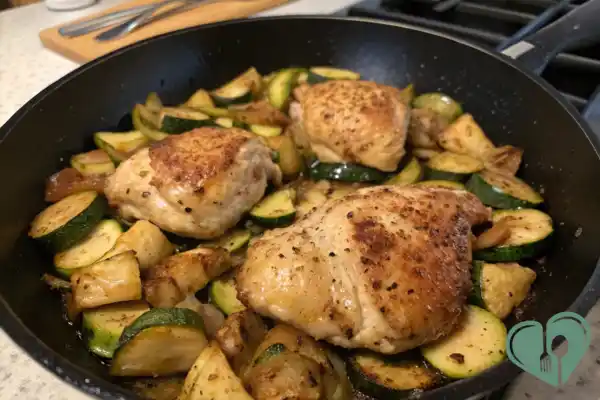
Some nights you open the fridge and just stand there. Not thinking much. Just tired. You want food, but not a project. Not a sink full of pans. That is where this one-pan chicken and zucchini dinner usually shows up for me. It is basic. Almost boring. And that is kind of the point.
It is chicken. It is zucchini. One pan. You cut a few things, throw them in, season them however you feel like that day. Or not much at all. The pan goes on the heat. You wait. That is it. No bouncing between steps. No extra bowls that somehow appear out of nowhere. The cleanup stays small, which matters more than it should.
I keep coming back to meals like this because they do not demand anything from me. They fit when the day has already taken enough. They also do not feel like “diet food,” even though they work for people looking for practical advice inside an easy diabetic dinner guide. It just feels like dinner. Normal dinner. The kind you make without thinking too hard. Normal dinner. The kind you make without thinking too hard.
This is not the meal you make to impress anyone. It is the one you make because you want to eat and move on with your evening.It works on busy nights. It works when you do not feel like deciding anything. That is exactly why it fits so well into weeknight diabetic meals that are meant to be simple and repeatable. And honestly, that is usually when I need a recipe the most.
Let’s just get into it.
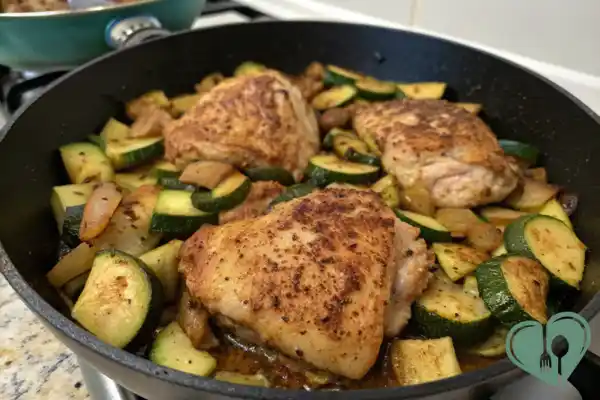
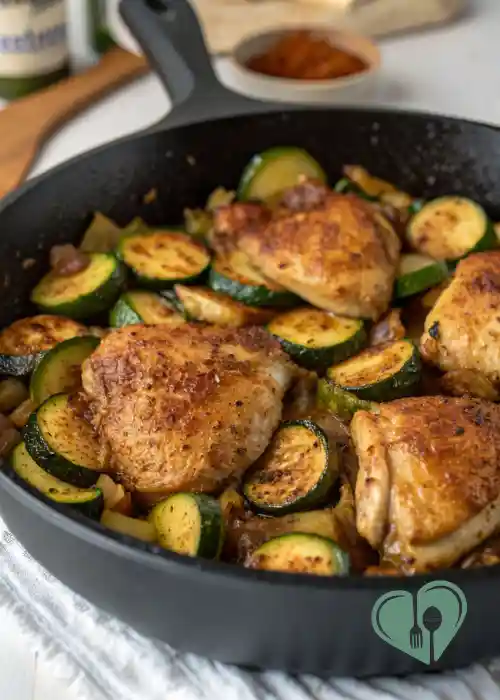

One-Pan Chicken and Zucchini Dinner
Ingredients
Equipment
Method
- Heat a large pan over medium heat. Add olive oil and let it warm up.
- Add the chicken to the pan. Spread it out and leave it alone for a few minutes so it cooks.
- Flip or stir the chicken once it starts looking cooked on the outside. Season with salt and pepper.
- Add the zucchini to the pan. Stir everything together so it gets coated in oil.
- Let it cook, stirring once in a while, until the chicken is cooked through and the zucchini is soft but not mushy.
- Taste and adjust seasoning if needed. Turn off the heat and serve.
Notes
Why One-Pan Meals Help With Consistency
Most people do not stop cooking because they hate food. They stop because it feels like too much. Too many steps. Too many dishes. Too much thinking when they are already done for the day. One pan meals cut through that without making a big deal about it. You see the pan. You know what is coming. That alone makes it easier to start.
There is something calming about knowing how the night will go. You are not bouncing between burners or checking three timers. Everything happens in the same place. You stir. You flip. You wait. When your brain is tired, that matters. A lot. It turns cooking into something closer to background noise instead of a task you have to manage.
Less Cleanup Changes Everything
Cleanup is the quiet reason people quit. No one talks about it much but it is real. When you know dinner means a pile of pans, you hesitate. When you know it means one pan and a plate, you do not. Or at least not as much. That difference adds up over time.
Less cleanup also shortens the whole experience. You eat. You rinse the pan. You are done. There is no second round of work waiting for you. That makes home cooking feel lighter even on nights when everything else feels heavy.
Fewer Decisions, Fewer Excuses
One pan meals remove a lot of tiny choices. What cooks first. What needs its own pot. What gets done last. All of that disappears. You are left with a simple flow that you can repeat without thinking. That repetition is not boring. It is relieving.
Consistency usually comes from meals that do not ask much of you. Not meals that are impressive. Not meals that take planning. Just meals that work when you are not at your best.
Quick Question People Ask
Does cooking this way get dull after a while?
Sometimes. But changing seasoning or vegetables fixes that fast. The method stays the same. The flavor shifts a little. That is usually enough.
Ingredients
This is a short list. On purpose. If it starts feeling long, the whole thing falls apart. You should be able to glance at this and not sigh.
You need chicken. Boneless. Breasts or thighs. Whatever you usually buy. I switch depending on mood and price. Both work. Thighs are a little more forgiving but it is not a big deal either way.
Zucchini is the other half. Two or three. Medium ones. If they are a little soft in the fridge, still fine. Slice them up and move on. No need to peel. No need to be precious about it.
Olive oil. Enough so nothing sticks and everything looks lightly coated. Salt and pepper. That is the baseline. If you stop there the meal still works. Everything else is optional and honestly depends on how much effort you feel like giving.
The Actual Must Haves
- Boneless chicken, about one to one and a half pounds
- Zucchini, 2 to 3 medium
- Olive oil
- Salt
- Black pepper
That is it. That is the core of the whole thing.
Optional Stuff If You Notice It in the Cabinet
- Garlic powder
- Paprika
- Onion powder
- Italian seasoning
- Red pepper flakes
- A lemon, if one is already there
None of this is required. Skip anything that feels annoying or extra. This is not the recipe where details make or break the outcome. It is forgiving. Almost stubbornly so.
Quick Question That Comes Up
Can I add other vegetables?
Yes. Just do not overload the pan. If everything is piled on top of each other it steams instead of cooks. Spread it out. Or use a bigger pan and call it a day.
Next is the part where you actually cook it. Very low drama. Just heat, time, and not overthinking it.
Cooking Instructions
Alright. Pan on the stove. Medium heat. Not blasting. Not timid either. Somewhere in the middle where oil actually moves. Pour some olive oil in. You do not need to measure. If it looks dry, add more. If it looks shiny, you are fine.
Chicken goes in first. Spread it out. Then leave it alone. This part matters. Walk away for a minute if you have to. If you poke it right away, nothing good happens. Let it cook until the bottom looks like food instead of raw chicken. Then flip it. Or stir it. Or kind of shove it around with a spatula. Whatever.
Salt. Pepper. Now or later. I usually forget and do it halfway through.
When the chicken looks mostly done not perfect, just close enough, add the zucchini. Dump it in. It will feel like a lot. It always does. Stir it around so everything gets some oil. The pan might hiss or look wet. That is normal. Zucchini does that.
Let it cook. Stir once in a while. Not constantly. If you keep moving it it never browns. If it starts releasing too much water, turn the heat up a bit and wait. It fixes itself. Eventually.
You are not aiming for anything fancy here. Chicken cooked through. Zucchini soft but still holding its shape. If some pieces are more cooked than others, that is fine. It all evens out on the plate.
Taste it. If it tastes flat add salt. If it tastes fine, stop messing with it.
Turn off the heat. Stand there for a second. Then serve it.
That is really it. If you want something just as simple but with a brighter, lemony flavor, 15-Minute Garlic Lemon Chicken follows the same low-effort approach.
Seasoning Ideas
This is where things can change without changing much. Same pan. Same food. Just different vibes depending on what you grab. ” If you ever want something richer and more sauce-driven, Low-Carb Creamy Tuscan Chicken takes the same simple idea in a slightly bolder direction. ” You do not need a plan. You just need to look in the cabinet and see what feels right.
Some nights I barely season it at all. Salt. Pepper. Maybe garlic powder. That is enough. Other nights I want more going on. Not fancy. Just louder. Paprika shows up a lot. Smoked if I remember I have it. Regular if I do not. It adds color. That alone makes the food feel more finished.
If you like dried herbs, this is where they help. Italian seasoning is easy because it is already mixed. Oregano works. Thyme too. You sprinkle. You taste later. You adjust or you do not. There is no wrong outcome here.
A Few Go To Combos
- Salt, pepper, garlic powder
- Paprika and onion powder
- Italian seasoning and black pepper
- Red pepper flakes with almost anything
That is usually as far as I go. If I start thinking too hard, I stop enjoying it.
Sometimes I finish it with lemon. Just a squeeze. Not always. Only if one is already sitting there. It wakes things up a bit. Makes leftovers better too. But again, optional.
Fresh herbs are nice if you already have them. Parsley. Basil. Whatever looks alive in the fridge. If not, skip it. This meal does not need rescuing.
Question That Pops Up
Should I marinate the chicken first?
You can. I almost never do. This is not that kind of meal.
Season it enough so it tastes like something. Then stop. Eat it while it is hot. That is the whole idea.
Portion Guidance
This part always feels more serious than it needs to be. It does not have to be exact. No scales. No math. Just look at the pan and divide it in a way that makes sense.
If you are eating it right away, one plate is usually enough. A decent scoop of chicken. A decent scoop of zucchini. Not tiny. Not overflowing. You want to feel full not annoyed five minutes later. If you are still hungry, you can always go back. That happens sometimes.
For leftovers, I usually split the pan into two or three containers. Depends on how much chicken I started with and how hungry I think future me will be. Some days I underestimate. Some days I do not. It is fine either way.
Rough Way to Think About It
- One pan usually makes 2 to 3 meals
- More chicken means fewer portions
- More zucchini stretches it out
That is it. No need to be precise. If your container looks sad, add more. If it looks packed, maybe stop.
Some people like their plate heavier on vegetables. Some want more protein. Adjust it without overthinking. The pan does not care how you divide it.
Question People Ask
Is this enough for a full dinner on its own?
Most of the time yes. Especially if you do not rush through it. If you want more, add something simple on the side. Or just eat a bigger portion and move on.
Next is what happens when you do not finish it all. Storage. Reheating. The unglamorous part.
Storage & Reheating
If there are leftovers, great. If not, also fine. But when there are, this stuff is pretty easy to deal with. Let it cool a bit first. Not all the way cold. Just not steaming hot. Then scoop it into a container. Any container. Nothing special.
It keeps in the fridge for a few days. Three, maybe four. After that it starts to feel questionable. Not unsafe, just sad. The zucchini gets softer over time. That is normal. It is not broken. It is just what zucchini does.
I usually store it all together. Chicken and zucchini in the same box. No separating. No layers. Less effort. Less thinking.
Reheating is simple too. Pan or microwave. Both work. Microwave is faster. Pan tastes a little better. Pick based on how patient you are that day.
If you use the microwave do not blast it all at once. Heat it, stir it, heat it again. Otherwise the chicken gets weird in spots. If you use the stove add a tiny splash of water or oil so it does not stick. Medium heat. Stir once in a while. Done when it is hot again.
One Thing That Helps
If it looks watery after reheating just keep heating it for another minute. The extra liquid usually cooks off. No big fix required.
Question That Comes Up
Can you freeze it?
You can. I do not love it. The zucchini gets very soft. If that does not bother you, go for it. If it does, maybe do not.
That is about it. Nothing fancy. Just food that holds up well enough for another round.
FAQs
Can I use frozen zucchini?
You can, but it is not great. It gets soft fast. Kind of watery. If that does not bother you, fine. If texture matters to you, skip it and use fresh.
What if my zucchini turns mushy?
It happens. Usually means the heat was too low or the pan was too crowded. Still edible. Still fine. Just not pretty.
Can I make this in the oven instead?
Yeah. Sheet pan works. Same idea. Everything spread out. Hot oven. Stir once if you remember. It comes out a little different but close enough.
If you prefer baking fish instead of chicken, Easy Baked Salmon is another low-effort option that keeps things simple and balanced.
What kind of pan works best?
Anything big. Cast iron is nice. Nonstick is easier. Stainless works if you pay attention. The pan is not the star here.
Does this work for meal prep?
It does. Just know the zucchini softens more each day. Flavor is still there. Texture changes. Decide if you care.
Can I add a sauce?
Sure. After cooking is better. A little drizzle. Nothing heavy. Too much sauce turns it into something else.
That is pretty much everything people ask me about this. If something goes slightly wrong, it is still dinner. That counts.
That is really all there is to it. It is food you make, eat, and move on from without thinking about it again. Sometimes that is exactly what dinner needs to be.

Dreena shares balanced, diabetes-friendly recipes made for real life—simple, nourishing, and full of flavor. Her kitchen is where health meets heart.