
I’ll be honest – the first time I tried to piece together a “diabetes-friendly” lunch on a busy weekday, I ended up with something so bland that even I didn’t want to eat it, and I was the one who made it. You might’ve had that moment too: standing over the counter, thinking you’re doing everything “right,” yet somehow ending up with a meal that feels like punishment rather than nourishment. That’s partly why these Mediterranean high-fiber roll ups exist – not as a compromise, but as a quiet reminder that food can be both stabilizing and enjoyable without turning into a complicated project.
There’s something almost grounding about Mediterranean ingredients. Maybe it’s the familiarity – the way hummus has that earthy comfort, or how fresh vegetables snap with a kind of brightness we didn’t realize we were missing. And the fiber… well, we all know it matters, but sometimes the conversations around it get so clinical that the human part gets lost. What I’ve felt (not just read in research papers) is that when a meal steadies your blood sugar, it steadies your mood a bit too. It creates this subtle internal calm, like your body is saying, “Okay, we’re good.” I can’t prove it – not scientifically – but I think you’ll sense it.
What’s strange is how simple these roll-ups are. Almost suspiciously simple. You assemble them and think, Is this really enough? And yet, the combination of whole grains, plant-based fats, and naturally high-fiber veggies works together in a way that feels more like synergy than recipe. I’ve caught myself adjusting them on autopilot: adding a squeeze of lemon when I need brightness, a few olives for that salty edge, or more greens on days when I feel emotionally, not nutritionally – like I need a reset.
Actually, let me rephrase that: these roll-ups aren’t just another “healthy lunch.” They’re more like a small act of cooperation between flavor and physiology. And if you’ve been craving a meal that supports your blood sugar without making you think too hard, you’re probably going to feel a little relieved as you make them. I know I did.
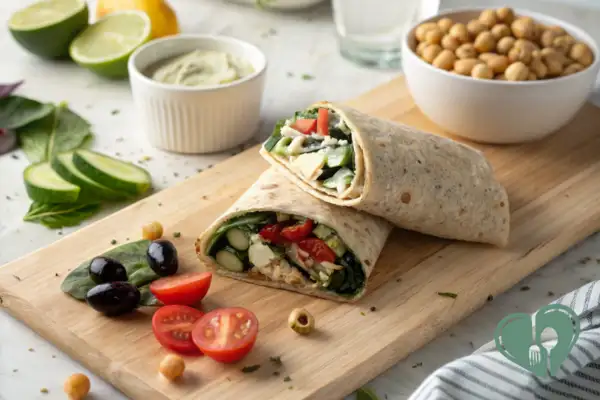
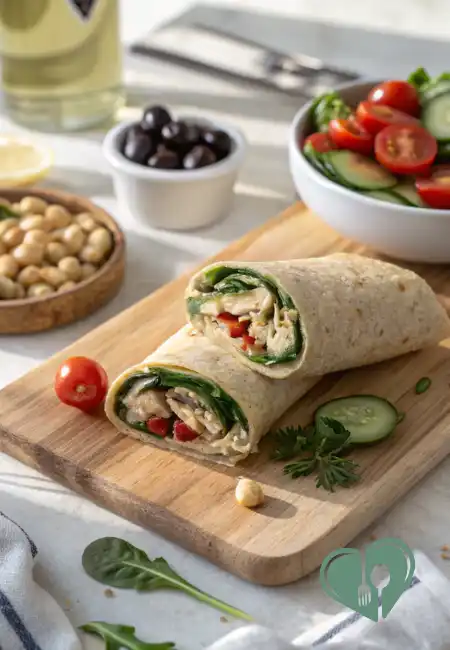

Mediterranean High-Fiber Roll Ups
Ingredients
Equipment
Method
- Warm the whole-grain wrap in the microwave for 5–10 seconds until soft and flexible.
- Spread hummus evenly over the surface of the wrap, leaving a small border around the edges.
- Add spinach or mixed greens across the center of the wrap to form a base layer.
- Scatter diced cucumbers and chopped tomatoes over the greens. Pat tomatoes dry before adding to prevent sogginess.
- Add optional extras such as olives, chickpeas, or grilled chicken if you want more flavor or protein.
- Season lightly with salt, pepper, and a small squeeze of lemon.
- Roll the wrap tightly from one side to the other, tucking the filling as you go to keep everything contained.
- Slice the roll-up in half for easier serving, or keep whole for eating on the go.
Notes
- Warm the wrap briefly before assembling to prevent cracking.
- Pat juicy vegetables (like tomatoes) dry to avoid sogginess.
- Add protein such as chickpeas or grilled chicken for a more filling meal.
- Use high-fiber or whole-grain wraps for better blood-sugar balance.
- Hummus works as a flavor base and helps the wrap stay sealed.
- Roll tightly for clean slicing and to keep the filling contained.
- Wrap can be made ahead, but add tomatoes right before eating for best texture.
- For a low-carb version, use large lettuce leaves or collard greens as the wrap.
Why Mediterranean Meals Work for Diabetes
It’s tempting to reduce diabetes-friendly eating to a checklist – more fiber, fewer refined carbs, some protein, maybe a drizzle of healthy fats. But Mediterranean meals complicate that tidy picture in the best way. They pull together ingredients that seem almost too simple to matter, yet somehow – almost annoyingly – they work. Part of it is the fiber sure but part of it is the way the whole plate slows you down. It’s as if the food itself encourages steadier rhythms, not just metabolically but mentally, which is something I didn’t expect to feel as clearly as I did.
The Mediterranean pattern leans heavily on vegetables, legumes, whole grains, and olive oil – each bringing its own small advantage for blood sugar stability. Fiber from vegetables and whole-grain wraps doesn’t just “help digestion”; it physically slows carbohydrate absorption. I know that sounds like textbook advice, but when you actually feel the difference – no sharp post-meal spike, no foggy crash – you start to understand it in a more embodied way. And the fats from olives or hummus? They soften the edges of the meal giving you satiety that feels earned rather than forced. It’s the sort of fullness that lets you get on with your afternoon without thinking about food again in an hour.
What surprised me most, honestly, is how Mediterranean meals create balance without demanding perfection. You don’t need to count every gram or police each ingredient; the structure of the cuisine naturally nudges things into alignment. I sometimes catch myself second-guessing whether something this straightforward can really support diabetes management – and then I remember that countless people in Mediterranean regions have eaten like this for generations, long before “glycemic control” was a phrase anyone used. Maybe there’s a lesson in that unintentional wisdom.
There’s also the emotional element – the part we rarely talk about but absolutely feel. A meal rich in color, texture, and freshness changes how you approach your day. It can break the frustration cycle of “What can I even eat?” and replace it with a sense of possibility. And yes, that matters. Food that feels restrictive often backfires; food that feels abundant invites consistency. Mediterranean roll-ups fit into that second category gracefully.
Are Mediterranean roll-ups good for lowering blood sugar?
Typically, yes. Because they rely on high-fiber vegetables, whole grains, and healthy fats, Mediterranean roll-ups help slow glucose absorption and minimize spikes. The effect isn’t dramatic like medication, of course, but many people feel noticeably steadier energy and more predictable post-meal readings.
Ingredients
Even if the full section goes deeper, it sometimes helps to see the ingredients laid out plainly-the core pieces that make these Mediterranean high-fiber roll ups both simple and steadying for blood sugar. Think of this list as the “no-overthinking” version: straightforward, flexible, and easy to customize depending on your mood or what’s in your fridge. If you’re curious about more Mediterranean & Plant-Based High-Fiber Lunches for Diabetics, this guide gives plenty of ideas to build satisfying, blood-sugar-friendly meals throughout the week. You might also enjoy the Veggie and Hummus Sandwich for Diabetics (High-Fiber Lunch) for another quick, fiber-packed option. Or the Simple Grain-Bean-Greens Bowl (Diabetic Lunch Base) for other quick, fiber-packed options.
Ingredient List:
- 1 large whole-grain or high-fiber wrap
- 2–3 tablespoons hummus (any flavor)
- 1 handful fresh spinach or mixed greens
- ¼ cup diced cucumbers
- ¼ cup chopped tomatoes
- 1–2 tablespoons sliced olives (optional)
- ¼ cup chickpeas or grilled chicken (optional protein boost)
- Pinch of salt, pepper, and a squeeze of lemon (optional for brightness)
Steps
There’s a kind of quiet satisfaction in putting these Mediterranean high-fiber roll ups together – not because the process is fancy, but because it isn’t. You don’t have to perform culinary acrobatics here; you just tune in for a moment and let the ingredients do most of the work. Still, the little details matter, and they’re worth noticing as you go.
1. Warm the Wrap Just Enough
Heat your whole-grain wrap for a few seconds – genuinely, just a few.
Mini Checkpoint: If you bend the wrap and it hesitates or cracks, it needs a touch more warmth. A pliable wrap makes everything later feel smoother.
2. Spread the Hummus Like You Mean It
Add a generous swipe of hummus, covering most of the surface but avoiding the very edges.
Mini Checkpoint: Watch how the hummus moves. If it drags or tears the tortilla, lighten your pressure; if it feels soupy, use a little less. This layer isn’t just flavor – it’s your sog-proofing shield.
3. Create a Cushion of Greens
Lay spinach or mixed greens across the center third. It doesn’t have to be perfectly symmetrical – just intentional.
Mini Checkpoint: Greens against the hummus form a moisture barrier, which sounds overly technical but prevents the wrap from turning sad and damp.
4. Add the Veggies with a Little Restraint
Scatter cucumbers and tomatoes on top of the greens.
Mini Checkpoint: Press a cucumber slice between your fingers – if it feels watery, shake off excess moisture. Tomatoes? Pat them dry. Small annoyances now, but they prevent sogginess later.
5. Introduce Protein or Extras (Optional, but Honestly Helpful)
Add chickpeas, olives, grilled chicken – whatever you’re in the mood for.
Mini Checkpoint: Pause and actually look at the filling mound. If it resembles a mini mountain, you’ve gone too far. A balanced roll has room to breathe.
6. Season Like You’re Brightening the Moment
A pinch of salt and pepper, maybe a squeeze of lemon.
Mini Checkpoint: If the wrap feels visually dull, a hit of acidity can wake it up. Mediterranean flavors rely on that spark more than we admit.
7. Roll with Steady Confidence
Start from one side, tuck the filling with your fingers, and roll firmly – not aggressively.
Mini Checkpoint: If the wrap pushes back or feels tight, ease up. If the seam won’t stick, a dab of hummus works like edible glue.
8. Slice or Don’t – Your Call
Cut it for a cleaner look or leave it whole if you’re heading out the door.
Mini Checkpoint: When slicing, saw gently. If everything spills out, don’t worry – it usually means you were enthusiastic with the veggies. Not the worst problem to have.
What’s the easiest way to avoid a soggy roll-up?
Dry your juicy ingredients, keep greens against the hummus, and avoid overfilling. The combination of hummus + greens creates a natural buffer that protects the wrap’s texture.
Add-Ins
The add-ins for these Mediterranean high-fiber roll ups almost act like quiet adjustments rather than full-blown recipe changes. You don’t need to reinvent the wrap – just tilt it slightly toward whatever flavor or texture your body seems to be craving that day. Sometimes that means extra freshness sometimes it means something more comforting or grounding. The flexibility feels strangely reassuring, especially when you’re trying to keep meals steady without them becoming predictable.
If you want brightness, thin strips of bell pepper or a handful of crunchy radishes bring a kind of lift that the base ingredients don’t always provide. On the opposite end, roasted red peppers or marinated artichokes offer a softer, almost slower flavor – something that rounds out the wrap rather than sharpens it. Then there are olives, which I hesitate to mention because they’re strong-willed ingredients. Still, a few small pieces can give the whole roll-up a sense of direction it didn’t have before.
Protein add-ins shift the tone more noticeably. Chickpeas keep things plant-based and subtly hearty; grilled chicken adds structure without weighing anything down. A light scattering of feta, when you’re in the mood for it, gives the wrap a kind of quiet richness – not overwhelming, just enough to make you pause and appreciate the bite. Herbs do something similar in a different register: parsley or mint can brighten the whole wrap with almost no effort at all.
None of these additions are mandatory. They’re more like options that respond to your day – whatever your hunger, energy, or mood happens to be.
Can I make these roll-ups without bread or wraps?
Yes. Lettuce leaves, collard greens, or roasted eggplant slices work as alternatives. They’re lighter by nature, so adding a bit more protein or healthy fat helps keep the meal satisfying.
Nutrition
The nutrition profile of these Mediterranean high-fiber roll ups leans naturally toward stable blood sugar, mostly because the ingredients balance each other without much effort. The whole-grain wrap contributes slow-digesting carbohydrates and plenty of fiber while the vegetables add even more bulk and water content to keep you full without feeling heavy. Hummus brings healthy fats and plant-based protein, which helps smooth out glucose release and keeps hunger from rebounding too quickly.
Depending on what add-ins you choose, a typical roll-up falls into this general range:
- Calories: 300–400
- Carbohydrates: 28–38g (mostly from whole grains and vegetables)
- Fiber: 10–14g
- Protein: 12–22g
- Healthy fats: 8–12g
The numbers aren’t meant to be rigid rules – just a snapshot of how naturally balanced this kind of meal tends to be. The combination of fiber, fat, and moderate protein works quietly in the background to keep energy steadier and prevent sharp blood sugar spikes.
and plenty of fiber, while the vegetable
If you enjoyed these Mediterranean high-fiber roll ups and want even more ideas for lunches that keep you full and support steady blood sugar, check out The Ultimate Guide to High-Fiber Diabetes-Friendly Lunches. It’s packed with practical meals and inspiration to help you build a week of satisfying, diabetes-friendly lunches without overthinking.

Dreena shares balanced, diabetes-friendly recipes made for real life—simple, nourishing, and full of flavor. Her kitchen is where health meets heart.