
I’ve lost count of how many lunches I’ve abandoned halfway through because they either tasted flat or made my blood sugar do something… unpredictable. You probably know that tightrope feeling too – wanting something genuinely satisfying but also something you won’t regret two hours later. That’s how the Grilled Veggie Hummus Wrap wound up becoming one of those meals I return to without thinking about it too hard. Not because it’s flashy, but because it feels like food that gets the assignment.
What surprised me – and maybe this will resonate – is how a simple combination like hummus, grilled vegetables, and a whole-grain wrap can feel oddly grounding. There’s a steadiness to it. The fiber slows things down, the healthy fats smooth out the edges and the whole thing has this warm, slightly smoky comfort that doesn’t try to impress you. It just works. Well… most days. (I’m not going to pretend every version is perfect. Vegetables have moods.)
But what really keeps me coming back isn’t the nutrition science – even though, yes, that’s part of it – it’s the way this wrap fits into the rhythm of a day that already feels too full. It doesn’t demand anything from you. You don’t need to negotiate with yourself, or brace for that weird midafternoon slump, or wonder whether you should’ve eaten something “lighter.” It’s the kind of lunch that feels like it’s on your side, which sounds dramatic for a wrap, but you’ll understand once you try it.
And if I’m being honest – actually, scratch that, let me be blunt – a lot of diabetic-friendly lunches feel like compromises. This one doesn’t. Or at least, it compromises in places you won’t mind. What follows isn’t some rigid manifesto about how you must eat; it’s just a practical guide to assembling a wrap that behaves, tastes good, and settles into your day without fuss. I’ll show you why its nutrient profile tends to support more stable blood sugar, how to adapt it when you’re bored, and the little tweaks that make it feel more like a meal than a “solution.”
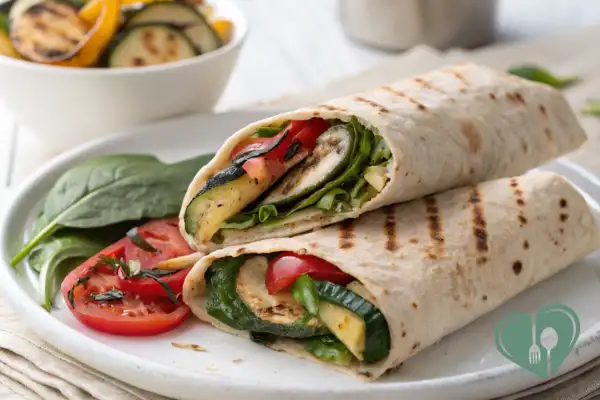
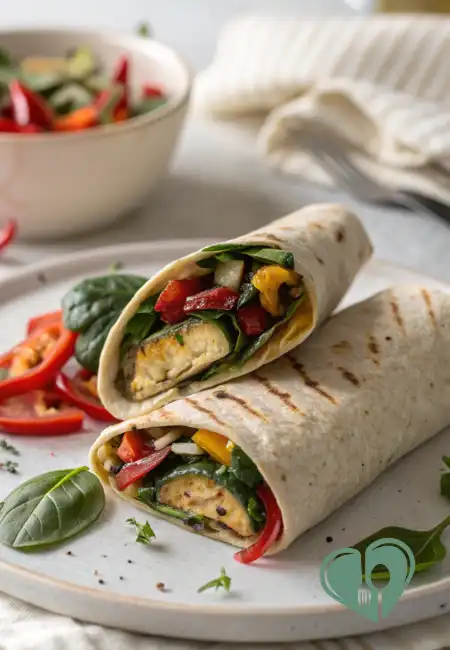

Grilled Veggie Hummus Wrap
Ingredients
Equipment
Method
- Slice the zucchini, bell pepper, onion, and mushrooms into even pieces and toss them lightly with olive oil, salt, and black pepper.
- Heat a grill pan (or outdoor grill) over medium-high and cook the vegetables for 3–5 minutes per side, until tender with light char.
- Warm the whole-grain tortilla in a dry skillet for 10–15 seconds per side to make it flexible and easier to roll.
- Spread 3–4 tablespoons of hummus in a strip down the center of the tortilla.
- Layer the grilled vegetables over the hummus, letting excess steam escape before adding them.
- Add a handful of spinach or romaine on top for freshness and structure.
- Fold the sides inward, then roll the wrap tightly from the bottom up.
- Optional: Press the wrap in a warm skillet for 30 seconds per side to lightly toast and seal it.
Notes
- For the best texture, let the grilled vegetables cool for a minute before adding them to the wrap – excess steam can make the tortilla soft.
- Warming the tortilla briefly in a skillet helps prevent tearing and makes the wrap easier to roll.
- If using tomatoes, cucumbers, or other high-moisture add-ins, pat them dry first to avoid sogginess.
- To make this wrap more filling, add a small portion of protein such as grilled chicken, roasted chickpeas, or sliced hard-boiled egg.
- For meal prep, store the grilled vegetables, greens, and hummus separately. Assemble the wrap just before eating for the best texture.
- A quick press in a skillet after rolling gives the tortilla a lightly crisp exterior and helps seal the wrap.
Ingredients for the Grilled Veggie Hummus Wrap
There’s a certain comfort in knowing exactly what’s going into your lunch – especially when blood-sugar stability is part of the equation. These ingredients lean heavily on fiber, slow-digesting carbs, and naturally satisfying textures. And while the list looks simple (almost too simple, honestly), the way these pieces interact is what makes the wrap feel steady, balanced, and not the least bit “diet-y.”
Below is the base version. You can absolutely adjust it depending on what’s lingering in your crisper drawer but this combination creates a foundation that’s hard to mess up.
Whole-Grain Base
- 1 large whole-grain tortilla (8–10 inches)
Look for one with at least 4–6g fiber and no added sugars. A steadier carb structure helps avoid that quiet midafternoon crash.
Spread
- 3–4 tablespoons hummus
Classic or roasted red pepper tends to complement grilled veggies best. The fat + fiber combo slows glucose absorption in a way that’s noticeable – not dramatic, just reliably gentle.
Vegetables to Grill
Use 1 cup total, mixing or matching:
- Zucchini or yellow squash, sliced
- Red, yellow, or orange bell pepper, sliced
- Red onion, thin wedges
- Portobello or cremini mushrooms, sliced
- Eggplant, thin strips
A little char does more than improve flavor – it gives depth to a wrap that might otherwise feel too earnest.
Fresh Greens
- ½ cup spinach or romaine
They add volume without spiking carbs and they help the hummus cling to everything instead of sliding around.
Seasoning & Extras
- 1 teaspoon olive oil (optional, for grilling)
- Pinch of salt + black pepper
- Squeeze of lemon or dash of red wine vinegar
Tiny touches, but they wake the whole thing up.
How to Make the Grilled Veggie Hummus Wrap (Step-by-Step Instructions)
There’s a moment, right before you start cooking when you look at a handful of vegetables and wonder how something so ordinary is supposed to turn into a lunch you’ll actually want. Don’t overthink it. This wrap comes together through small choices – heat, timing, a little patience – not culinary perfection. Let the process be slightly messy; it tends to taste better that way.
1. Slice the vegetables into whatever shapes make sense today.
You’re aiming for pieces that cook at roughly the same pace, but don’t stress over uniformity. A zucchini that’s a little thicker on one end won’t ruin the wrap-if anything you get a nicer mix of textures. Lightly coat everything with olive oil, salt, and pepper. Keep it simple.
2. Grill them until they look “done enough.”
A grill pan works fine, even if it doesn’t feel as impressive as an outdoor grill. Medium-high heat, a few minutes per side and pull them off when they soften but still hold their shape. If you get a bit of char, great. If you don’t, also fine. The vegetables don’t have to audition for a magazine spread; they just need flavor.
3. Warm the tortilla-seriously, don’t skip this.
Cold tortillas tear. Warm tortillas cooperate. Ten seconds in a dry pan and the whole wrap feels different… more intentional, somehow. It’s one of those tiny steps you only appreciate once you forget to do it.
4. Spread the hummus like you’re drawing a path for the vegetables.
A wide stripe down the middle is enough. If you smear it all the way to the edges, it tends to ooze out later, and then you end up eating the wrap over the sink (not that I’m speaking from experience or anything).
5. Add the grilled veggies.
Not too high, not too flat. You’ll find the sweet spot. Let the steam escape for a second before placing them on the wrap-excess moisture is the enemy of structure. If you’ve ever taken a bite of a wrap and watched the entire filling slide out, you already understand why.
6. Add your greens like the final layer of insulation.
Spinach, romaine, whatever you prefer. This little cushion keeps the warm veggies and the hummus from merging into one indistinguishable mass. It’s subtle, but your future self will thank you.
7. Roll it up in one confident motion.
Fold the sides inward, then roll from the bottom up. Don’t hesitate; hesitation leads to gaps. And if it unravels anyway… well, you’ll adjust the filling next time. Wraps teach you more with mistakes than with successes.
8. Optional: Press it lightly for that golden finish.
A quick press in the pan gives you a toasted exterior that makes the whole thing feel like it came from a café instead of your kitchen. Totally unnecessary. Also totally worth it.
Why This Wrap Helps With Blood Sugar Control
There’s a quiet relief in eating something that doesn’t leave you guessing what your glucose numbers will look like later. This wrap isn’t some nutritional miracle – let’s get that out of the way – but it is built around ingredients that tend to behave predictably. And in the world of managing blood sugar, predictability can feel like a luxury.
The real reason this wrap works is its balance: vegetables that digest slowly, hummus that layers in healthy fats and plant-based protein and a whole-grain wrap that releases energy at a gentler pace instead of hitting your bloodstream all at once It’s the kind of meal that doesn’t shout “diabetic-friendly,” yet quietly aligns with the way your body prefers to process food.
Fiber + Healthy Fat: The Understated Duo
If you’ve spent any time navigating glucose spikes, you already know the difference between a carb on its own and a carb paired with fat and fiber. The hummus steps in here almost like a mediator. It slows digestion just enough to give your body time to respond smoothing out that sharp rise that tends to sneak up on you with more refined lunches.
Meanwhile, the grilled vegetables bring bulk and texture without loading your system with fast-acting carbs. Zucchini, peppers, onions – they all carry fiber and water, which helps you feel full in a steady, sustained way rather than that quick hit followed by a slump.
Even the whole-grain tortilla plays its part. It’s not just “better than white flour”; the intact grains hold their structure longer, meaning your body works through them at a more natural pace.
For more high-fiber lunch ideas that are steady on blood sugar, check out The Ultimate Guide to High-Fiber Diabetes-Friendly Lunches.
A Meal That Supports You Instead of Surprising You
One of the hardest parts of managing blood sugar is the unpredictability – that sense that two nearly identical meals can behave completely differently. This wrap doesn’t eliminate that uncertainty (nothing really does), but the combination of fiber, fat, and moderate carbs makes it more likely to land in that comfortable middle ground.
It’s not flashy and it’s not pretending to solve anything big. But it gives your body a meal it can work with rather than one it has to fight.
Add-On Ideas & Flavor Variations
One of the best parts about a wrap like this is how forgiving it is – almost too forgiving. Once you’ve made the base version a couple of times, you’ll probably catch yourself opening the fridge and improvising without a plan. That’s usually where the interesting versions come from. Below are ideas that build on the original, but none of them require you to reinvent the wheel or derail the blood-sugar stability you’re aiming for.
These tweaks aren’t meant to “improve” the wrap so much as give you different ways to enjoy it, especially on days when the standard version feels a little predictable.
Mediterranean Lean-In
If you want something brighter or more herb-forward, this variation pulls the wrap firmly into the Mediterranean lane – where the flavors taste bigger than the effort required.
- Add crumbled feta (just a little it goes further than you think)
- Toss the veggies in oregano or za’atar before grilling
- Add cucumber ribbons or chopped fresh tomatoes
- Swap regular hummus for roasted garlic or lemon herb
This combo walks that line between refreshing and rich, and it feels especially right on warmer days. For another easy, fiber-rich option along the same lines, check out Veggie and Hummus Sandwich for Diabetics (High-Fiber Lunch). It’s like this wrap’s sandwich cousin, perfect for a quick, steady-energy lunch.
Southwest Style
Sometimes you want a bit more warmth – not heat, necessarily, but warmth in the way spices round out vegetables.
- Add a sprinkle of smoked paprika or chili powder
- Use chipotle hummus or mix a spoonful of salsa into your hummus
- Swap spinach for shredded cabbage for more crunch
- Add a handful of black beans (not too many, to keep carbs in check)
It’s unexpected how well grilled zucchini plays with these flavors but it does.
High-Protein, Still-Diabetic-Friendly Options
If the base wrap leaves you hungry on high-activity days a small protein add-in gives staying power without spiking your glucose.
- Grilled chicken strips (just 2–3 ounces)
- Sliced hard-boiled egg
- Roasted chickpeas for crunch + plant protein
- Tofu or tempeh, lightly seasoned
What’s interesting is how little you need – a modest amount steadies energy without overwhelming the wrap.
The “Use What You Have” Version
Some of the best wraps happen when you don’t try to make them perfect. You can also explore other Diabetes-Friendly Sandwiches and Wraps High In Fiber for inspiration beyond this base version.
- Leftover roasted vegetables
- A different green because your spinach wilted
- Half an avocado you’re trying to rescue
- Herbs that are about to give up
Nothing here breaks the balance; it just gives the wrap personality.
When You Want More Brightness
Some people crave acidity to break up the richness of hummus.
- A thin swipe of pesto
- A drizzle of red wine vinegar
- A few pickled onions
- A handful of chopped parsley
These little additions lift the flavor without changing the structure.
Tips & Tricks for a Better Grilled Veggie Hummus Wrap
There’s a moment, usually right after you take the first bite, when you can tell whether a wrap is going to hold together or betray you halfway through. That moment is rarely about the recipe itself and almost always about the tiny decisions you made along the way – the temperature of the pan, the moisture on the vegetables, the thickness of the hummus. These tips aren’t complicated, but they’re the difference between a wrap that feels “fine” and one you’ll actually want to repeat.
Don’t Over-Grill the Vegetables
It’s tempting to chase perfect char marks, but vegetables that get too soft become slippery inside the wrap. Stop grilling a little earlier than you think – when they still have a bit of structure. It makes the whole thing easier to roll and keeps the textures layered rather than mushy.
Let the Veggies Cool for a Minute
A lot of soggy wraps trace back to this one overlooked step: steam. If you pile hot vegetables straight onto the hummus, everything traps moisture and the tortilla starts to soften from the inside out. Giving them just 60–90 seconds on the cutting board makes a surprisingly noticeable difference.
Warm the Tortilla, Always
A warm tortilla is more flexible, less prone to tearing, and somehow makes the wrap feel more intentional. Even if you’re in a rush, those 10 seconds in a pan matter. (It’s funny how many “problems” go away when the tortilla cooperates.)
Control the Hummus Layer
Too much hummus makes the wrap heavy and messy; too little makes it dry and unsatisfying. The right amount is enough to coat the center but still leave the edges clean. Think of it like giving the ingredients a cushion rather than a swimming pool.
Roll with Confidence, Not Caution
Hesitation almost guarantees gaps. Fold the sides in, pull the bottom edge tightly over the filling, and then roll with one smooth motion. If it’s overfilled, you’ll know instantly – but at least you’ll know for next time.
Pressing the Wrap Is Optional, but…
A quick toast brings everything together. The tortilla crisps, the hummus warms slightly, and the wrap feels more like a café-style lunch than something you made while trying not to rush. It’s one of those tiny upgrades that doesn’t ask anything from you yet gives a lot back.
Avoid “Wet Add-Ons” Without Balancing Them
Fresh tomatoes, cucumbers, or pickled elements can be amazing, but they also bring moisture. If you use them, pair them with something crisp (like shredded greens) or press them lightly in a paper towel first. Not glamorous, but effective.
Frequently Asked Questions (FAQ)
It’s funny how a simple wrap can raise more questions than a complicated recipe but that’s usually what happens when you’re trying to balance flavor with blood-sugar stability. The questions below are the ones people tend to whisper into search bars, so let’s just answer them plainly – with a bit of honesty layered in.
Are hummus wraps actually good for diabetics, or is that just wishful thinking?
They can be genuinely good – not perfect, but definitely on the friendlier side of the spectrum. Hummus has this built-in advantage: fiber + healthy fats + a little protein. That trio slows digestion, which means the carbs in the wrap don’t all hit your system at once. Add in grilled veggies and a whole-grain tortilla, and you get a meal that tends to behave more predictably than many “healthy” lunches that promise a lot and deliver spikes anyway. So, not wishful thinking… just context-dependent.
If I want this to be low-carb, what’s the smartest place to make changes?
Honestly? Start with the tortilla. That’s where most of the carbs live. A high-fiber or low-carb wrap changes the math instantly without messing up the flavor. After that you can tweak the hummus portion or stick to lower-sugar vegetables (think zucchini, peppers, mushrooms). Just don’t strip it down so much that it stops feeling like an actual lunch – low-carb shouldn’t mean low-pleasure.
Will this hold up in the fridge, or am I setting myself up for a soggy disappointment?
If you assemble it fully, you’ve got maybe a day before the texture starts wandering into “meh.” But if you prep the pieces separately – grilled veggies in one container, greens in another, hummus waiting on the side – the wrap tastes almost fresh when you build it later. A warmed tortilla right before assembly does wonders. It’s the difference between “meal prep” and “I guess this is technically edible.”
Can I add protein without knocking the whole blood-sugar balance off?
Definitely. In fact, a little protein often makes the wrap more stable and more filling. The trick is moderation. A few strips of chicken half a boiled egg, a small handful of roasted chickpeas, or some tofu – these add staying power without overwhelming the wrap or turning it into a calorie bomb. It’s less about what you add and more about how much.
Does grilling the vegetables make them higher in sugar? They taste sweeter.
They do taste sweeter – but that’s your palate talking, not the nutrition label. Grilling evaporates water and amps up natural flavors, but it doesn’t meaningfully change the carb load. So you get more flavor without any real “cost,” which is a rare win when you’re working within blood-sugar boundaries.
Nutrition Information
Nutrition can feel like a moving target – especially when you’re trying to build meals that are satisfying without sending your numbers into chaos. This wrap sits in that middle space where the ingredients work together instead of competing. The values below are estimates (vegetables and hummus brands vary wildly), but they give you a realistic picture of what you’re eating rather than a rigid overly precise breakdown.
Estimated Nutrition per Wrap
- Calories: ~350–420
- Carbohydrates: 40–48g
- Fiber: 8–12g
- Protein: 10–14g
- Fat: 12–18g
- Sodium: varies widely by hummus brand & tortilla
- Added sugars: 0g (assuming the wrap and hummus don’t include hidden sweeteners)
What you’re really getting here is a meal built around steadiness – not deprivation, not extremes. The carbohydrates mostly come from the whole-grain tortilla which brings fiber along with it, and from vegetables that digest slowly. The hummus is doing quiet but important work: its healthy fats and plant protein help create that slower release of glucose that keeps you from crashing later.
There’s also the satiety factor which is harder to measure but easy to feel. The combination of warm vegetables, creamy hummus, and a wrap with actual structure tends to hold you longer than you’d expect from something that assembles in minutes. It’s not a “light lunch” in the way some diet foods are – it’s more balanced than that, more grown-up. It shows up for you without making a big fuss about it.
If you adjust anything add protein, swap tortillas, change vegetables – the numbers shift slightly, but the foundational balance stays intact. That’s the real value here: a recipe that’s flexible without becoming unpredictable.
Conclusion: Why the Grilled Veggie Hummus Wrap Fits Into Real Life
By the time you finish making this wrap a few times you start to realize it’s less about the recipe and more about the rhythm it gives you. The Grilled Veggie Hummus Wrap isn’t trying to be a statement meal or a grand nutritional gesture. It just… fits. It fits into days when you don’t want to overthink lunch. It fits into routines where blood sugar stability matters but joy still deserves a seat at the table. And it fits into that in-between space where you want something warm, honest, and not overly complicated.
What I appreciate most – and maybe you’ve felt this too – is that it offers steadiness without asking you to trade away flavor or texture. The hummus gives it that grounded, satisfying richness the vegetables bring brightness and depth; the whole-grain wrap ties everything together with a slow, predictable release of energy. It feels almost like a conversation between ingredients that understand each other.
If you try it and it becomes a small anchor in your week, great. If you tweak it, adapt it, or turn it into something entirely your own, also great. Recipes like this earn their value not because they’re perfect, but because they’re dependable in a way most of us quietly need. When you’re ready, go ahead and make it again – or make it differently. Either way, it’ll meet you where you are.

Dreena shares balanced, diabetes-friendly recipes made for real life—simple, nourishing, and full of flavor. Her kitchen is where health meets heart.