
I wasn’t trying to create the perfect high fiber pasta salad. I just wanted something quick that wouldn’t leave me feeling weird or shaky later – especially on days when blood sugar feels like its own full-time job. Whole-wheat pasta seemed like the obvious answer but honestly it took a few not-so-great bowls to get here.
What changed was keeping things really simple: cook the pasta so it stays firm, toss in veggies that stay crisp, add chickpeas for that slow, steady fullness and use a dressing that actually tastes alive. Suddenly it wasn’t “healthy pasta salad,” it was just… lunch I actually liked.
And the best part? It doesn’t fall apart in the fridge. You can make it once, forget about it, then open the container the next day and think, Oh good, this still looks like food. That alone made it worth sharing.
If you’re looking for more ideas for high-fiber, diabetes-friendly lunches, see The Ultimate Guide to High-Fiber Diabetes-Friendly Lunches
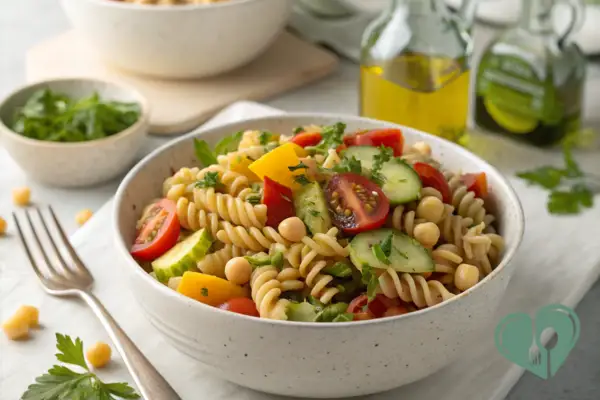
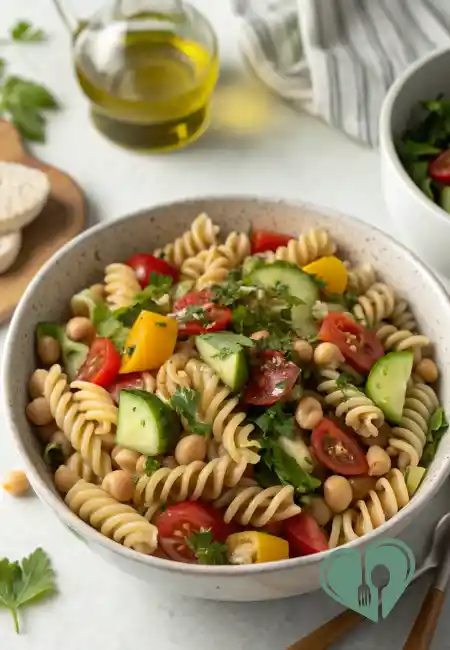

High Fiber Pasta Salad (Whole-Wheat, Veggies & Chickpeas)
Ingredients
Equipment
Method
Cook the Pasta
Bring a large pot of salted water to a boil. Add the whole-wheat pasta and cook until just barely al dente (about 1 minute less than package directions).Rinse and Cool
Drain the pasta in a colander and rinse under cold water to stop the cooking. Let it sit for a minute so excess water can drain off.Prep the Veggies
Chop the tomatoes, cucumbers, bell pepper, and red onion. Keep everything roughly bite-sized so it mixes evenly.Rinse the Chickpeas
Drain and rinse the chickpeas well. Pat them dry so they don’t water down the salad.Make the Dressing
In a small bowl or jar, whisk (or shake) together olive oil, lemon juice, vinegar, Dijon, garlic, salt, and pepper.Add Veggies and Chickpeas
Fold in the chopped vegetables, chickpeas, and any fresh herbs. Mix lightly so everything stays crisp.Taste and Adjust
Add more lemon, salt, or herbs if needed. Whole-wheat pasta absorbs flavor as it sits, so don’t be afraid to season generously.Chill Before Serving
Refrigerate for at least 20–30 minutes to let the flavors settle. It tastes even better the next day.
Notes
- Cook the pasta slightly under al dente. Whole-wheat pasta softens as it cools, so pulling it off the heat early keeps the salad firm and not mushy.
- Rinse the pasta for this recipe. It stops the cooking and removes extra starch so the salad stays light instead of gummy.
- Chop the veggies small and even. Bite-size pieces help everything mix smoothly and keep the textures balanced.
- Season generously. Whole-wheat pasta absorbs flavor as it sits, so don’t be afraid to add a little more lemon, salt, or herbs before serving.
- Even better the next day. The chickpeas soak up the dressing overnight, and the flavors settle into a more rounded, mellow balance.
- Storage: Keeps well in the fridge for 3–4 days in an airtight container. If it looks a little dry later, add a splash of olive oil or lemon juice.
- Make it your own. Fresh herbs, roasted veggies, olives, or a sprinkle of feta can totally change the vibe without changing the recipe.
Ingredients
I like keeping the ingredients for this whole-wheat pasta salad almost ridiculously simple. It’s one of those recipes where fewer moving parts actually make it taste better – and make you more likely to cook it again instead of letting it fade into “I should try that someday” territory.
Whole-Wheat Pasta
This is the backbone. Whole-wheat pasta holds up in the fridge, keeps its bite, and brings that subtle, earthy flavor that regular pasta doesn’t. Any sturdy shape works. If it collapses easily, skip it.
Veggies That Stay Crunchy
Go for the classics: peppers, cucumbers cherry tomatoes, maybe carrots. Nothing complicated – just vegetables that don’t turn soft the moment they meet dressing. The crunch is what keeps this high fiber pasta salad from feeling tired by day two.
Chickpeas
Chickpeas add that “okay, this is an actual meal” feeling. The fiber and protein help with steady energy and they blend in without trying to steal the spotlight. Rinse them, drain them done.
Optional Upgrades
- Fresh herbs you already have
- Lemon, vinegar, or anything bright
- Roasted veggies for a deeper flavor
- Olives or feta if you want a salty edge
Nothing here is mandatory – just little nudges that can change the whole character of the bowl.
If you want even more high-fiber salad ideas that are colorful, filling, and blood-sugar smart, check out High-Fiber Salads for Diabetics: Colorful, Filling and Blood-Sugar Smart
FAQ – Is Whole-Wheat Really Better Here?
Yeah mostly because it doesn’t get mushy. The fiber is a bonus, especially if you’re making this for steadier energy or blood-sugar balance, but the texture alone makes it worth choosing.
Cooking + Mixing
If there’s one thing I’ve learned making this whole-wheat pasta salad over and over it’s that tiny decisions make a big difference. Nothing dramatic – just small tweaks that keep the pasta firm, the veggies crisp, and the whole bowl tasting fresh instead of tired.
Avoiding Mushy Pasta
Whole-wheat pasta can be forgiving but it’s not magic. If you cook it until it’s fully done, it keeps softening as it cools and suddenly your high fiber pasta salad turns into a sticky situation. The fix is simple: pull it off the heat a little earlier than the box suggests. You want a firm bite, not “almost soft.”
I know people argue about rinsing pasta, but for cold salads, rinsing is honestly the thing that saves you. A quick cool-down under cold water stops the cooking fast and washes off the starch that would otherwise glue everything together. Spread it out for a minute so the steam can escape – that alone makes a huge difference.
Finding the Right Flavor Balance
Whole-wheat pasta has this slightly nutty taste, which is nice, but it needs something bright to wake it up. Lemon, vinegar, anything with acidity – that’s what gives the salad life. And don’t be shy with salt. Veggies like cucumbers and tomatoes taste fresh but don’t bring much seasoning of their own.
Here’s something people skip: toss the pasta with the dressing first, before adding anything else. When the dressing hits warm-ish pasta, nothing good happens. When it hits fully cooled pasta, it coats everything evenly and actually sticks. Then you can fold in the veggies and chickpeas gently so they keep their crunch instead of drowning in dressing.
One more thing I didn’t expect until I made it a few times: the salad tastes better the next day. The chickpeas absorb flavor, the vinegar mellows out, and the whole thing feels more pulled together – like it got a chance to settle into itself overnight.
FAQ – Do I Really Need to Cool the Pasta Completely?
Yes. Warm pasta absorbs dressing too fast and ends up dry later. Cool pasta holds its texture and keeps the flavor where it belongs.
Optional Add-Ins
After you mix the basic whole-wheat pasta salad, you might feel like it needs a little something – not a full makeover, just a small shift. That’s where these add-ins come in. I don’t plan them; I usually just look at what’s in the fridge and think, Yeah that could work.
For another delicious, diabetes-friendly salad that combines grains, greens, and nuts, check out Farro, Arugula & Pistachio Salad for Diabetics
Fresh Herbs
Herbs can change the entire mood of the bowl with almost no effort. Parsley makes everything cleaner. Dill adds a sharp, almost playful kick. Basil gives the salad this gentle, familiar warmth. It’s funny how a handful of leaves can fix a dish that tasted “fine” but not quite there.
Roasted Veggies
If you’ve got leftover roasted veggies toss them in. Seriously. Carrots, zucchini, broccoli – whatever survived last night’s dinner. They add depth, a little sweetness and they match the whole-wheat pasta’s nuttiness in a way raw veggies don’t. The salad feels more grounded, like something you could eat on a cold day without wishing it were summer.
Other Easy Add-Ins
- A little cheese (feta, goat cheese, whatever’s around)
- Olives for a salty bite
- Sun-dried tomatoes for a deeper tang
- Nuts or seeds for crunch
- A splash of lemon or vinegar if the salad tastes sleepy
These aren’t upgrades so much as personality tweaks. Tiny things that make the salad feel like your version not a template.
FAQ – Do Add-Ins Mess Up the Balance?
Not really The base of this high fiber pasta salad is sturdy, so a couple of extra ingredients rarely throw it off. If anything, they make it more interesting.
Nutrition
What I like most about the nutrition in this whole-wheat pasta salad is how it feels rather than what it “scores.” You eat it, and there’s this comfortable steady-ness afterward – not the heavy slump, not the quick hunger that hits out of nowhere. Just a kind of calm fullness that seems to last.
The whole-wheat pasta brings more fiber, sure but it’s really the mix with the veggies and chickpeas that makes the difference. It’s like everything slows down a bit – the energy, the digestion, the urge to snack – in a way that feels kind of reassuring, especially if you’re someone who notices those ups and downs.
And it’s not one of those meals where you have to talk yourself into liking how “healthy” it is. It tastes good first. The nutrition just happens to line up behind it in a way that makes sense.
FAQ – Will This Keep Me Full?
Most people say yes. The fiber from the whole-wheat pasta and chickpeas has this subtle way of sticking with you so you don’t feel like you need a second lunch.
Conclusion: What Makes This High Fiber Pasta Salad Feel Different
What keeps me coming back to this high fiber pasta salad isn’t just the nutrition – it’s the way it makes the day feel a little easier. You eat it and there’s this quiet steadiness afterward, like your body isn’t fighting the meal you just had. No heaviness, no slump, just a calm kind of full that feels oddly reassuring.
It’s simple food, but in the best way. Whole-wheat pasta that stays firm, veggies that still have life in them, chickpeas that make the bowl feel like an actual meal – it all fits together without trying too hard. And somehow that makes it even better.
If you end up making it a few times, you’ll probably notice the same thing I did: it’s not flashy, but it becomes a go-to. The kind of recipe you trust on days when you don’t have the energy for anything fussy.

Dreena shares balanced, diabetes-friendly recipes made for real life—simple, nourishing, and full of flavor. Her kitchen is where health meets heart.