

Lunch is usually where things start to wobble a bit. Not because you don’t care-but because life’s happening. You’re busy, you’re hungry and you just want something that won’t mess up the rest of your day. If you’re managing diabetes, that pressure is always there in the background. You eat, then you wait… and hope your blood sugar behaves. High-fiber lunch bowls for diabetics help take some of that uncertainty off the table.
What I like about lunch bowls is how straightforward they are. Nothing is hidden. You can see the grains, the vegetables, the protein-no mystery sauces, no “this should be fine” moments. Fiber does a lot of the heavy lifting here. It slows digestion, helps prevent sharp glucose spikes and keeps you full long enough that you’re not rummaging for snacks an hour later. That alone can change how the afternoon feels.
This isn’t about eating perfectly or following strict food rules. Honestly, that approach burns people out fast. This is about building diabetes-friendly lunch bowls that feel normal-meals you can repeat, adjust, and rely on without thinking too hard. We’ll talk about why bowls work so well for blood sugar, what actually makes one diabetes-friendly (not just “healthy-looking”), and how to put together high-fiber lunches that keep you satisfied without feeling heavy or restrictive.
If lunch has ever left you thinking, Well… we’ll see how this goes, this guide is meant to give you a little more confidence-and a lot less second-guessing.
Why Lunch Bowls Work So Well for Diabetes
Lunch bowls work not because they’re trendy, but because they remove a lot of the friction that makes lunch hard with diabetes. There’s less guesswork. Less hiding. Less “I’ll deal with it later.” When everything is laid out in a bowl, you can tell pretty quickly whether the meal feels balanced or a little off. And that awareness-without obsessing-is half the battle.
Another quiet advantage? Bowls tend to slow you down. You’re not inhaling lunch between emails or unwrapping something on autopilot. You move between bites, chew more, and actually register fullness. That pacing matters. Blood sugar doesn’t love rushed meals and bowls naturally create a rhythm that’s easier on your system.
Fiber slows digestion
Fiber is one of those nutrients everyone mentions but not always for the right reasons. In the context of diabetes, fiber helps slow how quickly carbs turn into glucose. That slower release is what helps prevent those sharp spikes that can show up an hour or two after lunch.
But fiber also changes how satisfying a meal feels. When a lunch bowl includes whole grains, beans, lentils and plenty of vegetables, it tends to “stick” longer. You’re not thinking about food again right away. And when you’re not chasing hunger all afternoon, blood sugar usually behaves better too. It’s not magic-it’s just how the body responds to slower digestion.
Bowls make balancing macros simple
One thing bowls do well is make imbalance obvious. If the grain portion is taking over the bowl, you see it. If protein is missing, you notice. That visual feedback is surprisingly helpful, especially if you’re tired of tracking numbers.
Over time, this builds intuition. You start recognizing what a steady lunch looks like without needing rules for every meal. Fiber-rich carbs paired with protein and some healthy fat tend to feel better-and bowls make that combination easier to repeat without overthinking it.
Perfect for meal prep
Bowls are also forgiving, which matters more than people admit. You can prep components ahead of time and adjust as needed. Hungrier day? Add more protein or vegetables. Blood sugar running higher? Pull back slightly on grains. Nothing falls apart if it’s not exact.
That flexibility is what makes lunch bowls sustainable. They adapt to real life instead of asking you to eat the same way every single day.
FAQ: Why do lunch bowls feel more filling than other lunches?
Because they usually combine fiber, protein, and volume in one meal. That combination slows digestion and signals fullness more effectively than refined carbs or low-fiber lunches, which can leave you hungry-and dealing with blood sugar swings-soon after eating.
What Makes a Bowl “Diabetes-Friendly”
This is where I think a lot of advice goes sideways. People talk about “healthy bowls” as if that automatically means diabetes-friendly. Sometimes it does. Sometimes it really doesn’t. You’ve probably eaten something that looked great-whole grains, veggies, the works-and still watched your blood sugar climb anyway. That’s not you doing something wrong. That’s the bowl not being built with diabetes in mind.
A diabetes-friendly lunch bowl usually feels steady rather than impressive. It doesn’t rely on one “superfood” to save the meal. Fiber shows up more than once. Protein is actually present, not sprinkled on. Vegetables take up space. When those things line up, lunch stops feeling like a test you might fail and starts feeling… manageable. Boring word, maybe. But manageable is underrated.
The ideal fiber range
Fiber matters a lot here-but chasing the highest number possible isn’t the goal. For most people, landing somewhere around 8 to 15 grams of fiber at lunch tends to work well. Enough to slow digestion and soften blood sugar spikes, without tipping into “why do I feel uncomfortably full?” territory.
What usually works best is spreading fiber out. Some from vegetables. Some from grains. Maybe beans or lentils. When fiber is layered like that, the meal digests more evenly. No sudden rush, no dramatic drop later. It just… moves through your system more calmly. And that calm digestion shows up in blood sugar, too.
Best grain bases (quinoa, barley, farro)
Grains are often treated like the villain but the truth is more nuanced. In bowls, quinoa, barley and farro tend to behave better than refined grains. They digest slower, add fiber and don’t overwhelm the rest of the meal when portions are reasonable.
Quinoa brings some protein, which helps. Barley has a lot of soluble fiber which is especially helpful for blood sugar. Farro is chewy-and that chew actually slows how fast you eat which sounds minor but can matter. None of these grains are magic fixes. They’re just easier to work with if your goal is stability, not spikes.
Best proteins to add
Protein is what keeps a bowl from feeling unfinished. Without it, lunch often looks fine but doesn’t last. Hunger comes back early, and blood sugar can feel all over the place. Chicken, fish, eggs, tofu, tempeh, beans, lentils-there’s no “best” option on paper.
The best protein is the one you’ll actually eat consistently. Protein slows digestion, supports fullness, and helps keep carbs from hitting all at once. When it’s missing lunch tends to unravel faster than you expect.
Veggies that boost volume without spiking sugars
Vegetables do a lot of quiet work in diabetes-friendly bowls. Non-starchy ones-leafy greens, broccoli, cauliflower, zucchini, peppers, cucumbers, tomatoes-add volume without pushing blood sugar up. They make the bowl feel generous instead of restrictive.
That generosity matters. When a meal looks abundant it’s easier to feel satisfied and move on with your day instead of thinking about food an hour later.
FAQ: Do diabetes-friendly bowls mean cutting out grains or beans?
No. Whole grains and beans can fit very well into a diabetes-friendly lunch bowl when they’re balanced with vegetables and enough protein. It’s the overall structure of the meal that matters-not eliminating entire food groups.
High-Fiber Bowl Recipes You Can Try
This is usually where people want something concrete. Not theory. Not guidelines. Just, tell me what to put in a bowl so lunch doesn’t blow up my blood sugar. These aren’t fancy recipes and they’re not meant to be followed perfectly. Think of them as starting points-bowls you can come back to when your brain is tired and you don’t want to reinvent lunch again.
What all of these have in common is balance. Fiber shows up more than once. Protein isn’t an afterthought. Vegetables do more than decorate the edges. That’s why they tend to work better than random “healthy” lunches.
Quinoa Burrito Bowl

This one feels familiar, which honestly helps. Quinoa, black beans, sautéed peppers and onions, maybe some leafy greens. Add grilled chicken, tofu, or whatever protein you already have. It eats like comfort food, but behaves better than most comfort food does.
The reason this bowl works for diabetes is the combination, not any single ingredient. Quinoa alone can be hit or miss. Beans alone can be tricky for some people. Together, with vegetables and protein, they slow each other down. Blood sugar tends to rise more gently, and fullness lasts longer than you expect.
If you want the exact breakdown of this bowl, including portions, fiber content, and blood-sugar–friendly adjustments, I’ve shared the full recipe here:
High-Fiber Quinoa Burrito Bowl for Diabetics
Lemon-Roasted Veggie & Hummus Bowl
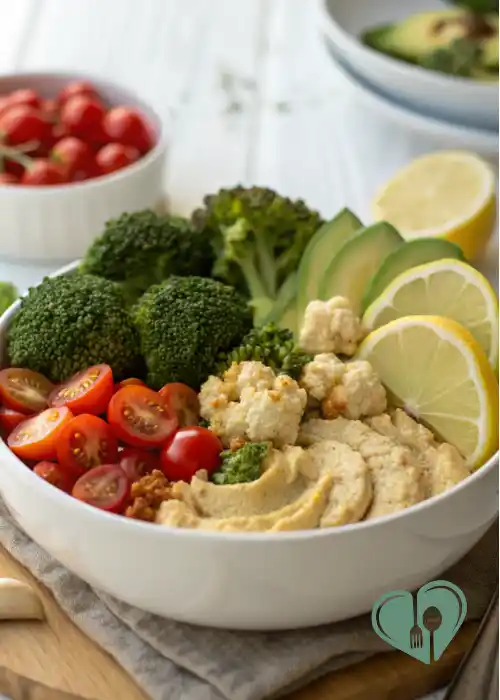
This is a good option when you don’t want something heavy but still need lunch to actually count. Roasted vegetables-broccoli, cauliflower, zucchini-do most of the volume work here. Hummus adds fat and protein, which helps slow digestion and a small scoop of a whole grain keeps it from feeling like a salad pretending to be a meal.
This bowl is especially helpful on days when big portions don’t feel great, but skipping lunch would absolutely backfire later.
If you want a simple, step-by-step version of this bowl with blood-sugar–friendly portions, I’ve shared the full recipe here:
Lemon-Roasted Veggie Bowl with Hummus (Diabetic-Safe Lunch)
Chopped Veggie Turmeric Grain Bowl
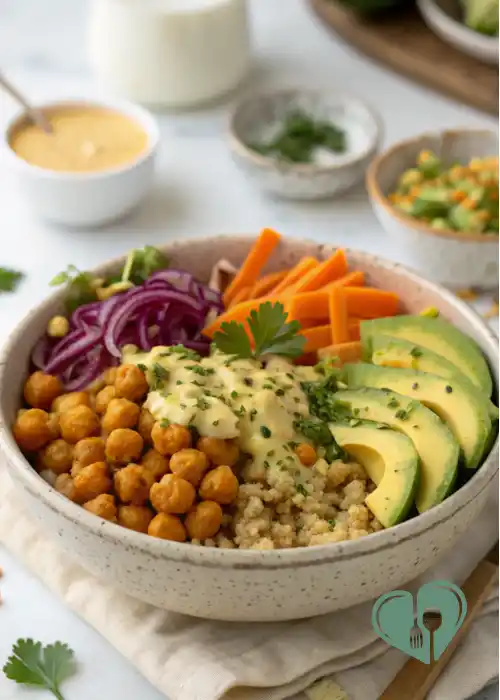
This one leans vegetable-forward, which can be useful if blood sugar has been running higher. Chopped veggies take up a lot of space without adding a lot of carbs and turmeric adds flavor without relying on sweet sauces.
Paired with a modest grain portion and a solid protein, this bowl feels steady and grounding. It’s not exciting in a loud way-but it’s the kind of lunch that quietly does its job.
If you want a step-by-step version of this bowl, with fiber-focused portions and blood-sugar–friendly adjustments, I’ve shared the full recipe here:
High-Fiber Turmeric Veggie Grain Bowl (Diabetic Lunch Idea)
Grain + Bean + Greens Bowl
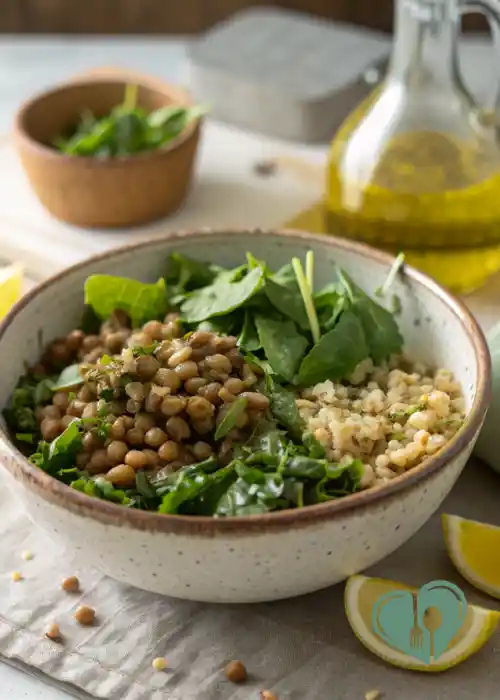
This is the most flexible option, and probably the one you’ll come back to the most. Pick a grain. Pick a bean. Add a lot of greens. Then adjust from there. Different protein, different dressing, different vegetables-it still works.
It’s not flashy, but it’s reliable. And when it comes to diabetes-friendly lunches, reliability beats novelty almost every time.
If you want a simple base you can build on again and again, with clear portions and diabetes-friendly balance, I’ve shared the full bowl here:
Simple Grain-Bean-Greens Bowl (Diabetic Lunch Base)
FAQ: Do I need to follow these bowls exactly for them to work?
No. These bowls are templates, not rules. Swapping vegetables, changing proteins, or adjusting portions won’t “break” them. As long as fiber, protein and balance are still there, the bowl will usually behave well for blood sugar.
How to Build Your Own High-Fiber Diabetes Bowl
Okay, this is the part I wish someone had explained earlier-because once you get this, lunch stops feeling like a constant decision. You don’t need recipes. You don’t need rules taped to the fridge. You just need a loose structure you can fall back on when your brain is tired and you’re hungry now. A high-fiber diabetes bowl is really just a way to stop overthinking lunch.
Some days you’ll want more food. Some days less. Some days your blood sugar’s already being annoying and you need to play it safe. This approach gives you room to adjust without feeling like you “messed up.” And honestly, that flexibility is what makes it doable long-term.
Choose your base
This is where people usually freeze. Is rice okay? Should I skip grains? What if this spikes me? Take a breath. Your base doesn’t have to be big, and it doesn’t even have to be the star. Quinoa, barley, farro, lentils, beans-any of those can work.
If grains tend to spike you, make the base smaller and let vegetables or beans carry more weight. You’re not doing lunch wrong by adjusting portions. You’re just paying attention. That’s kind of the whole point.
Add lean protein
If there’s one thing that consistently makes bowls work better, it’s protein. Without it, lunch feels fine… and then suddenly it’s not. Hunger shows up early. Blood sugar follows. It’s annoying, but predictable.
Chicken, fish, eggs, tofu, tempeh, beans, lentils-pick what you’ll actually eat. Protein slows digestion, helps carbs land more gently, and keeps lunch from unraveling an hour later. Fancy doesn’t matter here. Presence does.
Add 2 to 3 veggies
This is the easiest part, and also the part people weirdly underdo. Vegetables are where you can stop being careful and start being generous. Leafy greens, broccoli, cauliflower, zucchini, peppers, cucumbers-pile them in. These are the same kinds of vegetables that show up in high-fiber salads for diabetics when the goal is volume, satisfaction, and steadier blood sugar rather than restriction.
More vegetables usually means you eat slower, feel fuller and think about food less afterward. And when you’re not constantly thinking about food, blood sugar tends to behave better too. Funny how that works.
Add healthy fats
Fat is the quiet finisher. A little olive oil. Some avocado. A sprinkle of nuts or seeds. Maybe tahini. Not a lot-just enough to make the bowl feel satisfying instead of incomplete.
Without fat, bowls can feel oddly flat, even if everything else is there. With it, lunch feels done. That matters more than it sounds.
Keep dressing light and balanced
This is where perfectly good bowls get accidentally sabotaged. It’s usually not the food-it’s the sauce. Heavy, sweet dressings can spike blood sugar faster than you expect.
Simple works better most of the time: olive oil and lemon, yogurt-based sauces, tahini thinned with water. Enough flavor to enjoy the bowl, not so much that it takes over.
FAQ: How do I know if my bowl is actually “working”?
If you’re full for a few hours, your energy feels steady, and your blood sugar doesn’t do anything dramatic afterward, that’s your answer. Over time, your body gives better feedback than any checklist ever will.
Meal Prep Tips
Meal prep doesn’t have to be a whole personality. If the phrase alone makes you tired, you’re not alone. With lunch bowls, prep is less about being disciplined and more about making sure Future You doesn’t get stuck making decisions while hungry. That’s really it. And on the days when sitting down with a bowl isn’t practical, having diabetes-friendly sandwiches and wraps high in fiber ready to grab can keep lunch just as steady without adding stress. A little prep now saves a lot of second-guessing later.
The easiest way to do this is to prep pieces, not finished meals. A container of cooked grains. A tray of roasted vegetables. One or two proteins you actually like. Then you mix and match as the week goes on. That way lunch doesn’t feel repetitive, and you’re not locked into eating the exact same bowl five days straight.
How long bowls last in the fridge
Most bowl components last longer than people expect, which helps. Cooked grains like quinoa, barley, or farro usually keep well for about 4 to 5 days. Roasted vegetables tend to be fine for 3 to 4 days, especially if they’re not already mixed with sauce. Proteins depend a bit-chicken and fish are better within 3 to 4 days, while beans and lentils often last closer to 5 days.
Fully assembled bowls can work, but they’re a little riskier. Things get soggy. Textures go weird. If you do prep complete bowls, try to eat them within 2 to 3 days. And honestly-if something smells off or looks questionable, just skip it. Lunch isn’t worth that gamble.
What components store best separately
Keeping things separate is one of those small habits that makes meal prep feel way less annoying. Grains do better on their own. Vegetables stay fresher without dressing. Proteins reheat better when they’re not mixed into everything else.
Sauces and dressings almost always belong on the side. Not just for texture-but because it gives you control. You can add a little, taste, then add more if you want. That’s helpful for blood sugar and for avoiding bowls that feel overdressed and heavy.
One small trick that helps a lot: keep at least one no-cook veggie ready to go. Washed greens, sliced cucumbers, shredded cabbage-something you can throw into a bowl at the last minute to bulk it up without extra effort. It sounds minor, but it makes building lunch feel easier.
FAQ: Do I have to meal prep for lunch bowls to work?
Not at all. You can absolutely build bowls on the fly. Meal prep just lowers the barrier. When fiber-rich foods and protein are already there, it’s easier to make a lunch that supports steady blood sugar instead of grabbing whatever’s fastest.
Nutrition Snapshot: What a “Perfect” Bowl Looks Like
Before we even get into numbers-let’s agree on something. A “perfect” bowl isn’t one you measure to death. It’s one you eat, feel satisfied afterward, and don’t regret an hour later. That’s it. This snapshot isn’t a rulebook it’s more like a reference point. Something to keep in the back of your mind when you’re building lunch and wondering, Is this going to hold me or am I about to be hungry again?
A solid high-fiber lunch bowl for diabetics usually lands in a range that supports steady energy and calmer blood sugar. Not because it’s exact-but because the balance is there. Enough fiber. Enough protein. Carbs that aren’t rushing the process. When those pieces line up, lunch tends to behave.
Fiber, protein, carbs, calories
Here’s what a “this usually works” bowl often looks like in real life:
- Fiber: around 8–15 grams
This is the zone where digestion slows down without getting uncomfortable. You usually hit it by combining vegetables with whole grains or beans-no need to force it all into one ingredient. When fiber comes from a few places, the bowl tends to feel steadier. - Protein: roughly 20–30 grams
This is what keeps lunch from falling apart later. Too little protein and hunger comes back fast. Enough protein helps carbs land more gently and keeps you from grazing all afternoon. If you go a little higher some days, that’s fine too. - Carbohydrates: present, but not overwhelming
Instead of thinking “low carb,” think slower carbs. Whole grains, beans, and vegetables digest more gradually-especially when protein and fat are in the mix. That combo matters more than cutting carbs entirely. - Calories: often somewhere around 400–600
This isn’t a target you need to hit. It’s just where many balanced lunch bowls naturally land. What matters more is whether lunch carries you to your next meal without a crash or constant snacking.
One thing people often notice: bowls with enough fiber and vegetables feel bigger than they are. Volume does a lot of quiet work here, both for fullness and satisfaction.
FAQ: What if my bowl doesn’t fit these numbers?
Then it doesn’t fit-and that’s okay. These ranges are guides, not grades. If you’re full for a few hours, your energy stays steady and your blood sugar doesn’t spike sharply afterward, your bowl is doing exactly what it needs to do.
FAQs**
Do high-fiber lunch bowls actually help with diabetes, or do they just sound healthy?
Honestly? They help because they’re structured, not because they’re trendy. High-fiber lunch bowls for diabetics tend to work well because they slow things down-digestion, eating speed, blood sugar response. You’re not relying on one “good” ingredient to do all the work. Everything supports everything else. That said, bodies are weird. What works great for one person might need tweaks for another. That’s normal, not failure.
How much fiber should lunch have… roughly?
Roughly is the key word here. Most people land comfortably around 8 to 15 grams of fiber at lunch. Enough to make a difference not so much that your stomach feels like it’s staging a protest. You don’t need to calculate it every time. If lunch keeps you full and your blood sugar doesn’t spike hard afterward, you’re probably in the right zone.
Can I eat lunch bowls every day without messing things up?
Yes – as long as you’re not eating the exact same bowl every single day. Rotating ingredients matters more than people think. Different vegetables, different grains, different proteins. It keeps digestion happier and helps prevent that “I’m so bored of this” feeling that usually leads to giving up altogether.
What if grains or beans don’t agree with my blood sugar?
That happens. More often than people admit. It doesn’t mean bowls aren’t for you. It usually just means the ratio needs adjusting. Try less grain, more vegetables, a bit more protein. You don’t have to cut things out completely to make a bowl work. Think tuning, not eliminating.
Are bowls actually better than salads for diabetes?
Sometimes. Especially if salads leave you hungry an hour later. A lot of salads accidentally end up low in protein or fiber unless you’re very intentional. Bowls tend to be more filling because they’re built to include multiple fiber sources and a clear protein. If salads work for you, great. If they don’t, bowls are often a calmer option.
Do I need to track carbs, calories, or macros for these bowls to work?
Not necessarily. Many people do just fine paying attention to how they feel afterward. Are you full for a few hours? Is your energy steady? Did your blood sugar behave reasonably? That feedback matters more than perfect numbers. Tracking can help some people-but it’s not required for bowls to be effective.
If high-fiber lunch bowls have made lunch feel a little more manageable, it can help to step back and see how they fit into the bigger picture of high-fiber diabetes-friendly lunches.

Dreena shares balanced, diabetes-friendly recipes made for real life—simple, nourishing, and full of flavor. Her kitchen is where health meets heart.