
If you’ve ever stared into your fridge at noon – somewhere between hungry and cautious – you probably know the quiet negotiation that comes with managing diabetes. What can I make that won’t spike my numbers… but also won’t feel like punishment? It’s a strangely universal moment, even among people who’ve been eating “diabetic-friendly” meals for years. That’s partly why this Open-Face Chickpea Salad Sandwich for Diabetics keeps resurfacing in my own kitchen; it doesn’t ask you to choose between comfort and control.
Chickpeas sit in this interesting middle ground where they’re humble, almost forgettable, yet ridiculously reliable. They don’t behave like “diet food,” and maybe that’s the appeal. There’s something grounding about mashing them up, adding a few crisp, bright things, and watching a simple mixture turn into a meal that feels sturdy – the kind of sturdy you need on days when your blood sugar feels a little unpredictable. And sure, maybe that sounds dramatic for a sandwich, but food often becomes emotional long before it becomes logical.
As we move through the sections ahead, you’ll see how the fiber in chickpeas works like a slow, steady brake pedal; how the ingredients fit together without overcomplicating your life; and how small customizations can shift the recipe toward your own rhythms – your carb tolerance, your cravings, your mood that day. There’s no single “right” way to build this, and honestly, that flexibility is what makes it work. I’ll also share the nutritional details, not to overwhelm you with numbers, but because knowing them often brings a kind of quiet confidence to the plate.
And if part of you is still wondering whether something so simple can actually hit the spot, that’s fair. Let’s just say you might end up building this sandwich more often than you expect – sometimes because it fits your health goals, and sometimes simply because it tastes good.
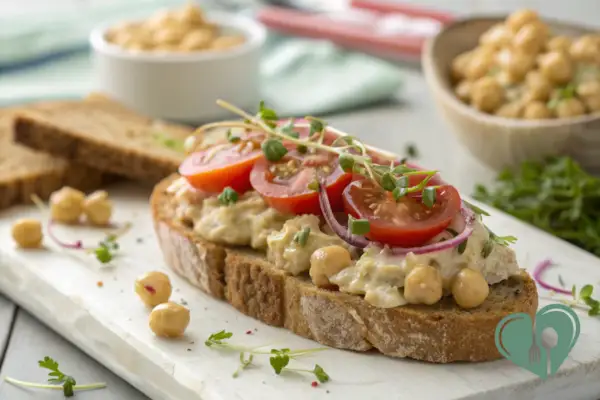
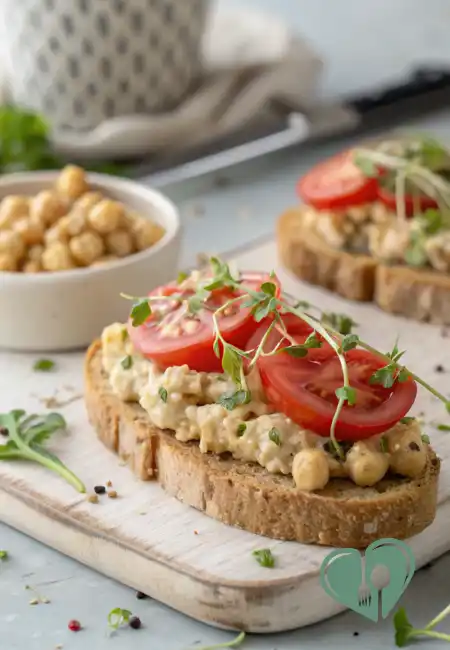

Open-Face Chickpea Salad Sandwich
Ingredients
Equipment
Method
- Mash the chickpeas lightly with a fork – leave some pieces whole for texture.
- Stir in the yogurt (or mayo), mustard, lemon juice, celery, and red onion until the mixture comes together.
- Taste the mixture and adjust with salt, pepper, or more lemon to suit your preference.
- Toast your slice of bread until sturdy enough to hold the chickpea salad.
- Spread the chickpea mixture over the toast in an even layer.
- Add any fresh toppings you like – tomatoes, cucumbers, microgreens – and serve immediately.
Notes
- You can mash the chickpeas as much or as little as you like – leaving some whole gives the sandwich more texture.
- Greek yogurt keeps the salad lighter and higher in protein, while mayo makes it richer. Either works.
- Toasting the bread a little longer helps it hold up under the chickpea mixture.
- This tastes great right away but also holds up for a few hours if you prep it ahead – just keep the bread and salad separate.
- Add-ins like herbs, pickles, or a pinch of paprika can change the whole vibe without much effort.
Why Chickpeas Are a Perfect Fiber Source
Chickpeas are one of those ingredients people tend to overlook until they need something dependable – kind of like that neighbor who always shows up with jumper cables when your car battery dies. They’re unflashy, beige, and honestly a little boring on the surface, but they carry a kind of nutritional steadiness that matters a lot more when you’re trying to keep blood sugar from drifting into chaos. What makes them especially compelling isn’t just that they’re rich in fiber; it’s the quality of that fiber and the oddly comforting predictability it brings to the table. If you’ve ever eaten a meal and thought, “Please just… behave,” chickpeas are one of the foods that usually do. For a collection of meals that combine fiber and blood sugar stability, check out The Ultimate Guide to High-Fiber Diabetes-Friendly Lunches
There’s a gentle irony here: many so-called “diabetic-friendly” foods feel engineered or restrictive, while chickpeas simply exist as they are – unchanged, familiar, and strangely cooperative. Their soluble fiber slows glucose absorption in a way you won’t consciously feel, but you may notice later, almost like your body finally exhaled. And then there’s the insoluble fiber, the unsung hero that keeps you fuller than you’d expect from something you mashed with a fork. The combination doesn’t give you that sudden jolt or crash that’s so common with refined carbs instead, it offers a smooth, almost gradual rise. Not perfect, because food rarely is, but predictable enough to build a meal around without overthinking every bite.
The quiet mechanics of fiber
Soluble fiber forms a gel-like texture during digestion – yes, that sounds clinical, but the real-world effect is anything but. It slows digestion just enough to temper blood sugar swings, which is something you start to appreciate after a few afternoons spent feeling like you’re chasing your glucose meter. Insoluble fiber, meanwhile, contributes to that satisfying heaviness – not the “I overdid it” kind, but the grounded, “I’m good for a while” feeling. It’s subtle, the way good habits usually are.
Do chickpeas spike blood sugar?
Generally, no. They’re low on the glycemic index and release energy slowly, largely thanks to their fiber-to-carb ratio. That said, portion size still plays a role — chickpeas are friendly to blood sugar, not magical. But as far as carb-based foods go, they tend to be one of the more cooperative options for people navigating diabetes.
Ingredients
When you strip this recipe down, the ingredients are honestly pretty down-to-earth. Nothing fancy, nothing that requires a scavenger hunt. Just the kind of things you’d reach for on a day when you want something real but don’t feel like performing in the kitchen.
Chickpea Salad Mix
- 1 cup chickpeas (canned is fine – most of us use canned anyway)
- A spoon or two of Greek yogurt or light mayo
- A small hit of Dijon mustard
- A squeeze of lemon, the kind you half-measure by instinct
- A little chopped celery
- A little chopped red onion
- Salt and pepper
For the Sandwich
- 1 slice whole-grain or low-carb bread
- Whatever fresh topping you’ve got: tomato, cucumber, a handful of greens
It’s intentionally simple. You can eyeball half of this and it’ll still come together. The idea is to make the chickpeas shine without drowning them in extras – just a balanced mix that tastes honest.
How to Build the Open-Face Sandwich
Honestly, there’s nothing fancy about putting this together – it’s more about small choices that make it taste like something you actually want to eat. Think of it like a quick kitchen ritual rather than a “recipe.”
1. Mash the chickpeas – lightly.
Just grab a fork and go for it. Stop before it turns into baby food. You want that mix of soft and firm bits… the kind of texture where you can still see a chickpea here and there. If it looks a little uneven, that’s exactly right.
2. Stir in the yogurt, mustard, lemon, celery, and onion.
Fold everything together until it starts looking like a proper salad. You’ll feel it thicken as it mixes – that’s the nice part. Give it a taste. If it feels flat it probably just needs a tiny bit more lemon or salt. (It’s wild how much difference a squeeze of lemon makes.)
3. Toast your bread.
Toast matters more than anyone admits. If it’s too soft, the whole thing sags in the middle and you spend the next five minutes chasing chickpeas. Too hard and it turns into loud-crunch toast that overshadows everything else. Aim for that middle ground: firm enough to hold gentle enough to bite.
4. Load the chickpea salad onto the toast.
No need to make it precise – let it be a little messy. The warmth from the toast softens the edges of the salad in this really comforting way. (It’s the tiny details like that that make this sandwich feel more filling than you expect.)
5. Add some fresh toppings.
Whatever you’ve got – tomato, cucumber, a handful of greens. These aren’t “decorations.” They give the sandwich contrast so every bite doesn’t feel the same.
Texture Tips (Real-World, Tried-and-Tested)
- If the salad feels mushy: next time, mash less. Or toss in extra celery for crunch.
- If it feels too stiff: loosen it with a tiny splash of lemon or a little more yogurt.
- If the toast collapses: toast longer or switch to a sturdier whole-grain slice – some breads just aren’t built for this kind of topping.
The whole point is to make a sandwich that feels good to eat – not perfect, just satisfying in that quiet, dependable way.
Customizations
The thing about this chickpea sandwich is that it sort of invites you to mess with it. Once you make the basic version, you start noticing all these little ways it could swing sweeter, sharper, creamier, crunchier – whatever you’re in the mood for that day. And honestly, half the time the “customization” is just you glancing into the fridge and thinking, Yeah, that could work.
If you want it richer, just add more yogurt or mayo. It’s not a big moment – you stir it in, taste it, shrug, and maybe add a little more. If you’re craving crunch (because some days soft foods just don’t cut it), chopped pickles or radishes perk it right up. Even leftover roasted vegetables can add a weirdly great texture if you’re not overthinking it. If you love creative, plant-based lunch ideas like this, check out Mediterranean & Plant-Based High-Fiber Lunches for Diabetics for more inspiration.
On days when carbs feel like something you have to negotiate with, the bread can go. The chickpea salad works on crackers, inside lettuce leaves, or honestly just spooned out of a bowl while you stand in the kitchen pretending you’re not ‘having lunch’ yet. For more fiber-packed sandwiches and wraps, check out Diabetes-Friendly Sandwiches and Wraps High in Fiber or try the Veggie and Hummus Sandwich for Diabetics (High-Fiber Lunch) for another simple, satisfying option.
Spice is another mood thing. Sometimes you want that quiet warmth from smoked paprika; other times you want the more chaotic, “wake me up” kind of heat from jalapeños or cayenne. The chickpeas handle it gracefully – like they’re used to adapting.
And then there are herbs. Fresh parsley, dill cilantro… each one changes the personality of the sandwich in this subtle but noticeable way. It’s like giving the same outfit different shoes.
None of this needs to be planned. The sandwich is forgiving, flexible, and weirdly responsive to whatever tiny craving you have in the moment.
Nutrition
Nutritionally, this sandwich is kind of a “no surprises” situation – which is honestly what most people want when managing blood sugar. Chickpeas give you those slow, steady carbs and plenty of fiber, so things stay calm afterward. Using just one slice of whole-grain or low-carb bread keeps the carb load lower without feeling like you’re missing anything. The yogurt adds a small bit of protein, just enough to make the meal feel balanced.
It’s simple, filling in a gentle way, and generally won’t mess with your day. Nothing fancy – just a meal that behaves.
Conclusion: Bringing the Open-Face Chickpea Salad Sandwich
When you step back from the ingredients and the steps and all the tiny decisions that go into making this it’s kind of funny how simple the whole thing really is. This Open-Face Chickpea Salad Sandwich for Diabetics isn’t trying to be a big, impressive recipe – it’s more like a quiet promise that lunch doesn’t have to be stressful or bland or something you just “get through.” It’s a meal that behaves, one that feels steady and satisfying without demanding a lot from you.
And maybe that’s why it works so well. It’s flexible, forgiving and easy to build around whatever kind of day you’re having. Some meals shout this one just shows up, does its job, and lets you move on with your day feeling a little more grounded.
If you try it let yourself adjust it the way you naturally cook a little more lemon here, a crunchier topping there. Make it yours. That’s the real point.

Dreena shares balanced, diabetes-friendly recipes made for real life—simple, nourishing, and full of flavor. Her kitchen is where health meets heart.