
If you’ve ever opened your lunch only to find a sad, wilted salad staring back at you, you’re not alone – and honestly, it’s one of the reasons the Chickpea Quinoa Salad Jar even became part of my own meal-prep rotation. When you’re trying to manage diabetes the last thing you need is a meal that feels like a compromise or, worse, a guessing game with carbs. A jar salad might seem almost too simple, but there’s something quietly powerful about having a neatly layered, blood-sugar-friendly lunch waiting for you in the fridge. For even more ideas on high-fiber, diabetes-friendly lunches, check out The Ultimate Guide to High-Fiber Diabetes-Friendly Lunches.
What makes this particular salad jar different – and, dare I say, a bit of a small victory – is how naturally it fits into a diabetic-friendly lifestyle. Chickpeas offer slow-burning carbs, quinoa adds balanced plant protein, and when you tuck everything into a jar in the right order, the greens stay crisp for days. It’s portion control without feeling like portion control, which is probably why people tend to stick with it longer than they expect. And BTW, if you’ve ever felt that nagging uncertainty about how much dressing is “safe” or whether quinoa is “okay,” layering solves more of that than you might think.
Actually, let me pause there – because something funny happens the first time you use jar salads for meal prep. You realize (maybe halfway through the week) that eating well feels less like a chore and more like a quiet relief There’s this subtle emotional shift: you stop worrying whether lunch will spike your glucose, and instead you start wondering which variation you want to try next. That small mental pivot is, in many ways, the whole point of this recipe. It’s not just food. It’s predictability wrapped in flavor.
This guide will walk you through why jar salads work so well for diabetes, how to layer everything to avoid that dreaded sogginess, and how to customize the recipe based on your cravings or nutritional needs. I’ll also share a few variations – some lower-carb, some more vibrant and herb-heavy – along with a nutrition breakdown so you can understand exactly what you’re eating. And if you’ve ever hesitated before trying chickpeas or quinoa because you weren’t sure how they behave with blood sugar, we’ll talk about that too.
By the time you finish this, my hope is that you’ll feel not just prepared but a little reassured – like you’ve finally found a meal prep habit that doesn’t fight against your diabetes goals. If anything, it supports them quietly, deliciously, and without much fuss.
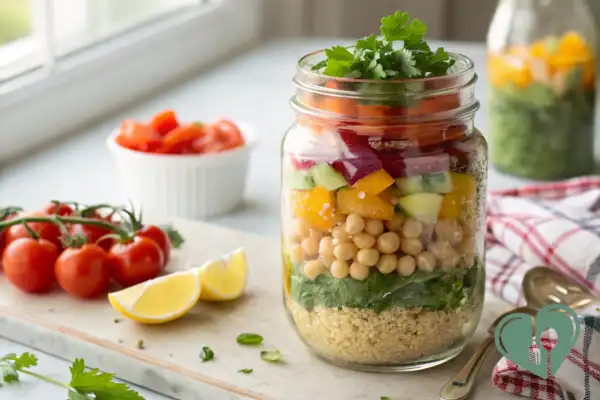
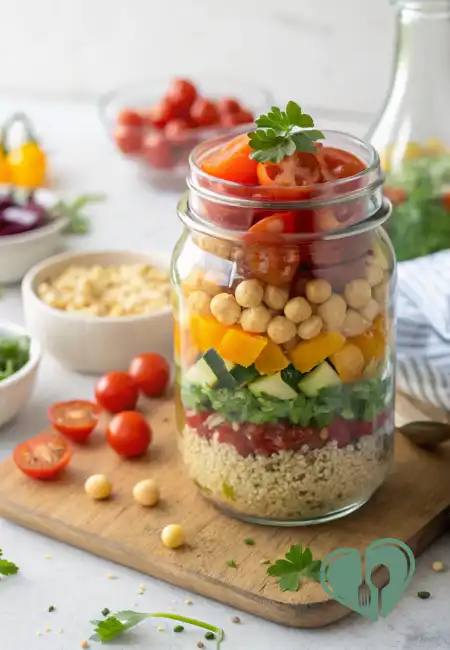

Chickpea Quinoa Salad Jar (Meal Prep for Diabetics)
Ingredients
Equipment
Method
- Add the dressing ingredients (olive oil, lemon/vinegar, mustard, salt, pepper) to the bottom of a clean wide-mouth mason jar.
- Layer the sturdy vegetables directly on top of the dressing: cucumbers, tomatoes, bell peppers, and red onion.
- Add the chickpeas, creating a buffer layer above the vegetables.
- Add the cooked, cooled quinoa on top of the chickpeas.
- Sprinkle in your chopped herbs (parsley, cilantro, or mint).
- Finish with the greens, packing them lightly so they stay crisp.
- Seal the jar and refrigerate for 3–5 days. Shake before serving or pour into a bowl and toss to combine.
Notes
- Salad jars stay fresh for 3–5 days, especially when the dressing stays at the bottom and greens stay dry at the top.
- Use sturdy vegetables like cucumbers, peppers, onions, and tomatoes as your middle layers to prevent sogginess.
- Be sure the quinoa is fully cooled before adding; warm grains cause moisture buildup and wilted greens.
- Add herbs for brightness and flavor without increasing carbs.
- For more protein, add chicken, tofu, tuna, or a hard-boiled egg. This helps create steadier blood sugar and longer-lasting fullness.
- For a low-carb version, substitute cauliflower rice for quinoa and reduce chickpeas.
- Add crunchy toppings like nuts or seeds just before serving.
- Choose vinaigrettes that are low in added sugar to keep the meal diabetic-friendly.
- Shake the jar well or pour into a bowl when ready to serve.
Why Jar Salads Are Great for Diabetes
I’ll be honest: the first time someone suggested a salad in a jar I hesitated. It felt gimmicky, like one of those Pinterest things people swear by but never actually stick with. But once I started making a Chickpea Quinoa Salad Jar for my own diabetic-friendly lunches, something clicked – not immediately, but gradually, almost the way you realize you’ve been sleeping better after changing your pillow. The real advantage isn’t that it looks organized (though that’s nice). It’s that a jar quietly solves problems most people with diabetes bump into every single week: unpredictable portions, fast-digesting meals, and that weird mid-afternoon drop that sneaks up on you after a carb-heavy lunch.
What surprised me most was how steady I felt after eating one. There’s a kind of rhythm your body settles into when a meal has enough fiber, enough protein, and no hidden surprises. Chickpeas, quinoa, crunchy veggies – they digest slowly, almost politely, and that polite pacing matters when you’re trying to avoid glucose spikes. I used to think stabilizing blood sugar required complicated meal planning, but this format has a way of stripping the effort down to something simple. Maybe that’s why jar salads have held up long after other “meal prep hacks” faded out of my routine.
And then there’s the texture thing which sounds superficial until you realize how much it affects behavior. Let’s be honest: nobody wants to eat limp lettuce. Most people managing diabetes don’t fall off track because they lack discipline – they fall off because the food becomes unappealing. Layering the dressing at the bottom, the sturdy vegetables in the middle, and the greens on top protects freshness in a way bowls never quite manage. It’s a small engineering trick but its impact on consistency is bigger than it gets credit for.
Easy Portion Control (Without the Mental Math)
There’s a quiet relief in not having to calculate every component of your meal. The jar sets the boundary; you just fill it with foods that treat your blood sugar gently. What you get is portion control that doesn’t carry that heavy feeling of restriction. It’s more like choosing the right container and letting physics take over. Some days I’m not even fully aware I’m “meal prepping for diabetes” – I’m just assembling layers that happen to keep me balanced.
FAQ – Do Jar Salads Actually Help Prevent Glucose Spikes?
Often yes. The combination of high-fiber ingredients, controlled carb portions and delayed dressing contact keeps the meal both nutrient-dense and low-glycemic. It’s not a cure-all, of course but for many people, this structure creates smoother post-meal readings compared to typical grab-and-go lunches.
Ingredients for the Chickpea Quinoa Salad Jar
There’s a moment – right before you start assembling a meal-prep recipe – when you quietly hope the ingredients won’t become another half-used collection in the fridge. I’ve had that happen more times than I’d like to admit. But the ingredients for this Chickpea Quinoa Salad Jar tend to pull their weight all week long, partly because they’re intentionally simple and partly because they behave well even when you’re not in the mood to cook. And if you’re managing diabetes, there’s something comforting about knowing the building blocks of your lunch are naturally low-glycemic and fiber-forward without needing to overthink any of it.
When I lay everything out on the counter – the chickpeas, the quinoa, the bright vegetables – it always feels less like “meal prep” and more like assembling a set of guarantees. Each component brings something reliable: slow-digesting carbs, crunch that doesn’t fade overnight, and flavors that don’t turn muddy after a day or two. If anything, the simplicity of these ingredients almost tricks you into believing the recipe couldn’t possibly be doing much for blood sugar balance… until it does.
Below is the list in its cleanest form, but you’ll probably notice I’ve added little reasons beneath the surface – small nudges that explain why these foods make life easier when you’re trying to eat in a way that respects both flavor and glucose stability.
Base Ingredients (1 Large Jar / 1 Serving)
- 1/3 cup cooked quinoa, cooled
- 1/2 cup chickpeas, drained and rinsed
- 1/3 cup diced cucumber
- 1/3 cup cherry tomatoes, halved
- 1/4 cup chopped bell pepper
- A small handful of red onion slices (or none, depending on your mood)
- Herbs you actually enjoy – parsley, mint, cilantro
- 1.5–2 cups mixed greens or spinach
Dressing (Layer First)
- 1 tablespoon olive oil
- 1 tablespoon lemon juice or red wine vinegar
- 1/2 teaspoon Dijon mustard
- Salt and pepper
- Optional: dried oregano or garlic powder
Why These Ingredients Work (Beyond the Obvious)
Sometimes the most diabetes-friendly ingredients aren’t the flashy superfoods – they’re the steady ones. Chickpeas give you that slow-burn fullness without the rollercoaster effect. Quinoa behaves almost like a grain that decided to grow up and become more responsible: high in protein moderate in carbs, and gently digesting. And vegetables? They give you volume, color, and the kind of crunch that makes the whole jar feel intentional instead of obligatory.
The dressing looks simple because it should be. I’ve tried plenty of store-bought versions, but many contain sneaky sugars or stabilizers that don’t do blood sugar any favors. A quick vinaigrette like this one lets you control the tang, the richness, and the carb count without adding another task to your day.
FAQ – What if I Don’t Like Quinoa?
Totally fine. Swap in farro (if you tolerate a slightly higher carb option), cauliflower rice (for lower carb), or even a scoop of lentils for more protein. The jar doesn’t depend on quinoa specifically – it just needs a base that won’t turn soggy or spike your glucose too quickly.
Step-By-Step Instructions
There’s something oddly soothing about assembling a jar salad – almost like stacking small decisions in the right order so the rest of the week doesn’t unravel on you. And with a Chickpea Quinoa Salad Jar, the order really does matter. It’s one of those rare cooking moments where structure actually gives you freedom. When you’re managing diabetes, that structure becomes even more important: good layering keeps textures crisp, flavors bright and blood sugar surprises at a minimum. It’s funny how something as simple as where the dressing sits can change whether you look forward to lunch or quietly dread it.
Below is the process in a way that feels less like strict instructions and more like a rhythm – a flow you fall into. After a jar or two, your hands will almost know where to go before you think about it. That’s the beauty of a diabetic-friendly meal prep technique that isn’t demanding; it starts working with you instead of against you.
1. Add the Dressing First
Pour the olive oil, lemon or vinegar, mustard, and seasonings into the bottom of a clean, wide-mouth jar. This bottom layer protects everything else. It feels counterintuitive at first – like you’re burying the flavor – but later, when you shake the jar, it distributes itself perfectly without drowning the greens.
Sometimes I even pause here, noticing how much easier it is to control portions when the dressing is measured rather than drizzled mindlessly over a bowl. Little things accumulate.
2. Add the Sturdy Vegetables
Think cucumbers, tomatoes, bell peppers, red onion. These vegetables can handle sitting in dressing without losing their integrity. Their natural water content creates a buffer that prevents the quinoa or greens from becoming soggy. And emotionally – or maybe this is just me – layering bright colors early on makes the whole jar feel intentional.
3. Add the Chickpeas and Quinoa
This is the heart of your low-glycemic, fiber-rich structure. Adding them above the vegetables keeps the dressing from saturating them too quickly, which helps maintain flavor and texture. Chickpeas settle in with a quiet sturdiness; quinoa tends to float a little, an unbothered midpoint layer that just works.
If you’ve ever worried whether you’re using “too much carb,” this middle layer removes that anxiety because everything is pre-portioned.
4. Add Herbs and Greens Last
Herbs first, greens last. This is where the jar earns its keep. The greens stay far away from moisture, which means they stay crisp for days. There’s something strangely satisfying about opening a jar on day three and hearing a faint crunch when you press a leaf between your fingers – the kind of satisfaction bowls almost never give you.
Layering to Avoid Soggy Greens
The trick isn’t complicated: wet things go down, dry things go up. But the psychological reward is bigger than the technique itself. When your greens aren’t wilted, you don’t feel like you’re settling for a “diet” meal; you feel like you’re eating something fresh and deliberate. And that emotional shift – however subtle – often determines whether a diabetic meal prep habit sticks long-term.
FAQ – How Long Does a Salad Jar Stay Fresh?
Generally 3–5 days. The more carefully you keep the greens separated from moisture, the closer you get to the five-day mark. If you’re using delicate greens like spring mix, aim for three days; heartier greens like spinach or romaine stretch longer.
Variations for a Diabetic-Friendly Chickpea Quinoa Salad Jar
The funny thing about salad jars is that once you get comfortable with the basic structure, you start noticing how adaptable they are – almost suspiciously adaptable, like they’ve been waiting for you to personalize them. And if you’re living with diabetes, that flexibility matters more than people think. Some days you need fewer carbs, some days you need more protein, and some days… well, you just need lunch to feel a little different so you don’t abandon your meal prep entirely. For another high-fiber, fresh salad option, check out Mixed Greens with Lentils & Sliced Apple. I’ve had weeks where the only thing that kept me from straying was the promise of a slightly new flavor hiding behind a familiar structure.
What I love about these variations is that they don’t require rebuilding the recipe from the ground up. All you’re doing is redirecting the same foundation fiber, slow-digesting ingredients and layered textures – in a way that keeps things interesting. If you want even more ideas for colorful, filling high-fiber salads that are blood-sugar smart, see High-Fiber Salads for Diabetics: Colorful, Filling and Blood-Sugar Smart.” And there’s something quietly reassuring about knowing you can tweak a salad jar without compromising the stability it offers your blood sugar. It’s not about reinventing the wheel; it’s about nudging it a little so the ride feels smoother, or at least less repetitive.
1. Lower-Carb Variation
If your body tends to be a little finicky about carbs (mine definitely has its days), this is the simplest shift: swap the quinoa for cauliflower rice or reduce it by half. You still get volume, texture, and that “I’m actually eating a full meal” feeling – just with a gentler carbohydrate impact. I’m always surprised by how satisfying this version feels, even when I think I’ll miss the grains.
2. High-Protein Variation
Some days call for a sturdier lunch – the kind that keeps you grounded between late-morning errands and whatever the afternoon decides to throw at you. Adding tofu, grilled chicken, tuna, or even a chopped hard-boiled egg changes the arc of the meal entirely. The chickpeas stay, but suddenly they’re part of a bigger ensemble. It’s a subtle reminder that protein is one of the most underrated tools for glucose stability.
3. Mediterranean Version
This version is bright, herbal and without meaning to exaggerate – reliably mood-lifting. Swap the regular dressing for something lemony and add feta, olives, and parsley. The high-fiber vegetables and olive oil create this quiet harmony that just feels right for diabetic-friendly eating. It’s the kind of salad that makes you pause halfway through and realize you’re actually enjoying lunch instead of tolerating it.
4. Southwest Version
On weeks when I’m bored of “fresh” flavors and want something deeper or warmer, this is my go-to. A squeeze of lime, a dash of chili powder, maybe a few black beans (not too many), cilantro, peppers… it builds a different kind of comfort. It leans savory slightly smoky and somehow feels heartier without adding unnecessary carbs.
5. Crunch-Forward Version
If you’re driven by texture – and honestly, many of us are – add toasted nuts, pumpkin seeds, or roasted chickpeas right before eating. I’ve noticed that crunch has an outsize effect on satisfaction. It tricks the brain into thinking the meal is fresher than it is, which matters a lot when you’re on day four of meal prep and starting to question your life choices.
FAQ – How Do I Know Which Variation Won’t Spike My Blood Sugar?
A good rule of thumb: the fewer fast carbohydrates and the more fiber or protein you add the steadier your glucose curve tends to be. Most of these variations stay safely within a diabetic-friendly range, but your own body will respond in its own way. If you’re unsure, try a variation during a low-stakes day and see how your meter reacts – patterns usually reveal themselves faster than you expect.
Nutrition for the Chickpea Quinoa Salad Jar
Nutrition can feel strangely abstract until it’s tied to something you actually eat – something concrete enough to picture. With the Chickpea Quinoa Salad Jar, the nutritional profile isn’t just a set of numbers; it’s a pattern of slow digestion, fiber padding, and steady-release energy that supports diabetic goals without drawing attention to itself. I’ve always believed that the best diabetic-friendly meals don’t announce their intentions – they just behave well in your body and let you get on with your day.
A typical jar, as written, lands in that comfortable middle zone: filling but not heavy, fiber-rich without being bulky, and high enough in plant protein that you don’t experience those late-lunch cravings that push you toward snacks you didn’t plan for. If you’ve ever had a meal that tasted healthy but left you hungry an hour later, you’ll feel the difference here almost immediately. The mix of quinoa, chickpeas, and vegetables creates a kind of nutritional scaffolding that holds you steady. Not perfectly steady – nothing is perfect – but steady enough that you notice the absence of blood sugar swings.
Let’s look at the approximate breakdown for one serving (it varies slightly depending on your vegetable choices):
- Calories: ~380–420
- Carbohydrates: ~48–52g
- Fiber: ~11–14g
- Protein: ~13–16g
- Fat: ~12–15g
None of these numbers are extreme. Instead, they lean toward balance – the kind of balance that diabetes educators talk about but that’s sometimes hard to translate into real meals. The high fiber (especially from chickpeas & vegetables) slows glucose absorption. The protein from quinoa and legumes keeps your appetite grounded. The olive oil provides sustained energy without spiking anything. And the vegetables… well, they bring bulk and micronutrients without adding meaningful carbs. It’s a meal built around the idea that steadiness is more valuable than strictness.
There’s another subtle benefit: this salad jar tends to have a moderate glycemic load because the carbs are surrounded by fiber and fat. A lot of people misunderstand quinoa or chickpeas, assuming they’re “off-limits,” but the way they behave in a mixed meal like this is completely different from eating them alone. Context matters – a lot more than nutrition labels suggest.
FAQ – Is This Salad Safe for Someone Watching Their Blood Sugar Closely?
Generally yes. Most people find that meals with this balance of fiber, protein and slow-digesting carbs produce gentle, predictable glucose curves. If you’re cautious or still learning how your body responds, try testing your blood sugar two hours after eating the jar the first time. Your response will tell you more than any chart could.
Conclusion – Why the Chickpea Quinoa Salad Jar Deserves a Spot in Your Week
Some recipes become part of your routine because they’re convenient; others because they make you feel a little more in control. The Chickpea Quinoa Salad Jar falls somewhere in between – reliable enough to trust, flexible enough to adapt, and quietly supportive in a way that matters when you’re trying to balance real life with diabetes management. What surprised me most the first time I made it wasn’t the taste (though the taste is good) but the calm predictability it brought into a part of the day that often feels rushed or improvised.
You might notice, after a week or two, that this jar becomes less of a “healthy choice” and more of a familiar anchor. Something you can prep while half-distracted, stack in the fridge, and forget about until you need it. There’s comfort in that – the kind of comfort that comes from knowing your lunch won’t sabotage your blood sugar or leave you hunting for snacks an hour later.
And maybe that’s the real value here. Not the layering technique, not the quinoa, not even the dressing at the bottom – but the small sense of steadiness the whole thing brings. If you’re searching for a meal that respects your time, your appetite, and your glucose levels, this Chickpea Quinoa Salad Jar tends to show up exactly the way you hope it will.
Whenever you’re ready you can make the base recipe or explore the variations. Either way, you now have a meal-prep tool that works with you, not against you.
Dreena shares balanced, diabetes-friendly recipes made for real life—simple, nourishing, and full of flavor. Her kitchen is where health meets heart.