
It’s funny how something as simple as lunch can start to feel like a tiny daily negotiation – especially when you’re trying to manage blood sugar without sacrificing flavor. I’ve been in that spot more times than I can count: staring into the fridge, hoping a “diabetic-safe lunch” somehow magically appears, only to settle for something plain or, worse, something that sends glucose levels on a predictable, annoying roller coaster. This is partly why this lemon-roasted veggie bowl with hummus became a small personal victory for me. It struck that rare balance between feeling bright, satisfying, and – honestly – like real food rather than a nutritional compromise.
What surprised me most the first time I made it wasn’t even the taste (although the lemon does something almost mischievously refreshing). It was how steady I felt afterward. There’s a calmness you don’t really talk about with meals, but when your blood sugar stays level, you notice it – a kind of quiet in the background instead of the usual spike-then-slump narrative. And maybe this sounds a bit overdramatic for a bowl of vegetables and grains, but when food behaves, life feels just a little more cooperative.
I’m also aware that recipes promising “healthier choices” often drag you through complicated steps or specialty ingredients. This bowl isn’t like that. It’s practical, adaptable, and forgiving – the sort of thing you can throw together on a rushed weekday or build more intentionally when you actually have a moment to breathe. BTW, the lemon-on-veg move? It’s one of those tiny tweaks that feels like it shouldn’t matter as much as it does.
As you go through this guide, you’ll notice it isn’t just about assembling ingredients. It’s about easing that low-level frustration people rarely talk about: wanting meals that support your health without making you feel monitored or restricted. This bowl is both structured and flexible, a combination I didn’t realize I needed until I started making it regularly. And as we unpack each part – from the ingredients to the customizations – you’ll probably find yourself thinking of your own variations, or maybe even second-guessing whether you’ve underestimated how satisfying a simple grain bowl can be. Actually, scratch that – let’s dive in and let the bowl make its own case.
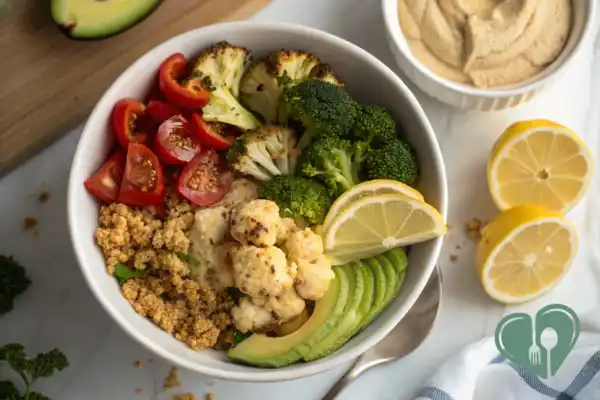
Why This Bowl Helps Control Blood Sugar
It’s strange how a meal can feel both comforting and strategic at the same time. When I first started paying closer attention to how different lunches affected my blood sugar, I kept wishing for something that felt real – not a diet plate, not a clinical checklist – just a bowl of food that tasted good and didn’t punish me an hour later. This lemon-roasted veggie bowl ended up being one of the few that actually delivered that mix of grounded flavor and steadiness. Not perfect steadiness – bodies rarely work like that – but steady enough that I noticed the difference without even trying to measure it.
The real magic, if you can call it that, comes from how all the pieces interact. Roasted vegetables bring naturally slow-digesting carbs and loads of fiber; hummus adds creaminess with a quiet punch of plant protein; whole grains create that satisfying fullness without the “spike-crash” arc you might be familiar with. I think what surprised me most was how the lemon – bright, almost sharp – seems to make the bowl feel lighter without reducing how filling it is. It’s the kind of combination you don’t overthink until you realize it’s making your afternoons noticeably calmer.
High fiber + plant protein
Even if you’ve heard the fiber-and-protein conversation a thousand times, this bowl shows why people won’t stop talking about it. Fiber from roasted veggies slows the absorption of carbohydrates; plant protein from hummus and chickpeas keeps hunger from rebounding too quickly. The partnership isn’t glamorous, but it works. And I’ll admit something: I used to think hummus was just there to make everything taste less “vegetable-y.” Turns out it’s quietly doing the heavy lifting – smoothing digestion, softening glucose responses, and making the whole bowl feel more balanced than it looks on paper.
There’s this subtle pacing effect, too. The chewy grains, the creamy hummus, the slightly crisp edges of the vegetables – you naturally slow down while eating it. That gentle, almost unintentional pause between bites gives your body more time to process what’s coming in. It’s not scientific precision, but it is a pattern I’ve noticed again and again.
FAQ – Will this bowl keep blood sugar steady for most people?
Generally, yes – and that’s one of its biggest strengths.
Meals built on fiber-rich veggies, legumes, and slow-burning grains tend to lead to more predictable glucose readings. Of course, everyone’s body reacts a little differently (something I’ve had to remind myself more times than I’d like), but this type of bowl is usually a smart, steady choice. If you want to make it even more blood-sugar-friendly, a slightly bigger scoop of hummus or an extra serving of protein can help anchor it even further.
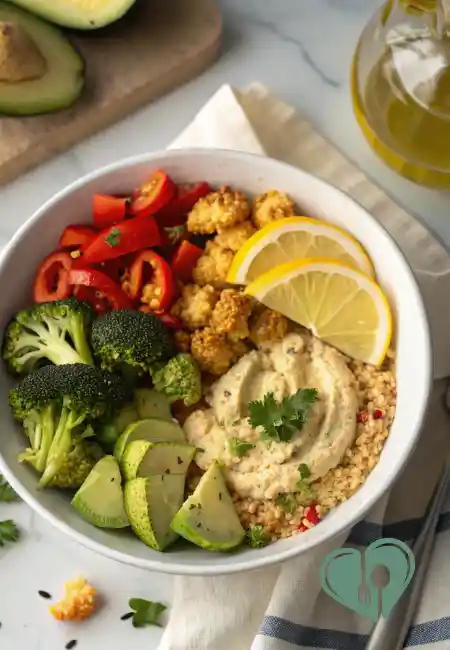

Lemon-Roasted Veggie Bowl with Hummus
Ingredients
Equipment
Method
- Preheat the oven to 425°F (220°C).
- Spread the cauliflower, broccoli, red bell pepper, zucchini, and sliced garlic onto a large baking sheet.
- Drizzle the vegetables with olive oil, sprinkle with dried oregano and salt, and toss to coat evenly.
- Roast the vegetables for 20–25 minutes, stirring halfway through, until lightly browned and tender.
- Remove from the oven and toss the hot vegetables with lemon zest.
- Add the cooked, cooled quinoa to serving bowls.
- Top each bowl with the roasted vegetables.
- Add a generous scoop of hummus to each bowl.
- Slice the avocado and divide it among the bowls.
- Serve with lemon wedges for squeezing over the top.
Notes
- Cool the quinoa completely before assembling the bowls so the hummus doesn’t melt and the textures stay distinct.
- Cut the vegetables into similar-sized pieces to help them roast evenly and get those lightly caramelized edges.
- Add the lemon zest while the veggies are still hot è the warmth releases the citrus aroma and brightens the whole bowl.
- Prepare the avocado right before serving to keep it fresh and prevent browning.
- Swap quinoa for cauliflower rice if you want a lower-carb version without losing the bowl’s flavor or structure.
- Use any hummus flavor you like è classic, lemon, garlic, or roasted red pepper all work well in this recipe.
- Great for meal prep: store the roasted vegetables and quinoa together, but add the hummus and avocado fresh when serving.
- Optional: Add extra protein (chicken, salmon, tofu, or lentils) if you want a heartier, more blood-sugar-stabilizing bowl.
Ingredients
There’s something strangely reassuring about working with a list of ingredients that already feels complete – no guesswork, no “maybe I should add this,” just a clear set of simple, real foods that work together without fighting for attention. When I first laid out these ingredients on the counter, I remember thinking how… normal they looked. Vegetables you’ve probably bought dozens of times, quinoa that might be sitting in your pantry right now, hummus that doesn’t ask for any special treatment. And yet, when you put them together, they somehow feel elevated – like a bowl that respects your blood sugar and your taste buds without making a big performance out of it.
The measurements are specific, but not in that bossy, rigid way certain recipes can feel. They’re more like a starting point – the kind of quantities that give you a perfectly balanced bowl while still allowing for the tiny personal tweaks we all make without admitting it. The lemon zest in particular brings a quiet brightness that threads through every bite. And the avocado? It softens everything almost like a gentle reminder that healthy eating doesn’t need to feel austere.
Veggies
These vegetables weren’t chosen just because they roast beautifully (though they do). They each bring their own subtle character and fiber-rich backbone, creating that slow-digesting structure that helps keep blood sugar steadier.
- 1 ½ cups cauliflower florets
- 1 ½ cups broccoli florets
- ¾ cup diced red bell pepper (1-inch)
- ¾ cup diced zucchini (1-inch)
- 2 cloves garlic, thinly sliced
The mix gives you a balance of earthy, sweet, and bright – and it’s just enough variety to feel interesting without turning prep into a chore.
Hummus choice
Here you’ll use:
- 1 cup hummus (see Tip)
The beauty of hummus in this bowl is that it’s doing three jobs at once: adding creaminess, anchoring the meal with plant protein, and naturally slowing digestion. Whether you choose classic, lemon, garlic, or something with a little heat, the hummus becomes the “glue” that ties the roasted vegetables and quinoa together. It’s the quiet stabilizer of the whole lunch.
Grain options
Instead of multiple choices, this version relies on one solid, dependable base:
- 2 cups cooked tricolor quinoa, cooled
Quinoa has that rare combination of being light yet filling – it feels substantial without weighing down your afternoon. The tricolor variety adds a bit more texture and visual interest which honestly makes the bowl feel just a touch more intentional than it actually is.
Additional supporting ingredients
These aren’t categories by themselves, but they’re essential to the bowl’s flavor and balance:
- 1 tablespoon extra-virgin olive oil
- 1 teaspoon dried oregano
- ¼ teaspoon salt
- 2 teaspoons lemon zest
- 4 lemon wedges
- 1 medium avocado
The lemon zest is what brightens the roasted vegetables, and the avocado brings a kind of gentle richness that rounds out the bowl. The olive oil, oregano, and salt create a simple, steady seasoning that never tries too hard.
FAQ -Are these ingredients balanced enough for a diabetic-friendly lunch?
Yes – and that’s part of why this combination works so well.
You’ve got fiber-rich veggies a moderate amount of healthy fats from olive oil and avocado, plant protein from hummus and quinoa, and bright acidity from lemon to help keep the flavors lively. It’s a naturally low-glycemic combination without feeling engineered for that purpose. It just happens to support steady energy – which, honestly, is the best kind of healthy meal.
Directions
I’ll be honest – every time I make this bowl, it reminds me how grounding it feels to do something simple with my hands. Not in a “mindfulness exercise” kind of way, just… normal. Real. You chop a few things, toss them together, let the oven do most of the work. And maybe I’m projecting but there’s something nice about a recipe that doesn’t demand precision or emotional energy. It’s just vegetables, heat and a little lemon. Somehow that ends up being enough.
The whole process has this rhythm to it – not quite relaxing but familiar, like tying your shoes or watering a plant. Even if you’re not in the mood to cook these steps don’t really fight you. They just happen and before you know it the kitchen smells good and the bowl is practically building itself.
Roasting vegetables
- Set your oven to 425°F (220°C).
No need to overthink it. This temperature seems to magically hit the “tender but slightly crispy” zone without much effort. - Spread the cauliflower, broccoli, red pepper, zucchini and garlic on a big sheet pan.
If it looks crowded, that’s your sign to grab another pan. I’ve tried squeezing everything onto one tray before – it always ends in soggy vegetables and a little regret. - Drizzle with olive oil, sprinkle the oregano and salt, and toss everything with your hands.
Using your hands isn’t fancy or rustic it’s just easier. You can actually feel when everything is coated instead of guessing. - Roast for 20–25 minutes, stirring halfway through.
Don’t stress about timing. Ovens have personalities. You’re aiming for browned edges and vegetables that feel soft but not collapsing. - Add the lemon zest while the vegetables are still hot.
This part is unexpectedly satisfying. The heat releases the citrus aroma instantly – it makes the whole tray smell way fancier than the ingredients actually are.
Putting the bowl together
- Add the cooled quinoa to your bowls.
And yes, it really does need to be cooled. Warm quinoa melts the hummus, and the textures get muddy. Learned that the hard way. - Spoon the roasted vegetables over the quinoa.
They’ll look a little messy. That’s fine – messy bowls usually taste better anyway. - Add a generous spoonful of hummus.
Don’t be stingy A small scoop disappears into the vegetables; a proper one sits proudly and actually adds structure. - Slice the avocado and lay it on top however you want.
Neat slices, wonky chunks – it doesn’t matter. Avocado always looks good once it’s in a bowl. - Serve with lemon wedges.
The squeeze at the end ties everything together. Sometimes I forget and add it halfway through eating — honestly, still great.
FAQ – Can I make this ahead without losing the roasted texture?
Yes – surprisingly, yes.
Just store the quinoa and roasted vegetables together and keep the avocado and hummus separate until you’re ready to eat. The veggies won’t stay crispy but they keep their flavor and structure better than you’d expect. It ends up tasting more like a “planned meal” than leftovers.
Customizations
One of the quiet joys of this bowl is how easy it is to make it “yours” without breaking the balance that keeps it diabetic-friendly. I think most of us have had that moment where a recipe looks great on paper but feels too rigid in real life – like it only works if you follow every direction with military precision. This bowl isn’t like that. The base does the heavy lifting, and the add-ons let you adapt depending on what you’re craving, what you have in the fridge, or honestly, the kind of day you’re having.
What I love about these customizations is that none of them make the bowl feel like an entirely different meal. They just shift the vibe – a bit heartier, a bit brighter, a bit more protein-forward – without disrupting the overall feeling of “balanced but comforting.” And if you’re managing blood sugar, having a bowl that can pivot with your appetite without sending glucose numbers into chaos is… honestly kind of a relief.
For more ideas on high-fiber lunch bowls that are easy, filling, and blood-sugar friendly, check out High-Fiber Lunch Bowls for Diabetics: Easy, Filling and Blood-Sugar Friendly. You might also enjoy trying the High-Fiber Quinoa Burrito Bowl for Diabetics for a flavorful twist on your lunchtime routine. Another great option is the High-Fiber Turmeric Veggie Grain Bowl, packed with color, flavor, and nutrients to help support steady blood sugar.
Protein additions
Adding protein is one of the easiest ways to make this bowl more satisfying and more stable. Different proteins bring different moods but they all blend into the bowl without overpowering the lemon-roasted vegetables.
- Grilled or baked chicken
Straightforward, familiar and especially good if you season it with lemon or herbs to match the bowl’s brightness. - Salmon
Rich, deeply satisfying, and naturally stabilizing thanks to healthy fats. It turns the bowl into more of a dinner-level meal. - Crispy tofu
Great if you want plant-based protein without heaviness. The crisp edges give the bowl extra texture. - Lentils
Low-effort, high-fiber, and surprisingly comforting. They blend with the hummus in a way that feels almost creamy.
What I’ve noticed is that each protein affects the bowl’s “tempo.” Chicken feels light and clean, salmon feels grounding, tofu feels playful, lentils feel earthy. They’re all compatible – it just depends on the energy you want your meal to have.
Gluten-free tweaks
The base recipe is already naturally friendly for gluten-free eaters as long as your quinoa is certified gluten-free but here are a few ways to adjust the bowl if you’re avoiding gluten entirely or cooking for someone who is:
- Stick with quinoa or switch to cauliflower rice for a lower-carb base.
- Check store-bought hummus labels, since a few brands sneak in additives you might prefer to avoid.
- Add extra roasted vegetables if you’re skipping grains – the bowl still feels satisfying without them.
- If you love a little crunch, toasted pumpkin seeds or sunflower seeds add texture without gluten risk.
These tweaks don’t change the spirit of the bowl they just widen the doorway for more people to enjoy it.
FAQ – What’s the best protein to keep blood sugar steady?
Anything lean or plant-based tends to work well, but lentils and salmon are standouts.
Lentils offer fiber + protein in one package, which is basically a dream combination for blood sugar management. Salmon brings healthy fats that slow digestion and keep the bowl feeling substantial. But honestly, the “best” protein is the one you’ll actually enjoy eating – because sustainable choices matter more than theoretical perfection.
Nutrition
Here’s the thing: I don’t think anyone sits down and gets excited about the “nutrition” section of a recipe. Half the time it makes me feel like I’m being quizzed on something I didn’t study for. So I’m not going to throw numbers at you or pretend every gram needs to be measured like you’re doing a science project. What matters with this bowl is how it feels in your body – and, honestly, it feels pretty steady.
The veggies give you a ton of fiber without making the meal feel bulky. The quinoa brings carbs, sure, but they’re slow-burning ones, the kind that don’t knock you sideways or make you tired 30 minutes later. The avocado and olive oil bring that smooth, satisfying fullness – not the heavy “oh no why did I eat that” fullness, but the kind where you’re actually good until dinner. And the hummus… well hummus is doing more silent work than anyone gives it credit for: protein creaminess and that weird ability to keep you full even though it never looks like a big portion.
What I like most about this bowl nutritionally is that it doesn’t feel like it’s trying too hard. You know how some meals look healthy but leave you hungry? This one doesn’t. And you know how others keep you full but wreck your blood sugar? This one doesn’t do that either. It lands somewhere in that sweet, almost boringly stable middle – which, frankly, is exactly what most of us are looking for.
What this bowl has going for it:
- Vegetable fiber that actually makes a difference
- Plant protein that’s easy on digestion
- Healthy fats that slow things down in a good way
- Carbs that behave themselves (finally)
- Lemon for flavor instead of sugary sauces
FAQ – Will this bowl keep me full without sending my blood sugar bouncing all over the place?
Most likely, yes.
It’s one of those meals that feels “even” – no sudden hunger, no weird crash. Between the fiber, the fats, and the protein, there’s enough going on to keep you satisfied without needing extra carbs or constant snacking. And if you do tend to get hungry easily adding just a bit more hummus or an extra half avocado usually does the trick.
Conclusion: Lemon-Roasted Veggie Bowl with Hummus
If there’s one thing this bowl proves, it’s that a “healthy” or “diabetic-friendly” meal doesn’t have to feel like a compromise. It’s simple, grounding, and honestly pretty reliable – the kind of recipe you come back to when you want something that tastes good and treats your body kindly. And maybe that’s the quiet charm of it: nothing flashy, nothing complicated, just a bowl that shows up for you on a regular Tuesday and makes the rest of the day a little easier. If you try it, you’ll probably find your own small tweaks, your own rhythm with it – that’s when you know a recipe has really settled into your life.
For even more ideas and a complete guide to high-fiber, diabetes-friendly lunches, check out The Ultimate Guide to High-Fiber Diabetes-Friendly Lunches.

Dreena shares balanced, diabetes-friendly recipes made for real life—simple, nourishing, and full of flavor. Her kitchen is where health meets heart.