
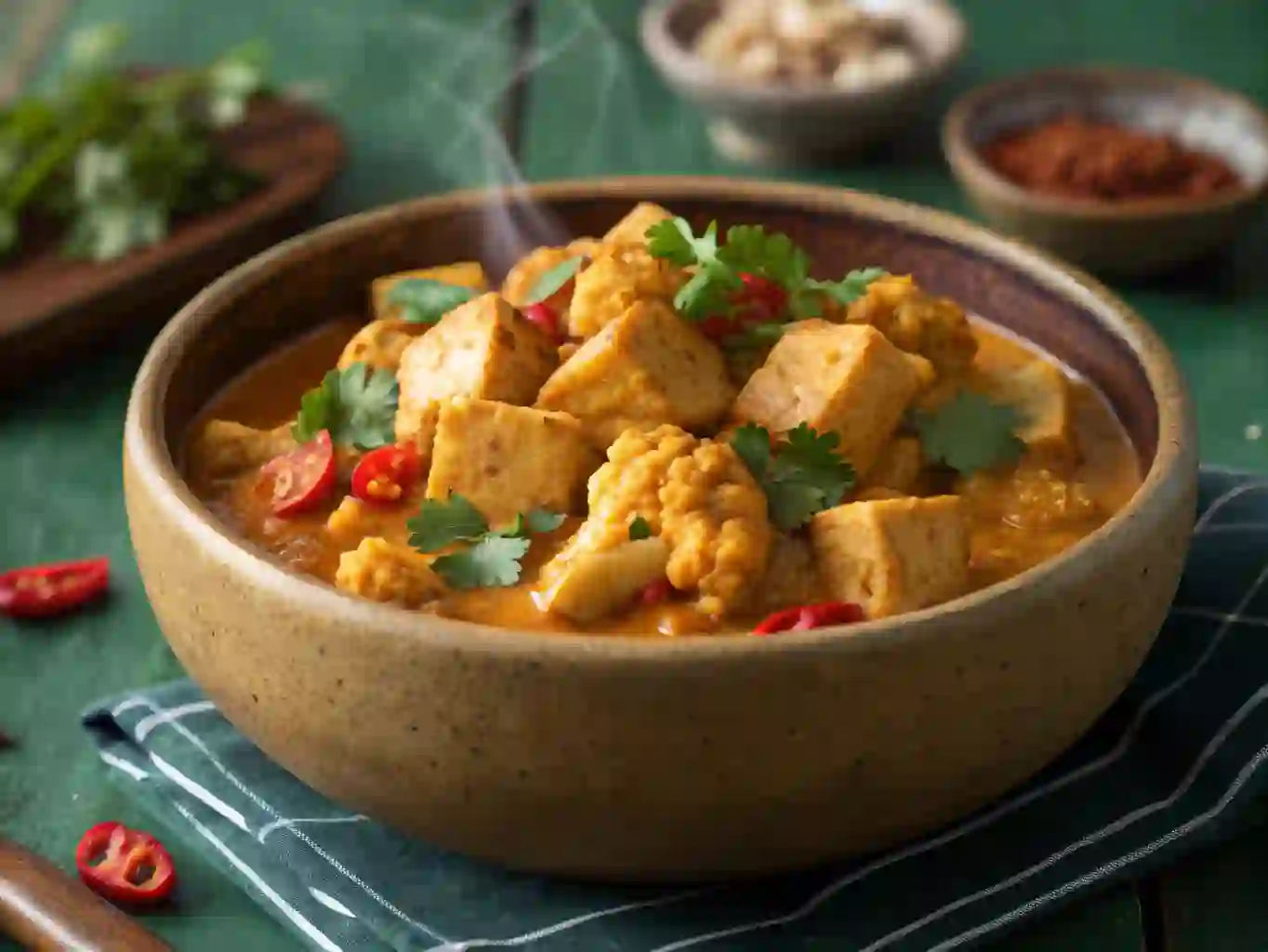
Vegetarian Tofu & Cauliflower Curry isn’t just another plant-based meal, it’s the answer to every low-carb vegetarian’s silent struggle. Let’s be honest eating low-carb as a vegetarian can feel like walking a nutritional tightrope. You ditch the bread and rice and somehow end up stuck with salads or eggs again.
If you’ve ever stared at a block of tofu wondering how to turn it into something warm, Flavorful and actually satisfying, you’re in good company.
This curry was born from that exact dilemma. It’s low in carbs, high in flavor, and packed with plant protein, thanks to a little tofu trickery and a scoop of pea protein you wouldn’t even notice unless someone told you.
In this post, we’re not just sharing a recipe and signing off. You’ll find:
- A satisfying vegetarian curry recipe made for low-carb eaters
- Real protein-boosting tricks that actually help you stay full
- Honest, simple advice on balancing macros without losing joy in food
So grab a pan, clear a little space on the counter and let’s make something that feels as good as it tastes.
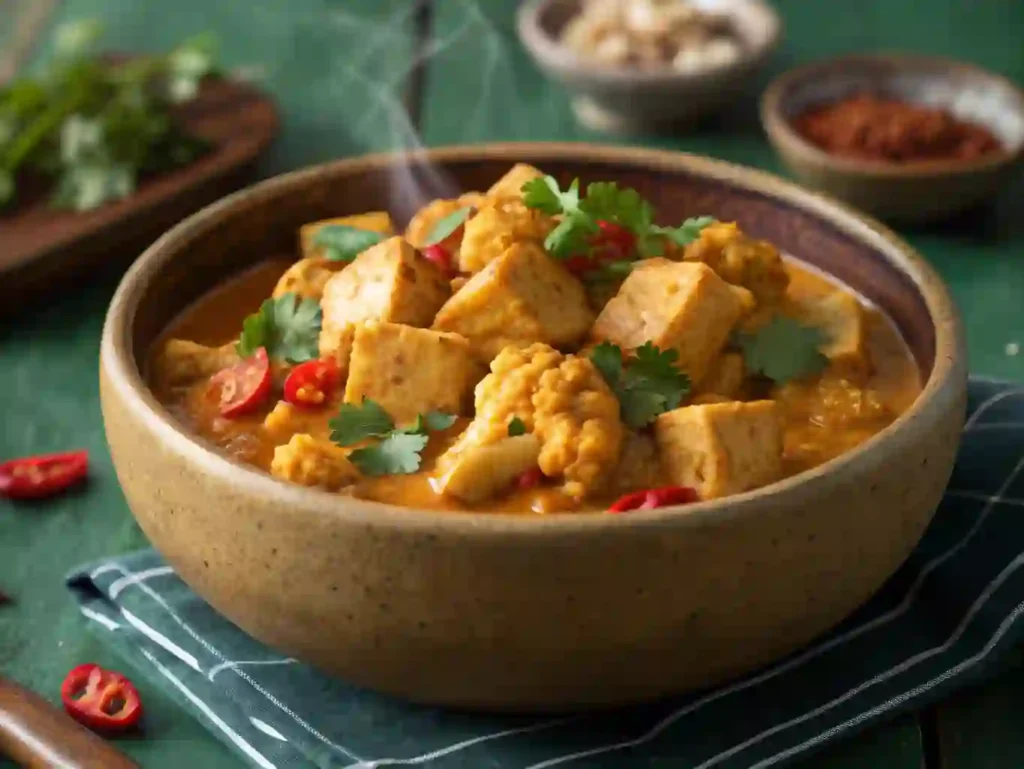
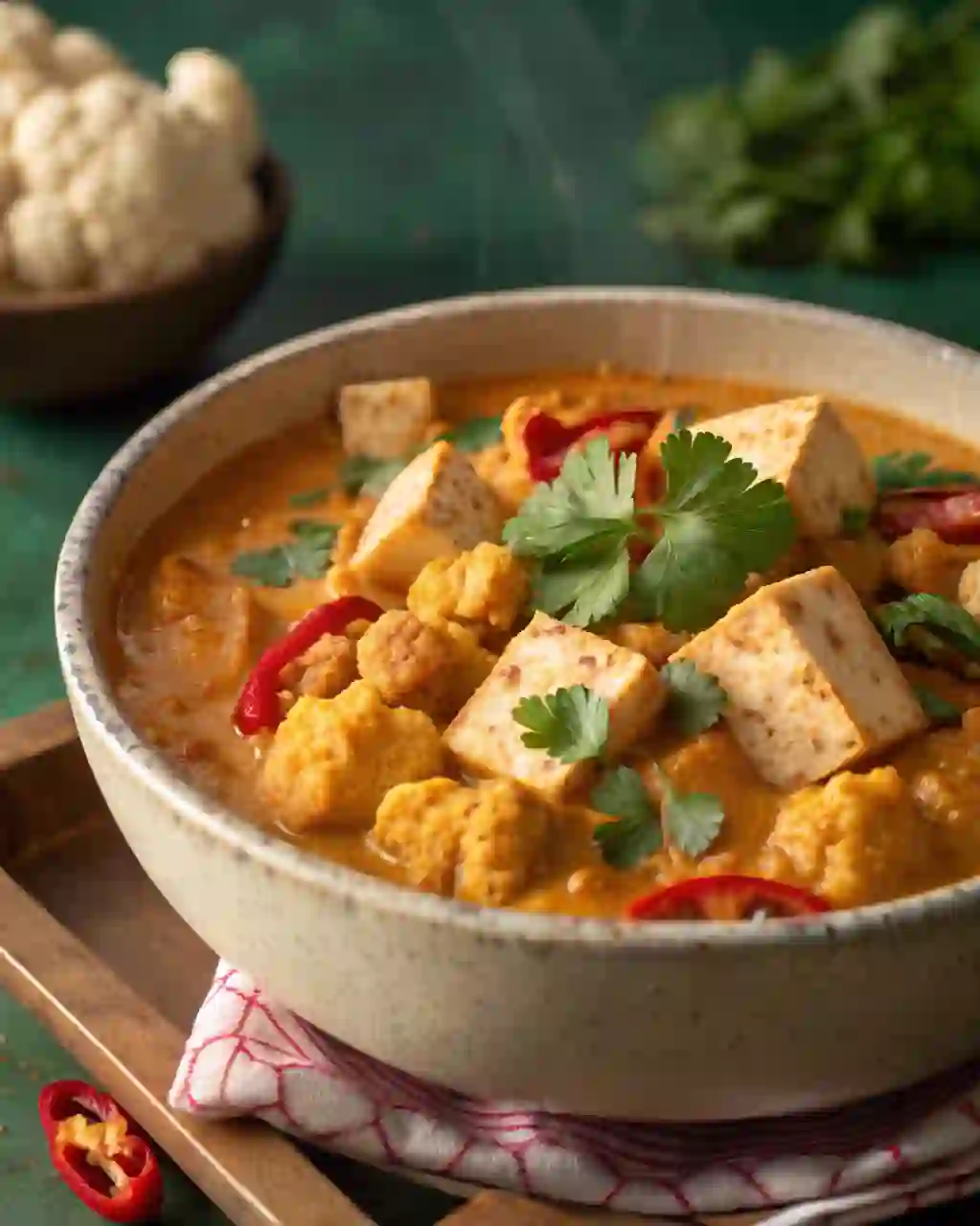

Vegetarian Tofu & Cauliflower Curry
Ingredients
Equipment
Method
- Wrap the tofu in a clean towel, place a light weight on top, and let it rest for 15 minutes to release extra water. Cut into cubes.
- Heat coconut oil in a large pan over medium heat. Add onion, garlic, and ginger. Cook until soft and golden.
- Stir in turmeric, cumin, curry powder, and smoked paprika. Cook for 30 seconds to release their aroma.
- Add cubed tofu to the pan. Let it sit for a minute before stirring so it develops light color and texture.
- Mix in cauliflower florets, crushed tomatoes, and coconut milk. Stir until everything is well coated.
- Reduce heat and simmer uncovered for 15–20 minutes, or until the cauliflower softens.
- Stir in pea protein (if using) and any greens. Season with salt and pepper to taste.
- Garnish with fresh cilantro and serve warm, plain or over cauliflower rice.
Notes
-
Storage:
Store leftover curry in an airtight container in the fridge for up to 3 days. The flavors deepen overnight, so it often tastes even better the next day. -
Freezing:
This curry freezes well. Cool completely before transferring to a freezer-safe container. Reheat gently on the stove with a splash of coconut milk or water. -
Serving Ideas:
Serve over cauliflower rice, zucchini noodles, or with a side of steamed greens. A spoonful of Greek yogurt or coconut yogurt adds a nice creamy finish. -
Protein Boost:
Add pea protein powder or a handful of hemp hearts for extra plant-based protein without changing the flavor. -
Spice Level:
Adjust the heat to your liking. For a mild curry, skip the chili; for extra kick, add one chopped fresh chili or a pinch of cayenne. -
Substitutions:
- Use tempeh instead of tofu for a firmer texture.
- Swap broccoli for cauliflower if that’s what you have.
- Light coconut milk works if you want to reduce fat, though it’ll be a bit less creamy.
Why Vegetarian Low-Carb Can Be Tricky
If you’ve ever tried eating low-carb while staying vegetarian, you probably know the confusion that comes with it. You start with good intentions. You fill your cart with tofu, greens, maybe a head of cauliflower or two. Then halfway through the week, you realize most of your “protein sources” are also packed with carbs. Lentils, beans, chickpeas, quinoa all healthy but they add up fast.
It’s not that carbs are bad. It’s that balance becomes harder to find. The moment you take out grains and legumes, your meals can start feeling light but not in a good way. More like something’s missing.
That’s where this curry comes in. It’s hearty without being heavy, Filling without feeling like a food coma. Cauliflower brings the texture and comfort that rice usually provides. Tofu adds structure and protein so your body actually feels nourished afterward.
Why This Combination Works So Well
- Cauliflower gives you that thick, creamy base while keeping carbs low.
- Tofu absorbs flavor beautifully, Especially if you press it well and give it time in the pan.
- Together they hit the right balance between comfort and nutrition.
It’s not fancy, but it’s satisfying in that quiet, grounded way. The kind of meal that feels like it’s doing something good for you without trying too hard to prove it.
FAQ: Can a vegetarian diet actually stay low in carbs?
Yes it can, but it takes some awareness. Start by focusing on lower-starch vegetables such as cauliflower, spinach, mushrooms and zucchini. Add protein-rich foods like tofu, tempeh, or seitan. Then bring in healthy fats coconut milk, olive oil, or avocado to keep you full and energized. And starting your day with a high protein meal, like this Crockpot Breakfast Frittata, helps you stay full longer and makes low carb eating feel easier. Once you figure out how to balance those parts, the diet stops feeling strict and starts feeling natural.
Ingredients and How to Cook This Curry
Cooking this curry isn’t about perfection. It’s about slowing down a little, letting the smell of spices fill the kitchen, and trusting that simple ingredients can still feel special . You don’t need fancy tools or chef tricks, just a bit of patience and a spoon you like to stir with.
Ingredients
Base flavors
- 1 tablespoon coconut oil or olive oil
- 1 onion, finely chopped
- 3 cloves of garlic, minced
- A thumb of fresh ginger, grated
Main ingredients
- 1 medium head of cauliflower, chopped into bite-sized florets
- 1 block firm tofu, pressed and cubed
- 1 cup full-fat coconut milk
- 1 cup crushed tomatoes or tomato puree
Spices
- 1 teaspoon turmeric
- 1 teaspoon ground cumin
- 1 teaspoon curry powder or garam masala
- ½ teaspoon smoked paprika (optional but lovely for warmth)
- Salt and pepper to taste
Optional add-ins
- 1 scoop unflavored pea protein powder
- A handful of spinach or kale
- 1 small chili for a bit of heat
- Fresh cilantro or parsley for garnish
Cooking Steps
- Warm the base. Heat the oil in a wide pan over medium heat. Add onion, garlic, and ginger. Stir until they soften and turn golden. If the smell makes you pause for a second, that’s your sign to keep going.
- Wake up the spices. Add turmeric, cumin, and curry powder. Stir gently until they release their aroma. This is where the flavor really begins to build.
- Add tofu and color. Drop in the tofu cubes and let them sit for a minute before stirring. They should pick up a little color and a hint of crispness.
- Create the sauce. Add cauliflower, tomatoes, and coconut milk. Stir until everything feels coated and connected. Let it simmer quietly for 15 minutes, uncovered, until the cauliflower softens but still holds shape.
- Finish and balance. Stir in the pea protein if you’re using it. Add greens at the end so they just wilt into the sauce. Taste and adjust the salt, maybe a bit more spice if you like bold flavors.
Serve it hot, with cauliflower rice or a simple green salad. The curry thickens slightly as it cools, and the next day it tastes deeper, rounder, more like something that’s been part of your kitchen for years.
FAQ: Can I make this ahead of time?
Absolutely. Let it cool completely, then store it in an airtight container for up to three days. When you reheat it, add a small splash of coconut milk or water to loosen the sauce. The flavors will feel even more layered, almost like the curry has settled into itself overnight.
Protein Enhancement Tricks with Tofu and Pea Protein
If you’ve ever finished a vegetarian meal and thought, that was nice, but I’m still kind of hungry, you already understand the real issue. It’s not the vegetables. It’s the missing protein. Without it, even the best dish feels a little hollow.
This curry fixes that. Quietly, without fuss.
How to Treat Tofu Like It Deserves to Be Eaten
Start by pressing it. Nothing fancy. Just a towel, a plate, and something with a bit of weight on top. Fifteen minutes is enough. You’ll see the water pool out, and suddenly the tofu feels alive again, ready to take on flavor.
Cut it into small cubes. When it hits a hot pan, leave it alone. Let one side brown properly before you move it. That still moment builds flavor, texture, and a bit of patience. Once you stir in the sauce, the tofu softens again, but it holds a quiet chew that feels right in your mouth.
There’s something honest about tofu when it’s cooked like that. It doesn’t try to be meat. It just soaks up spice, warmth, and the rhythm of what’s around it.
Adding Pea Protein the Natural Way
You don’t need to turn this into a science experiment. Just a scoop, stirred in near the end, while the sauce is still warm but no longer bubbling. That’s all it takes . the powder melts into the curry, leaving no trace of grit or flavor. What you get instead is fullness the kind that sneaks up on you later when you realize you haven’t thought about food in hours.
If you’re unsure, start small. Taste, adjust, listen to your own palate. Cooking isn’t about precision here; it’s about how your body feels afterward.
Small, Real Tweaks That Change the Meal
- Add a spoonful of hemp seeds for texture and quiet nutrition.
- Mix in a dollop of Greek yogurt before serving if you eat dairy.
- Sprinkle a few crushed roasted chickpeas on top for bite.
Each one brings something new. Together, they shift this curry from “plant-based and nice” to something complete. Something that feels like it belongs in your regular rotation, not just your healthy week.
FAQ: Does pea protein change the texture of the curry?
Only if you rush it. Let the sauce cool slightly before stirring it in. It dissolves gently and leaves the curry thick but not chalky. Once you get it right, you won’t even notice it’s there. You’ll just notice how satisfied you feel afterward.
Conclusion: Why This Vegetarian Tofu & Cauliflower Curry Feels Different
Okay, so, the curry’s still simmering and the whole kitchen smells kind of amazing right now. I wasn’t even planning to make this tonight. I just saw the tofu in the fridge, and the cauliflower looked like it was about to give up on life, so… here we are.
Anyway, it’s funny how this happens. You start cooking just to use things up, and then suddenly it turns into something that feels like a real meal . The onions are sweet now, the garlic’s mellowed out, and the sauce oh, the sauce it’s thick in that way that makes you think you accidentally did something right.
I keep poking at the tofu, probably more than I should. It’s starting to soak up everything, getting soft at the edges but still holding shape. You can tell when it’s done, it kind of stops resisting the spoon. That’s when it’s ready.
If you ever make this Vegetarian Tofu & Cauliflower Curry, don’t stress the details. Seriously. You’ll forget a spice or use the wrong kind of oil and it’ll still turn out fine. That’s the thing about curry it forgives you.
Now, I’m just going to let it sit for a few minutes. That’s when the flavors calm down and come together, like they’re talking it over before you take a bite. Grab a spoon, taste, adjust, and just trust it. Cooking’s not a test. It’s more like a conversation that smells good.

Dreena shares balanced, diabetes-friendly recipes made for real life—simple, nourishing, and full of flavor. Her kitchen is where health meets heart.