Go Back
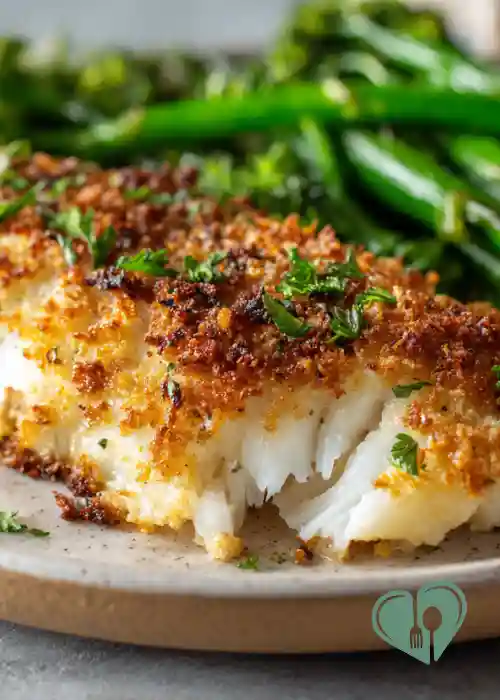
Oven baked parmesan crusted fish with a crispy golden topping and flaky white fish, garnished lightly and served with green vegetables.
Dreena Grace Burthon

Oven-Baked Parmesan Crusted Fish

Crispy baked fish with a parmesan crust that actually crunches. No frying, no mess, just an easy dinner that feels a little indulgent without being heavy.
Prep Time 10 minutes
Cook Time 15 minutes
0 minutes
Total Time 25 minutes
Servings: 4 people
Course: dinner
Cuisine: American
Calories: 330

Ingredients
  

  • 1 lb white fish fillets cod, haddock, pollock, tilapia
  • 3/4 cup parmesan cheese finely grated, not shredded
  • 1/4 cup breadcrumbs optional, panko or regular
  • 1 tbsp olive oil just enough to coat fish
  • 1/2 tsp salt adjust to taste
  • 1/4 tsp black pepper freshly ground if possible
  • 1/4 tsp garlic powder optional
  • 1/4 tsp paprika optional

Equipment

  • 1 Baking sheet Rimmed works best. Keeps oil contained.
  • 1 Wire rack (optional) Helps with airflow and crisping.
  • 1 Shallow bowl or plate For the parmesan coating.
  • Paper towels Important. Dry fish matters more than tools.

Method
 

  1. Heat the oven to 425°F. Line a baking sheet with foil. Add a wire rack if you’re using one.
  2. Pat the fish dry with paper towels. Press gently. Do it until the surface feels dry, not slick.
  3. Drizzle the fish lightly with olive oil. Use your hands to coat it evenly.
  4. In a shallow bowl, mix the parmesan, breadcrumbs if using, salt, pepper, and any optional spices.
  5. Press the fish into the parmesan mixture. Press firmly so it sticks. Flip once and press again. Do not pile it on thick.
  6. Place the coated fish on the prepared baking sheet, leaving space between pieces.
  7. Bake for 12 to 15 minutes, without flipping, until the crust looks golden and feels firm to the touch.
  8. Remove from the oven and let it sit for about a minute before serving.
Notes

  • Drying the fish matters more than anything else. If it feels wet, the crust won’t crisp.
  • Finely grated parmesan works better than shredded. It melts, then firms up instead of going soft.
  • Do not overload the coating. A thin, even layer crisps better than a thick one.
  • A wire rack helps, but it’s optional. Space between the fish matters more.
  • Skip flipping. Let the crust set on its own.
  • If the fish looks pale at first, wait. The color comes late.
  •