
Why This Diabetic Breakfast Guide Could Change Your Mornings
Here’s the truth about navigating breakfast with diabetes: it’s a minefield dressed up like a muffin.
You roll out of bed, maybe not even hungry yet but your blood sugar? Already climbing, courtesy of cortisol and that not-so-charming hormonal trick called the dawn phenomenon. You skip breakfast thinking it’s the smart move… only to end up shaky, foggy, and foraging the kitchen by 10AM. Sound familiar?
You’re not alone. And you’re definitely not doing it wrong.
This diabetic breakfast guide was created because mornings matter more than we admit especially when blood sugar stability is the goal. Yes, we’ll cover low-carb swaps and protein-packed recipes. But this isn’t about a list of “safe” foods. This is about having a strategy something sustainable that works with real life.
Whether you’re Type 2 and managing insulin resistance, Type 1 and juggling ratios, or navigating that gray area in between, this guide is your blueprint. Inside, you’ll learn:
- What’s really happening with your glucose each morning
- How to use the right macros to start your day steady
- How to meal prep once and relax for days
- Real, fast recipes that keep sugar spikes and crashes off the table
We’ll also get into the stuff most blogs skip: emotional eating, food guilt, misleading labels, and why your cravings might actually be trying to help you.
If you’ve ever stood in front of the fridge wondering, “What can I eat that won’t wreck me?” this diabetic breakfast guide is for you.

Why Breakfast Matters for Blood Sugar Control
Let’s pause the “eat your protein” talk for a second. Because if you’ve ever looked at your glucose monitor first thing in the morning and thought, I haven’t even eaten yet what gives? you’re already familiar with the quiet chaos of diabetic mornings.

What Happens While You’re Sleeping (and Why It Matters at 7 AM)
While you sleep, your liver’s been pulling an all-nighter, releasing glucose to “prepare” you for the day. That’s not malfunction that’s biology doing its job. But with diabetes, the usual insulin counterbalance is dulled. So even before your feet hit the floor, your blood sugar might be quietly rising.
Add cortisol to the mix the stress hormone that peaks just before waking and now your body’s firing glucose like it’s prepping for battle. This is called the dawn phenomenon, and it’s incredibly common. No, you didn’t do anything wrong. No, you didn’t “cheat.” Your body’s just following its programming.
Here’s the kicker: skipping breakfast doesn’t pause this process. It prolongs it. Because until you eat, your body keeps assuming you need fuel so it keeps pumping sugar into your bloodstream. Quietly. Persistently.
The Truth About Skipping vs. Starting Strong
Let’s be real: skipping breakfast feels like control. No decisions, no carbs, no risk of messing up. But physiologically? It’s often the opposite. Your cortisol stays elevated. Your liver keeps guessing. By 10 AM, you’re either hangry, shaky, or both and more likely to reach for something sweet just to steady the fog.
Now flip that: a low-carb, high-protein breakfast within an hour of waking tells your body, “We’ve got this. No need to stress.” You stop the glucose drip. You blunt the cortisol spike. You give your insulin a break.
It’s not about eating “early” just for the sake of it. It’s about breaking the overnight cycle before it turns into a mid-morning crash.
FAQ – “What if I’m not hungry in the morning?”
That’s common especially if your blood sugar was high overnight. Try starting small: a hard-boiled egg, a protein shake, a few spoonfuls of Greek yogurt. You’re not trying to feast. You’re trying to interrupt the glucose dump gently, and that takes less food than you think.
What Makes a Diabetic Breakfast Effective?
Okay deep breath. Because if you’ve ever stared at your plate thinking, Is this going to spike me? Or am I finally getting this right? you’re not the only one playing glucose roulette before 9 AM.
Let’s demystify it.
The Anti-Spike Formula (That’s Not Really a Formula)
Here’s what’s usually behind a blood sugar-friendly breakfast:
- Solid protein think 25–30g. Not just a “source” of protein. Actual protein. Enough to tell your body, we’re good stop releasing sugar now.
- Some fat 10–15g to keep you full and slow the carb curve
- Controlled net carbs 10–20g, mostly from fiber-rich stuff (more on that in a sec)
But let’s not pretend this is math class. This isn’t about perfection. It’s about knowing what levers matter. A veggie omelet with avocado? Probably gold. A high-protein smoothie with frozen cauliflower and flax? Weirdly great. A “healthy” granola bar with oats and dates? Eh… not so much.
BTW: Going zero-carb sounds like a win, but sometimes it backfires. Too little glucose can raise cortisol especially in the morning and that can push blood sugar up anyway. Go figure.
The Fiber + Water Trick Nobody Talks About
You’ve probably heard fiber is good. But most people don’t realize why. Fiber acts like a shield. It slows down digestion, traps carbs in a kind of metabolic traffic jam, and feeds gut bacteria that quietly improve insulin sensitivity over time.
So yeah chia pudding is more than Instagram bait.
And water? Don’t roll your eyes. You lose a lot overnight. Even light dehydration can make blood sugar readings look worse. One glass when you wake up before the coffee can make a real dent.
Not Just What You Eat How Much
Even “safe” foods can trip you up if the portions sneak up. A half cup of Greek yogurt? Great. A massive 20-ingredient “protein bowl” with seeds, nut butter, berries, and granola? You might be spiking yourself by accident.
This isn’t about restriction. It’s about getting familiar with your own body’s yes/no list. Sometimes the fix is smaller portions. Sometimes it’s swapping almond milk for whole milk. You’ll only know by experimenting and yeah, a CGM or food log helps a lot.
FAQ – “How strict do I have to be every morning?”
Short answer? Not very. But consistent, yes. The body loves rhythm. Start with a base breakfast that keeps your numbers steady, and build from there. Variety’s great once you know your anchor.
Understanding Carbs: How Much is Too Much?
Carbs get blamed for everything. But when you’re living with diabetes, it’s not about fear it’s about strategy. The goal isn’t zero. It’s smart.
What Are Net Carbs, Really?
You’ve seen the label tricks: “Only 2g net carbs!” But let’s slow it down.
Net carbs = total carbs – fiber – sugar alcohols (theoretically). But not all sugar alcohols behave equally some (like maltitol) spike blood sugar almost like real sugar. So net carbs aren’t always reliable on packaging.
What matters more is how your body actually responds. That 15g net carb breakfast from steel-cut oats might hit differently than 10g from a low-carb bar. Context is everything.
If you’re guessing, aim for 10–20g net carbs at breakfast, mostly from fiber-rich, slow-digesting sources.
Low-Carb vs. Slow-Carb: Know the Difference
“Low-carb” usually just means fewer total carbs. But “slow-carb” is about glycemic behavior how long it takes to digest and convert to glucose.
Examples of slow carbs:
- Steel-cut oats
- Lentils or beans
- Quinoa
- Berries
- Sweet potato (in small portions)
These don’t flood your system. They whisper, not shout. That’s what you want in the morning.
On the flip side, “low-carb” foods like almond flour pancakes or keto bars might be low in carbs, but high in fat and calories. That’s fine just don’t assume they’re automatically safer.
Smart Carbs for Stable Mornings
Here’s the test: after you eat, check your blood sugar at 1 and 2 hours. If it rises less than 30–40 mg/dL and returns to baseline within 3 hours, you’ve found your sweet spot.
Good carb choices for breakfast:
- ½ cup berries
- ¼ cup cooked oats with flax
- 1 small slice sprouted grain toast
- Veggies: spinach, peppers, mushrooms
Balance them with protein and fat, and you’re in control not your carbs.
FAQ – “Should I completely avoid carbs in the morning?”
No unless you’ve tested it and feel better that way. Most people do better with a small amount of slow, fiber-rich carbs in the morning. It supports cortisol balance, satiety, and brain function. The key is pairing not removing.
Protein Power: The Cornerstone of a Diabetic Breakfast
If blood sugar had a best friend, it’d be protein. Not trendy “high-protein” bars. Not marketing fluff. We’re talking real, stabilizing, glucose-buffering protein the kind that talks your liver off the ledge and tells your blood sugar, “We’re not going anywhere.”
What Protein Actually Does in the Morning
Here’s the unsexy truth: mornings are when your body is most prone to glucose chaos. Cortisol’s up. Insulin sensitivity’s down. And your liver? It’s leaking sugar like a slow faucet.
Protein doesn’t just not spike you it blunts all that hormonal noise.
When you get 25–35g of protein in early, you’re essentially saying to your metabolism, Hey we’re fed, we’re fine, calm down.
Want to take your diabetic breakfasts to the next level?

Discover how to combine protein, smart flours, and healthy fats to build meals that actually support your blood sugar not sabot
The result? Fewer spikes. Less rollercoaster. More energy that doesn’t come with a price tag.
Real Protein Not Just a Label
You’d be surprised how many “protein breakfasts” fall short. A tablespoon of peanut butter? 4g. A bowl of “high-protein” cereal? Maybe 9g. Not enough to move the needle.
Here’s what does count:
Animal-based options:
- 3 eggs + ½ cup cottage cheese = ~28g
- Plain Greek yogurt + hemp seeds = ~30g
- Chicken sausage + avocado + spinach = full plate, full satiety
Plant-based ideas:
- Tempeh scramble with veggies = ~22g
- Tofu “egg” bowl + nutritional yeast = ~25g
- Pea protein shake + almond butter = ~30g (but see below)
Powders are fine. Just don’t rely on them blindly. Liquid protein absorbs fast which means blood sugar can respond more sharply. Pair it with fiber or fat to slow the curve.

FAQ – “Is more protein always better?”
Not always. More isn’t always more. Once you pass ~40g in one sitting, you may not absorb it all efficiently. Stick to 25–35g for breakfast, spread your intake throughout the day, and let your numbers not just macros be your guide.
10 Fast, Blood Sugar-Safe Breakfast Recipes
Let’s be honest most mornings aren’t made for recipes. They’re made for survival. You’re half-dressed, your glucose is already moving, and that protein goal feels… optional at best.
But here’s the shift: once you find 2–3 breakfast staples that don’t spike you, mornings start to feel less like a gamble and more like a rhythm. You don’t need 100 ideas. You need 10 that actually work for your body.
Below is a list that’s not just “low-carb and high-protein” it’s doable, satisfying, and, importantly, won’t leave you side-eyeing your CGM an hour later.
Rushed mornings? Get low-carb breakfasts that actually fit your life

Discover quick, blood sugar-safe meals you can prep in minutes microwave-friendly, no-cook, and grab-and-go ideas made for real diabetic mornings.
No-Cook / Grab & Go
1. The Unpretentious Yogurt Bowl
- ¾ cup plain Greek yogurt, 1 tbsp chia, ½ cup berries
- Add cinnamon, call it gourmet
→ ~28g protein, 10g net carbs
Use when: You want cool, creamy, no-fuss.
2. The “I Overslept” Roll-Up
- 3 turkey slices + 2 cheese slices + avocado
→ Roll, eat, move. ~30g protein, 5g net carbs
Use when: You can’t think yet, but still want to win the morning.
3. The Quiet Smoothie
- 1 scoop protein + spinach + almond milk + chia
→ Blend in silence. Add peanut butter if you need soul.
→ ~30g protein, 8g net carbs
Use when: You need calm and control.
4. Cottage + Strawberries (Surprisingly Decent)
- ½ cup full-fat cottage cheese, ½ cup sliced strawberries
- Add 1 tbsp walnuts or hemp for texture
→ ~26g protein, 9g net carbs
Use when: Sweet cravings show up early.
Light Heat, Low Stress
5. Microwave Mug Eggs (Don’t Judge It)
- 2 eggs + 2 tbsp cottage cheese + spinach in a mug
- Microwave 90 sec, stir, 30 sec more
→ ~25g protein, 4g net carbs
Use when: You want warmth but not effort.
6. Salmon Scramble on Arugula
- 2 scrambled eggs + 2 oz smoked salmon
- Toss onto greens, drizzle olive oil
→ ~28g protein, 4g net carbs
Use when: You want to pretend you brunch professionally.
7. Quick Tempeh Fry-Up
- Crumble tempeh, sauté with paprika + greens
→ ~25g protein, 11g net carbs
Use when: You need plant-based power.
Meal Prep That Buys You Time
8. Sunday Egg Muffins
- Whisk eggs + chopped veg + turkey + cheese
- Bake in muffin tin, 350°F for 20 min
→ 2 muffins = ~25g protein, 5g net carbs
Use when: You want autopilot fuel for 3 days straight.
9. Pancake Freezer Fix
- 2 eggs + 2 tbsp almond flour + pinch baking powder
- Cook in pan, freeze between parchment
→ Toast and top with yogurt or almond butter
→ ~28g protein, 8g net carbs
Use when: You crave “breakfast-y” without the spike.
10. Protein Box Assembly
- Mix: boiled egg, cheese wedge, cucumber slices, olives
→ ~25–30g protein depending on combo
Use when: You want food that feels… safe.

FAQ – “Do I have to stick to the same one every day?”
Nope but there’s magic in repetition. If you find a breakfast that flattens your glucose line, repeat it until your life calms down. Once stability becomes your baseline, then you can experiment.
The Meal Prep Strategy: One Hour for One Week of Control
If breakfast feels like chaos, it’s probably not your fault it’s your rhythm. Diabetic mornings don’t reward spontaneity. They reward systems.
Meal prep isn’t about perfection or discipline. It’s about removing decision fatigue from your most vulnerable glucose window. One hour on a Sunday can give you five solid mornings that are blood sugar-steady, low-stress, and (dare we say it?) kinda peaceful.
Want calmer mornings without thinking about food?
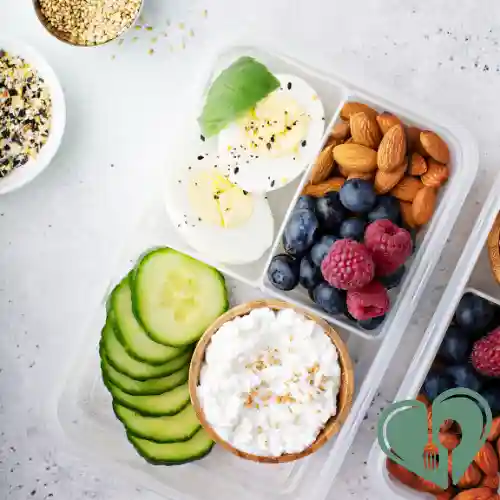
Learn how to prep 5 blood sugar-stable breakfasts in under an hour.
No stress, no daily decisions just ready-to-go meals that work for your glucose.
Why Prepping Breakfast Works Better Than “Winging It”
Let’s be honest you already know what happens when you don’t have a plan:
- You grab carbs because they’re fast.
- You skip food and spike anyway (hi, dawn phenomenon).
- You stress-eat mid-morning and start the day behind.
Meal prepping solves all of this by pre-deciding your wins. It turns “What should I eat?” into “Oh, it’s already done.”
The One-Hour System (It’s Easier Than You Think)
Set a timer. One hour. Here’s what it can buy you:
Step 1: Choose 2 breakfast formulas
- One cold (e.g., yogurt bowl, cottage cheese combo)
- One hot (e.g., egg muffins, turkey scramble)
Step 2: Prep in batches
- Make 6 egg muffins or hard-boil 6 eggs
- Chop veggies, portion out berries, wash greens
- Pre-assemble yogurt toppings (chia, hemp, nuts)
Step 3: Store smart
- Use glass containers to portion daily servings
- Keep protein shake ingredients grouped in one fridge bin
- Freeze muffins or pancakes in parchment stacks
Step 4: Make the first 2 days fully plug-and-play
- Literally grab, eat, done. The fewer morning decisions, the better.
Bonus tip: prep while your coffee brews or while watching Netflix. It shouldn’t feel like a chore just a quiet reset.
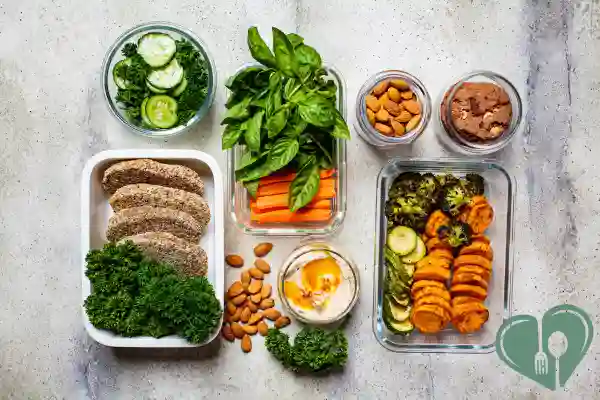
Realistic Weekly Pairings
| Day | Option 1 (Cold) | Option 2 (Hot) |
|---|---|---|
| Mon | Greek yogurt + berries + chia | Egg muffins + greens |
| Tue | Cottage cheese + strawberries | Turkey scramble + arugula |
| Wed | Protein shake + almond butter | Microwave mug eggs |
| Thu | Repeat your best combo | Prepped pancake + yogurt |
| Fri | Roll-ups + berries | Smoked salmon + egg |
FAQ – “What if I get bored eating the same thing?”
You will eventually. That’s normal. But boredom only becomes a problem when you don’t have a backup. Keep 1–2 “switch-out” items on hand (like a different protein or carb) to mix in when needed. The goal isn’t gourmet it’s glucose consistency with just enough novelty to stay interested.
Sweet or Savory? Choosing What’s Best for You
It’s a deceptively simple question sweet or savory? but for those managing diabetes, it’s not just about flavor. It’s about how you regulate cravings, interpret fullness, and stay in sync with your glucose curve.
Truth is, what you want and what your body needs don’t always match. And figuring out the difference? That’s the real breakfast work.
Crave sweet? Prefer savory? Here’s how to choose what helps not hurts your blood sugar.

Some mornings need comfort, others need balance. This guide breaks down how sweet and savory flavors affect satiety, energy, and glucose and how to build the right plate for your needs.
Sweet Cravings Aren’t Weakness They’re Data
Let’s start here: craving sweet in the morning doesn’t mean you’ve “failed” at being low-carb. It could mean you’ve trained your tastebuds that way. Or that you need comfort. Or maybe that your blood sugar dipped overnight and your body’s trying to fix it with dopamine.
None of that is wrong. But it helps to see it as information not identity.
If you gravitate toward sweet flavors, try upgrading instead of eliminating. Think:
- Greek yogurt with berries and cinnamon
- Chia pudding with almond milk and a touch of monk fruit
- Smoothies with frozen cauliflower (you won’t taste it, promise) and a scoop of protein
- Almond flour muffins or pancakes reheated, not rushed
These give you that hint of sweet without the spike. And sometimes, that’s enough to satisfy the craving without awakening the blood sugar beast.
Savory Might Be Your Best Ally Even If It Feels “Boring”
Then there’s savory. Grounding. Predictable. Blood-sugar-stabilizing.
If you feel clear-headed and calm after eggs, avocado, or tofu? That’s a sign. Your body responds better to fat, protein, and salt early in the day.
Great options:
- Eggs with spinach and feta
- Turkey sausage and sautéed greens
- Tofu scramble with tahini
- Cottage cheese with cucumbers and cracked pepper
Savory isn’t flashy but it’s sturdy. And when mornings feel fragile, sturdiness is a gift.

FAQ – “What if I crave sweet but always spike from it?”
Try this: eat savory first, then follow with something lightly sweetened. A few bites of yogurt after eggs. Or a protein shake after a veggie omelet. That little bit of sweetness feels satisfying but it’s cushioned by the savory base. Many find this sequence makes all the difference.
Ingredient Swaps That Save Your Morning
It always starts the same way: you find a “low-carb” waffle mix or “keto” yogurt that promises blood sugar bliss. You trust the label. You trust the marketing. And then you spike.
Sound familiar?
If you’ve ever whispered “but the label said it was safe” while watching your glucose graph climb, this section is your redemption arc. Because better mornings don’t start with rules they start with understanding your own food patterns… and a few swap tricks the packaging won’t tell you.
Label lies, sneaky carbs, fake health food? Fix it with smart swaps.

From flours to sweeteners to dairy, this guide shows you what to pick and what to avoid for blood sugar-safe breakfasts. No hype, just better choices that work.
Not All Swaps Are Created Equal But Some Are Game-Changers
Let’s break it down not like a list, but like a conversation with your future self.
That almond flour pancake you love? It’s better than white flour but still dense. Try adding flaxmeal to cut the load. Or lupin flour if you’re feeling adventurous. You’ll get more fiber, less spike and surprisingly, a better texture.
Sweet tooth in the morning? Go ahead but negotiate. Monk fruit + cinnamon over Greek yogurt hits way harder than stevia in coffee. And skip anything with maltitol. That stuff’s the fake friend of diabetic sweeteners: promises a lot, leaves you spiked and bloated.
Milk in your coffee? You don’t need to go sad and gray. Unsweetened macadamia milk has a silky richness. Or use a splash of real cream yes, cream if your body handles fat well. Sometimes old-school works better than lab-engineered “healthy” creamers.
Read Labels Like You’ve Been Burned Before (Because You Probably Have)
Here’s the real rule of thumb: if the front of the package says “diabetic-friendly,” the back better prove it.
Look for:
- Serving size sleight of hand (¼ muffin = one serving? Please.)
- Hidden carbs under names like maltodextrin or “natural syrup”
- “Keto” branding with 22g of total carbs and asterisks next to “net”
And trust your gut literally. If it spikes you, bloats you, or makes you crave more? It’s a no, even if the label says yes.
FAQ – “Should I just avoid packaged foods altogether?”
Not necessarily but approach them like tools, not crutches. The best swaps are the ones you control: single-ingredient basics, simple recipes, and flavor built from herbs, spice, and fat. Packaged food is fine as long as it’s not lying to you (or to your pancreas).
Matching Breakfasts to Your Type and Lifestyle
No two diabetics are the same and no single breakfast strategy fits all. The truth is, how your body responds to food depends not just on the type of diabetes you have, but how you live, move, sleep, and even stress.
This section is about contextual eating building a breakfast approach that fits your physiology and your real life.
Type 1 vs. Type 2: Totally Different Games
Type 1 Diabetes:
You’re managing exogenous insulin which means every bite comes with a calculation. Here, timing is everything. A high-protein, low-carb breakfast helps limit the insulin you need and reduces the chance of overcorrecting.
Helpful combos:
- Eggs + smoked salmon + greens
- Yogurt + nuts + small portion of berries (with a pre-bolus if needed)
Type 2 Diabetes:
Here, it’s about improving insulin sensitivity and preventing spikes. Your body’s making insulin but it’s not using it efficiently (yet). High-protein, low-carb breakfasts with fiber and fat improve your morning numbers and set a more stable tone for the rest of the day.
Good choices:
- Egg muffins with veggies
- Tempeh scramble + tahini drizzle
- Protein shakes with spinach + avocado
Different Bodies, Different Breakfasts

Learn how to adjust your breakfast to fit your type of diabetes, energy needs, and lifestyle without starting from scratch.
Active vs. Sedentary Morning Routines
If you work out in the morning:
Your body may tolerate a few more carbs, especially post-exercise. Consider a slightly higher-carb meal after your workout (like oats with protein or banana in your shake). Track your CGM your post-exercise glucose tolerance might surprise you.
If you’re sedentary (desk job, low AM movement):
Keep carbs lower and lean on protein/fat for energy. Avoid high-fructose “breakfast bars” or smoothies loaded with fruit they hit harder when your body isn’t moving.
If you skip mornings or shift your schedule:
Intermittent fasting can work but only if your glucose agrees. Track your fasting spikes. Some people do better with a small protein bite early, even if the “real meal” comes later.
Dietary Restrictions? Still Plenty of Room
- Vegan? Try tofu scrambles, chia pudding, pea protein shakes
- Dairy-free? Use unsweetened almond or coconut yogurt, skip cheese, add tahini or nuts
- Gluten-free? Almond flour pancakes, flax muffins, coconut flour wraps
- Keto? Just watch fat stacking high fat + high protein + zero carb isn’t always better for blood sugar
FAQ – “Can I copy someone else’s breakfast if their numbers look good?”
You can try but glucose is personal. Age, activity, stress, hormones they all change the response. Use others’ ideas as a starting point, not a script. Your glucose meter (or CGM) is the better coach.
Sample 5-Day Diabetic Breakfast Plan
Here’s what no one tells you: most people don’t need a “variety” of breakfasts they need one or two reliable patterns that buy them peace.
This plan isn’t about novelty. It’s about pattern testing five structured mornings designed to uncover how your body reacts to consistency, not guesswork. Use it as a personal experiment, not a prescription.
Monday: Establish Your Baseline
- Meal: Greek yogurt (¾ cup) + chia + berries + cinnamon
- Macros: ~28g protein, 10–12g net carbs
- Purpose: Test sweet breakfast tolerance + fiber response
- Data to watch: Mid-morning hunger. Does it creep in early?
Tuesday: Evaluate Warm Satiety
- Meal: 2 egg muffins (with turkey + spinach)
- Macros: ~26g protein, 6g net carbs
- Purpose: Observe fat-protein stability vs. sweet cravings
- Data to watch: Energy stability through lunch. Mood?
Wednesday: Stress-Test a Liquid Start
- Meal: Protein shake + frozen spinach + almond butter
- Macros: ~30g protein, 8g net carbs
- Purpose: Speed vs. satiety. Does liquid fuel hold?
- Watch for: Glucose slope is there a mild mid-morning dip?
Thursday: Go Fully Plant-Based
- Meal: Tofu scramble + sautéed greens + olive oil
- Macros: ~25g protein, 10g net carbs
- Purpose: Test fiber bulk + plant digestion curve
- Optional test: Add a ¼ avocado does fat help or hinder?
Friday: Simulate Craving-Driven Choice
- Meal: Almond flour pancakes + Greek yogurt topping
- Macros: ~30g protein, 9g net carbs
- Purpose: Observe dopamine effect of sweet textures
- Psychological angle: Are you more “satisfied” or more “primed”?
The Plan Behind the Plan
Each day isn’t just fuel it’s data collection. Watch:
- When does hunger actually hit?
- What meals calm you mentally not just physically?
- Which days made you snackier later, and why?
This isn’t meal planning it’s pattern mapping. And once you know your patterns, you get leverage.
FAQ – “What if I love variety but it wrecks my numbers?”
Start with rhythmic repetition. Once your glucose is stable for 3–5 days, introduce small variables. Novelty is fine but only after you’ve earned metabolic trust.
Smart Tools to Track and Improve Your Breakfast Routine
There’s a moment, usually after the third unexplained glucose spike, where you stop asking, “Is this food okay?” and start wondering, “Is it okay for me?”
That’s the shift. That’s when tools stop being optional, and start being clarifiers.
Because food advice is general. But glucose response? That’s you-specific. And the sooner you close that loop, the more breakfast becomes an ally, not a minefield.
CGMs: Not Just Sensors – Feedback Loops
Think of a Continuous Glucose Monitor (CGM) as a language translator. It helps you read your blood sugar in real time, without guessing. And what you learn might surprise you.
CGMs show:
- That overnight “fasting” sometimes spikes more than toast
- That black coffee at 6 AM can be a stress signal, not just a beverage
- That the same 15g of carbs behaves differently when paired with eggs vs. alone
But here’s what CGMs don’t do: make decisions for you. They give you feedback. It’s what you do with the curves the patterns, the timing that builds metabolic intelligence.
Journals: The Slow Data That Speaks Loud
You don’t need a device to learn your rhythms. Just a pen, a log, and a few days of attention.
Log:
- Time of meal
- Food (details matter)
- Glucose: before, and 1–2 hours after
- Energy, hunger, clarity
This isn’t tracking for control it’s for pattern recognition. After a week, you’ll see it. That yogurt bowl holds. That almond flour bar? Not so much.
Apps Aren’t the Solution – But They Make Solutions Easier
These aren’t forever tools. They’re onboarding devices for better self-awareness.
- Levels / Nutrisense, CGM + food + habit overlay
- Carb Manager, Built-in net carb calculator, visual macros
- MyFitnessPal, Basic but reliable if you need quick logs
- Glucose Buddy, Manual tracking with custom notes
But here’s the nuance: apps don’t make change. They just remove friction so you can.
FAQ – “How do I know when to stop tracking?”
When breakfast stops feeling uncertain when you can guess your glucose curve before it happens you’ve arrived. But don’t be afraid to return to tracking during transitions: travel, stress, schedule shifts. Think of it as metabolic maintenance not obsession.
FAQs About Diabetic Breakfast Optimization
“Can I have fruit in the morning?”
You can but not all fruit behaves equally. Berries (especially raspberries, blackberries, and strawberries) tend to be lower glycemic and fiber-rich, making them breakfast-friendly in small portions.
What to avoid early in the day:
- Tropical fruits like pineapple or mango
- Dried fruits (dates, raisins = blood sugar grenades)
- Fruit smoothies without protein or fat
Smart move: Pair fruit with protein and fat (e.g., Greek yogurt + berries + chia). Track your response some tolerate more than others.
“What if I’m not hungry in the morning?”
That could be:
- A sign of high overnight blood sugar
- A delayed cortisol rhythm
- Habitual appetite suppression (especially if skipping breakfast is routine)
Try this: Start with something light half a shake, a boiled egg, or a few spoonfuls of cottage cheese. You’re not trying to eat a full meal you’re trying to send a metabolic signal: “We’re fed. No stress response needed.”
“Should I skip breakfast to lose weight?”
It depends, but skipping usually works against glucose stability in diabetics. Here’s why:
- Cortisol rises with prolonged fasting = glucose spikes
- Delayed eating often leads to overcompensation later
- Your body may interpret the skip as stress → worsened insulin resistance
That said, if you feel better eating later and your glucose confirms it intermittent fasting can work. But you need data, not dogma.
“What’s more important – what I eat or when I eat?”
Timing magnifies food. A carb at 8 AM might behave very differently at 1 PM. Mornings often come with:
- Higher cortisol
- Lower insulin sensitivity
- Residual liver glucose production
So yes what you eat matters, but when might matter more than you think.
Start Strong, Stay Steady
If there’s one lesson beneath all the charts, labels, and recipes it’s this: mornings shape everything. Not because breakfast is magical, but because it’s predictable. It’s the one time of day you can actually build around before decisions pile up, before stress hijacks your appetite, before blood sugar gets pulled in five directions.
A stable morning doesn’t guarantee a perfect day. But it makes one possible.
And you don’t need to overhaul your entire life. You just need:
- One or two go-to meals that hold you steady
- A clear understanding of how your body responds
- Tools to course-correct when things drift
This guide wasn’t built to tell you what to eat. It was built to help you learn from your own biology so you can stop guessing, stop fearing food, and start designing mornings that work.
Because once you win breakfast, everything else gets quieter.